The air inside Madison Square Garden does not circulate; it ferments. It carries the ghost-scent of stale beer from 1973, the phantom aroma of cigars smoked by men in fedoras who watched Walt Frazier glide down the baseline, and the heavy, damp condensation of twenty thousand people holding their collective breath. For more than five decades, that breath was a hostage to history. To be a basketball fan in this city was to participate in a multi-generational exercise in ritual heartbreak. You didn’t just watch a game; you inherited a debt.
Then came the final twenty-four seconds of Game 5.
The scoreboard read New York 94, San Antonio 90. Four points. A two-possession game in the dying embers of June. On the hardwood, ten men moved with the leaden, agonizing slowness of soldiers who had been marching through a swamp for seven months. The floor was slick with sweat. Every squeak of a sneaker echoed like a gunshot against the cavernous ceiling.
In the second row, just behind the scorer's table, an old man named Arthur gripped his son’s wrist so tightly the knuckles turned white. Arthur was twenty-two the last time the Knicks lifted a Larry O'Brien trophy. He had hair then. He had a pristine lower back and a belief that greatness was a recurring seasonal event. His son, now thirty, had known only the lean years—the draft busts, the dysfunctional front offices, the promises that vanished like steam from a Manhattan subway grate. This wasn't just a basketball game anymore. It was an interrogation of hope.
The San Antonio Spurs did not care about Arthur’s nostalgia. They are a franchise built on the cold, calculated extraction of joy.
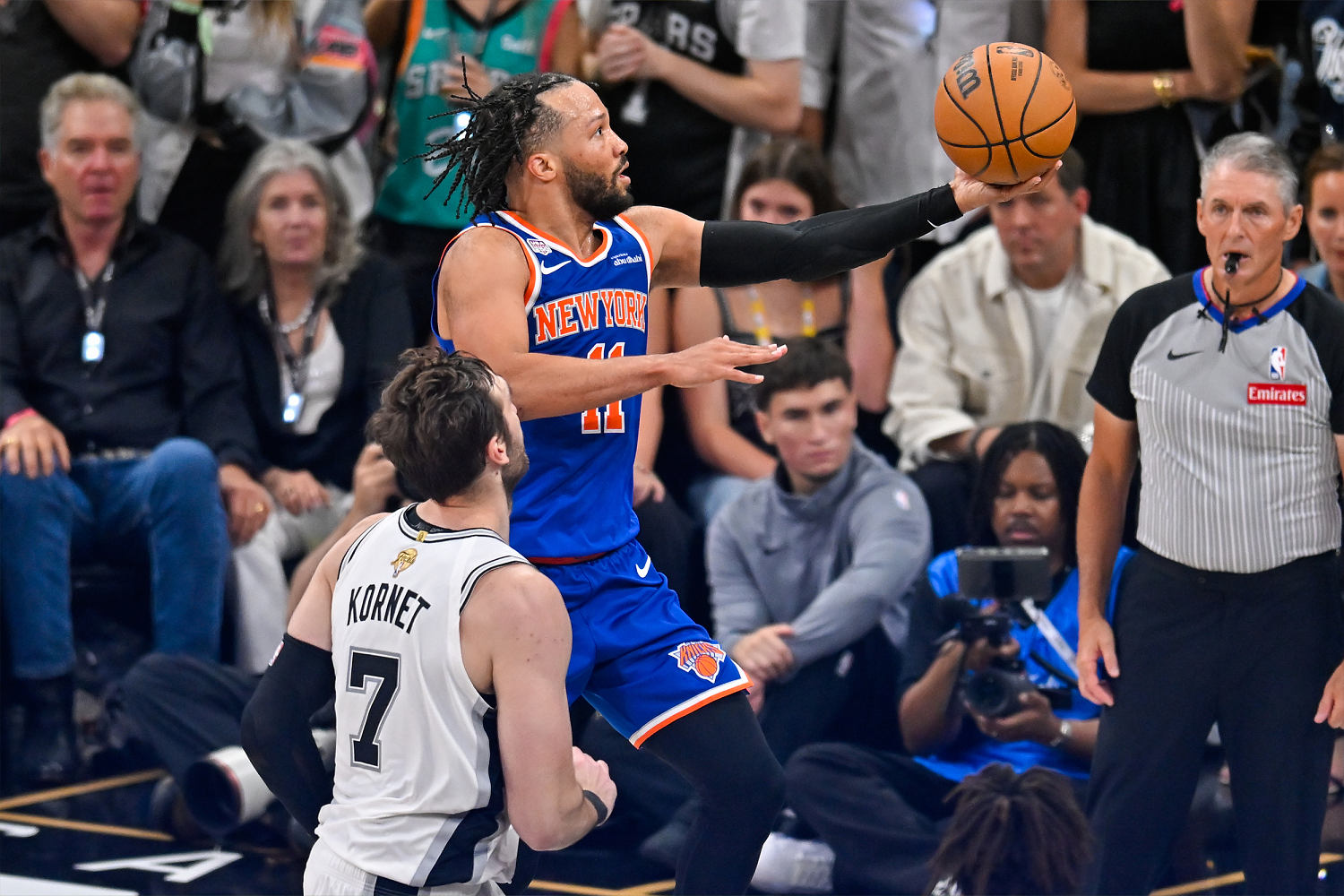
Under the blinding lights, the strategy was elementary but brutal. The Spurs deployed a full-court press, a suffocating web of long limbs and disciplined positioning designed to panic the weary. The ball belonged to New York's point guard. Let’s look at the anatomy of those final seconds. His jersey was soaked through, sticking to his ribs. His lungs burned with a chemical heat. In front of him stood six feet, seven inches of defensive malice, arms outstretched, cutting off the passing lanes, casting a long shadow under the stadium lights.
Five feet of hardwood. That was all the space he had to operate. If he crossed the half-court line, the championship was theirs. If he turned it over, the ghosts of New York winters past would pull them back into the dark.
To understand how a basketball game becomes a psychological epic, you have to look at the numbers that define the burden. Fifty-three years. More than nineteen thousand days. A rotating carousel of coaches, hundreds of players wearing the blue and orange, and millions of dollars spent in pursuit of a phantom. The competitor's ledger will tell you simply that New York shot forty-six percent from the field and out-rebounded San Antonio by six. But those figures are merely the scaffolding. They don't tell you about the third quarter, where the Spurs mounted a twelve-to-two run that felt like a slow-motion car crash.
During that run, the arena fell entirely silent. It is a specific kind of silence unique to New York—a resentful, knowing quiet that says, Ah, right. Of course. This is the part where it all goes wrong.
Every sporting event has a fulcrum, a quiet moment where the trajectory alters permanently. It didn't happen with a thunderous dunk or a buzzer-beating three-pointer. It happened on a missed assignment. With four minutes left in the fourth quarter, the Spurs’ primary scoring option drove left, expecting his defender to bite on a hesitation dribble. It was a move he had used forty times that season to generate an easy layup or a trip to the foul line.
But human beings are not algorithms. Sometimes, sheer exhaustion breeds a strange kind of clarity.
The defender didn't jump. He simply stepped back, took the impact square in the chest, and absorbed the collision. The whistle blew. Offensive foul. Turnover. It was a play that won’t show up in a highlight reel on social media, but it shifted the tectonic plates of the series. The momentum didn't just swing; it broke.
Consider what happens next when a city realizes its curse might actually be lifting. The noise began in the upper tiers—the cheap seats where the people who actually work for a living squeeze into narrow plastic chairs. It started as a low, rhythmic thumping of feet against the concrete. It rippled downward, gaining mass and velocity, until the entire billion-dollar arena was vibrating. The air became thick, almost impossible to inhale.
The Spurs took their final timeout with nine seconds remaining. On the bench, the New York players didn't celebrate. They didn't high-five. They sat with their heads buried in white towels, staring at the floorboards. They looked terrified. The closer you get to the summit, the more terrifying the drop looks. The coach didn't draw up a play. He just stood over them, his voice hoarse, repeating three words over and over: "Don't let go."
When play resumed, the ball was inbounded to the corner. The clock ticked down. Three. Two. One.
The buzzer did not sound like a normal horn; it was drowned out instantly by a primordial roar that had been incubating since 1973. The ball bounced away, unnoticed, rolling toward mid-court as players fell to their knees.
Arthur didn't yell. He didn't jump up and down like his son did. He just stood up, wrapped his arms around his boy's shoulders, and buried his face in a faded grey sweatshirt. He wept. He wept for the fifty-three years of waiting, for the friends he used to watch games with who weren't around to see this night, and for the sudden, overwhelming realization that the weight was finally gone.
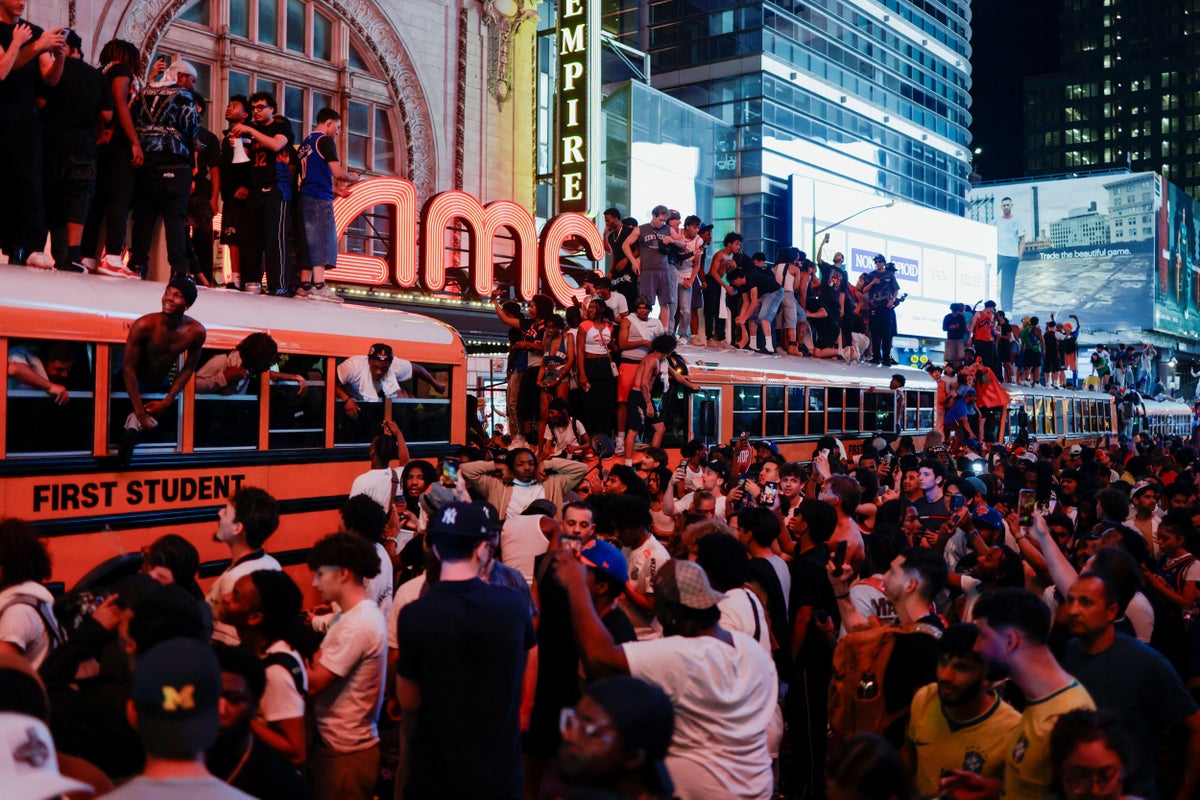
Outside the arena, Seventh Avenue was already descending into beautiful, chaotic madness. Car horns wailed in a disorganized symphony. Strangers high-fived on street corners. The ticker-tape parade would come later, along with the speeches and the commemorative magazines and the endless analysis of how the roster was built.
But in that specific room, under the rafters where the old championship banners hung lonely for over half a century, the victory wasn't about basketball strategy or cap space or shooting percentages. It was about the simple, undeniable relief of a long ache finally coming to an end. The city had its trophy, but more importantly, it had its peace.