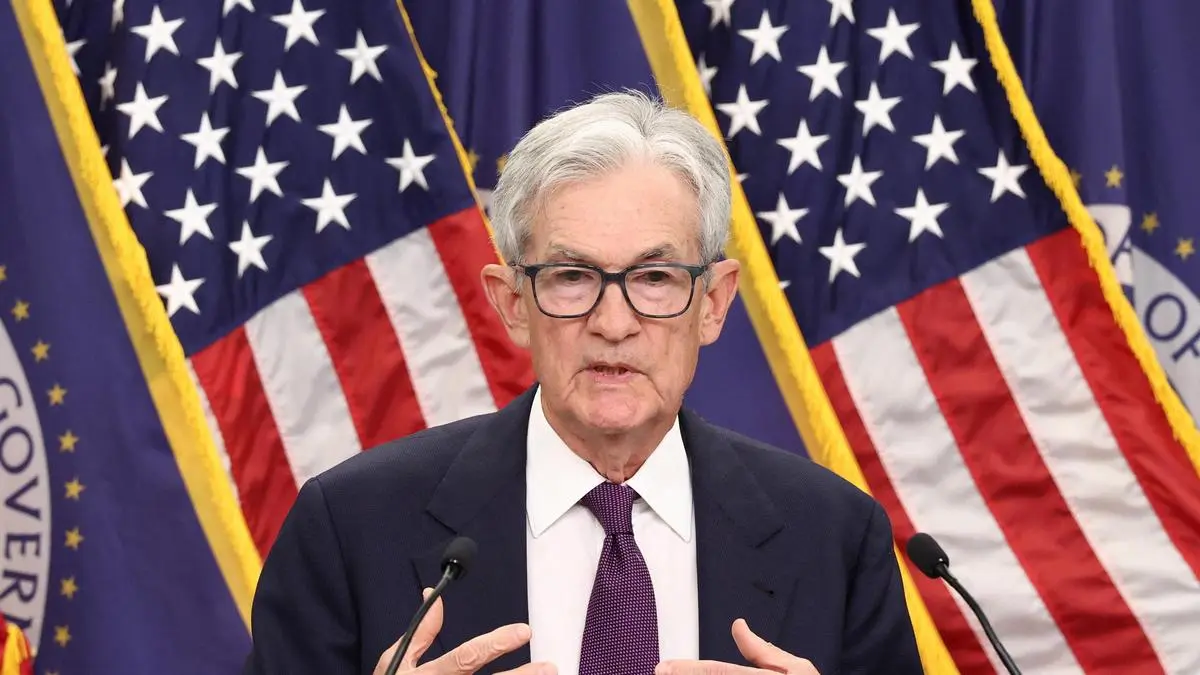
Jerome Powell stays. The board is divided. The interest rate remains frozen in a block of ice while the economy sweats.
Mainstream financial media treats this like a high-stakes political thriller. They focus on the personality clash, the "divided board," and the question of whether the Chairman will pack his bags. It is a distraction. Whether Powell stays or goes is a rounding error in the grand scheme of monetary policy.
The real story isn’t about who sits in the chair. It’s about the fact that the chair is currently bolted to the deck of a ship that has no rudder. The "divided board" narrative suggests a healthy debate between hawks and doves. In reality, it represents a total paralysis of imagination.
The Myth of the Soft Landing
The current consensus is obsessed with the "soft landing." This is the economic equivalent of trying to land a 747 on a postage stamp during a hurricane without spilling a drop of the passengers' gin and tonics.
We are told that if the Fed just holds steady long enough, inflation will vanish and growth will persist. This ignores the basic physics of the debt cycle. When you keep rates high after a decade of near-zero interest, you aren't just "cooling" the economy. You are rewriting the terms of survival for every business that relies on credit.
The "divided board" isn't arguing about the best path forward. They are arguing about how long they can ignore the structural rot in the commercial real estate market and the exploding cost of servicing sovereign debt.
I have watched fund managers burn through billions trying to time these Fed pivots. They treat Powell’s words like scripture, looking for hidden meanings in every "substantial" or "transitory." They are looking at the wrong map.
Why a Divided Board is a Ghost Story
A split vote at the Fed is usually framed as a sign of uncertainty. It’s actually a sign of irrelevance.
When the board cannot agree, they default to "wait and see." This status quo bias is the most dangerous force in finance. By holding rates steady while the underlying data starts to fracture, the Fed isn't being cautious. It is being reactive.
History shows us that the Fed is almost always late to the party. They were late to acknowledge inflation in 2021, calling it "transitory" until the house was already on fire. Now, they are late to acknowledge the slowing momentum in the labor market.
Imagine a scenario where the Fed waits for "perfect data" before cutting. By the time that data arrives, the lag effect of previous hikes will have already pushed the economy into a ditch. Data is a rearview mirror. You cannot steer a car by only looking at where you have been.
The Interest Rate Trap
Everyone asks: "When will they cut?"
The better question is: "What happens when they can't?"
The United States is currently spending more on interest payments than on its entire defense budget. This is the "Interest Rate Trap." If the Fed keeps rates high to fight inflation, the government’s borrowing costs spiral out of control, necessitating more money printing, which... creates more inflation.
If they cut rates to save the Treasury, they risk a second wave of price increases that would make 2022 look like a clearance sale.
Powell staying at the helm doesn't solve this. It just ensures the same hands stay on the controls as the plane approaches the mountain. The "divided board" is simply a group of people realizing there are no good options left.
The Labor Market Illusion
The competitor piece likely points to a "strong labor market" as the justification for holding rates. This is a surface-level reading of the data.
- Part-time vs. Full-time: We are seeing a massive shift where full-time roles are being replaced by multiple part-time gigs.
- Birth-Death Model: The government’s statistical models often overstate job creation during economic shifts because they assume new businesses are opening at a rate that doesn't reflect high-interest realities.
- The Lag: Unemployment is a lagging indicator. It is the last thing to break. Using it as a guide for current interest rate policy is like checking your pulse to see if you were shot ten minutes ago.
Stop Watching the Chair, Start Watching the Spread
If you want to know what is actually happening, stop reading the transcripts of Powell’s press conferences. They are designed to be boring. They are designed to say nothing while sounding authoritative.
Instead, look at the tightening of credit standards at regional banks. Look at the delinquency rates on auto loans and credit cards. Look at the spread between corporate bonds and Treasuries.
The Fed can control the "overnight" rate, but they cannot control the reality of risk. Risk is currently being repriced across the entire global economy, and no amount of "board unity" can stop that process.
I’ve spent years in the trenches of capital markets. The most expensive mistakes happen when investors believe the Fed has a magic wand. They don't. They have a sledgehammer and a pair of tweezers. Right now, they are trying to perform heart surgery with the sledgehammer.
The Actionable Truth
You are being told to wait for the Fed's next move. That is the advice of people who want you to stay passive while they exit their positions.
- Stop Betting on Pivots: If your business or investment strategy requires a rate cut to be profitable, you don't have a strategy. You have a prayer.
- Cash is No Longer Trash: In a world of high rates and high volatility, liquidity is the only real hedge.
- Ignore the "Unity" Narrative: A unanimous Fed is just as likely to be wrong as a divided one. Consensus is not a proxy for correctness.
The media wants you to care about whether Powell is "staying." It makes for a good headline. But the identity of the captain doesn't matter if the ship is out of fuel and the engines are on fire.
The Fed is not your friend. They are not the "adults in the room." They are a committee of academics trying to manage a $27 trillion economy using broken tools and stale data.
They held the rate. They stayed the course. And that is exactly why you should be worried.