The wind off Wellington Harbor does not negotiate. It sweeps across the grey gravel of Petone Beach, carrying the scent of salt, rotting kelp, and the cold, vast emptiness of the Southern Ocean. On a winter morning like this, the beach belongs to the dog walkers, the hardy joggers, and the gulls.
But on this particular morning, a stroller paused. Meanwhile, you can find other events here: The Anatomy of Immunization Decay: A Brutal Breakdown of Global Zero Dose Operational Failures.
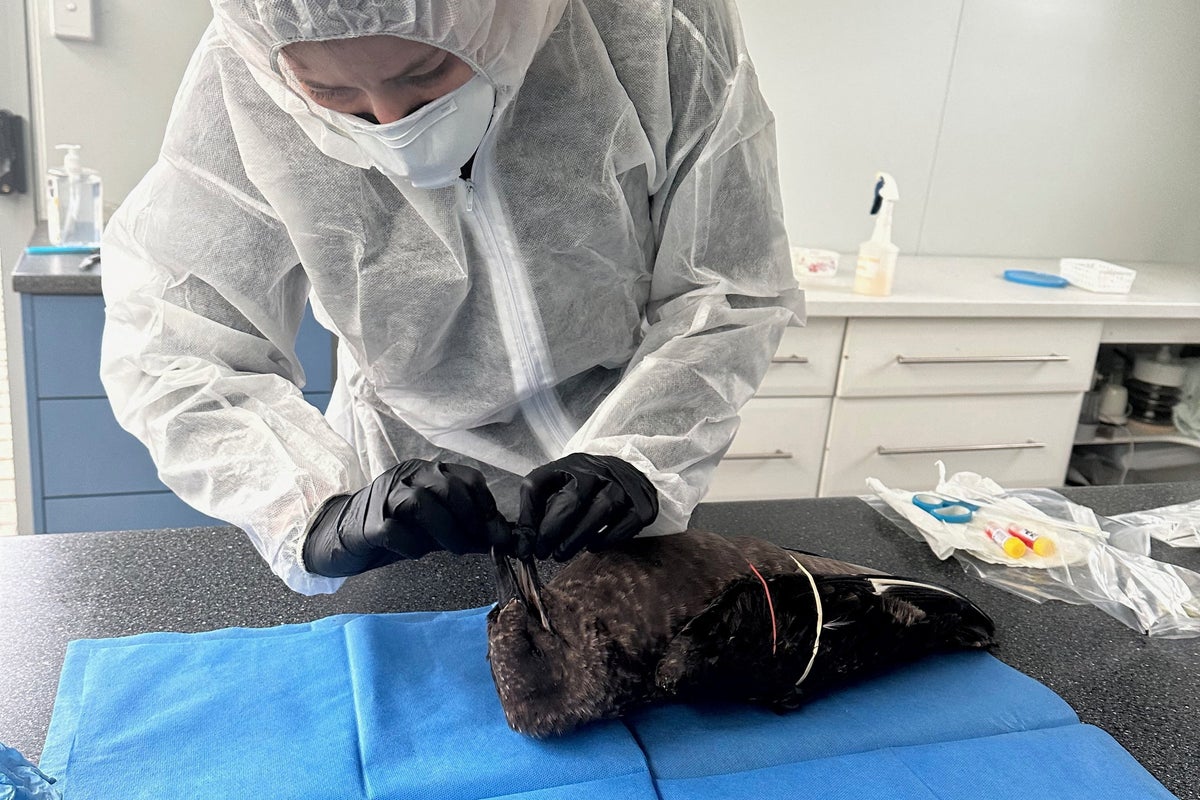
A dark, heavy shape lay near the high-water mark, half-tangled in washed-up plastic and driftwood. It was a brown skua. Usually, these birds are the pirates of the southern seas, aggressive and fiercely alive, built to survive the brutal sub-Antarctic gales. This one was entirely still. Its great, hooked beak was pressed into the wet stones.
For years, New Zealand felt like an island fortress. While the rest of the world watched avian influenza decimate chicken farms in Iowa, wipe out elephant seal pups in Argentina, and sweep through wild colonies in Europe, the rocky coastlines of Aotearoa remained quiet. The country’s geographic isolation, often a logistical headache for trade, was a shield. To see the complete picture, check out the excellent article by Healthline.
That morning, the shield cracked.
Testing of that single brown skua confirmed the presence of highly pathogenic H5N1 avian influenza, specifically the clade 2.3.4.4b. It is a string of numbers and letters that, to a virologist, reads like a fire alarm. To the public, it is a quiet, creeping anxiety.
The Weight of Isolation
To understand what this means, you have to look beyond the dry press releases from the Ministry for Primary Industries. Official statements talk about "surveillance," "low public risk," and "industry readiness." But walk into a poultry farm in the Waikato, or talk to a Department of Conservation ranger on a remote offshore island, and the language changes.
The stakes are deeply personal.
New Zealand is home to some of the rarest, most evolutionarily eccentric birds on Earth. These are creatures that evolved in a world without mammalian predators, birds that forgot how to fly because they never had to run away. The kākāpō, a giant, nocturnal parrot that smells of musty honey. The takahē, a stout, iridescent prehistoric remnant. The kakī, or black stilt, whose global population could sit comfortably in a single school bus.
If H5N1 gets into these populations, it will not just be an ecological loss. It will be an amputation of the national identity.
Imagine a ranger—let's call her Sarah—who has spent the last decade of her life on a predator-free sanctuary island. She knows the individual lineages of the birds she protects. She has spent freezing nights monitoring nests, celebrating every hatched egg as a triumph over extinction. For people like Sarah, the arrival of H5N1 is not a headline. It is a nightmare clawing at the door.
The virus does not care about conservation success stories.
When a highly pathogenic strain enters a dense colony of endangered birds, the result is often swift and catastrophic. It is why the Department of Conservation has quietly begun an extraordinary mission: vaccinating a vanguard of 300 core breeding birds from five of the nation's most endangered species. It is a desperate, delicate race against time, holding a tiny shield against a global storm.
The Firewall on the Farm
Away from the wild beaches, in the warm, humid sheds of the country's poultry farms, the tension is of a different kind.
A poultry farmer’s life is defined by margin. Margins of profit, margins of feed, and, above all, margins of biosecurity. The entrance to a modern chicken shed already resembles a cleanroom. You wash your boots. You change your clothes. You spray down truck tires.
But H5N1 is carried on the wind and on the feathers of birds that fly overhead.
If a wild duck lands on a puddle near a shed, and a farmer steps in that puddle before walking inside, the clock starts ticking. Within days, an entire flock of tens of thousands of birds can be dead or requiring euthanasia to prevent further suffering. The financial ruin is immediate; the psychological toll on the families who care for these animals is immense.
Officials are quick to reassure the public that eggs and chicken meat remain perfectly safe to eat. There is no food safety risk here. But the vulnerability of the supply chain is real. If the virus breaches the farms, the local supermarket shelves will feel the impact almost instantly.
The country's biosecurity response is built to prevent this.
For months, government agencies and the poultry industry have been running simulations, tightening protocols, and mapping out containment zones under a joint readiness program. They have rehearsed the steps. They know who to call. But there is a vast difference between a tabletop exercise in a warm Wellington office and the grim reality of culling a flock in the freezing rain.
The Human Threat is Low, But the Ghost Remains
For the average person buying a flat white in a suburban café, life goes on as normal. The Ministry of Health maintains that the risk to human health remains low. Unless you are handling dead wild birds with your bare hands, you are safe.
Yet, we all live in the shadow of the early 2020s. We know how quickly a virus can rewrite the rules of daily life. When a word like "pandemic-potential" is attached to a headline, a collective muscle memory flinches.
The fear is not entirely irrational, even if the current risk is minimal. Viruses mutate. They spill over. The H5N1 strain has already made its way into dairy cattle in North America, proving its ability to adapt to mammals. Every new host is a fresh roll of the genetic dice.
That is why the discovery of the skua on Petone Beach matters so much. It is not cause for panic, but it is an end to complacency. The moat around our island castle has been crossed.
What We Do in the Quiet
The ocean-going skua did not catch the virus in New Zealand. It brought it from the wild, trackless spaces of the southern oceans, a traveler carrying an invisible passenger. There is no way to police the skies or cordon off the sea.
Now, the defense of the country relies on the eyes of its people.
The official advice is simple: do not touch dead wildlife. If you see three or more dead birds in a group, call the hotline. Keep your dogs on leashes on the beaches. Clean your hiking boots before entering native forests.
These seem like small, almost trivial actions against a global pathogen. But they are the only tools we have.
The coming spring will bring millions of migratory birds back to these shores from all corners of the globe. They will land in the estuaries, on the lake shores, and along the wild beaches. We cannot stop them from landing, nor should we want to.
Instead, we watch the shorelines. We look for the slumped feather, the quietness where there should be noise, and we wait to see if the defenses we built in the quiet years will hold when the storm finally arrives.