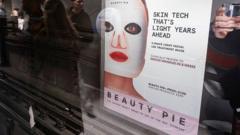
The multi-million-pound industry built around at-home LED face masks faces a reckoning as regulators dismantle the pseudo-medical claims used to sell them. The UK Advertising Standards Authority recently executed a sweeping enforcement action against brands including Beauty Pie, Silk'n, and Project E Beauty. The watchdogs banned high-profile marketing campaigns for weaponizing unsubstantiated scientific language and making unauthorized medical promises. These consumer electronics are widely promoted on social media to fix fine lines, active acne, and rosacea. However, they are legally classified as simple cosmetic novelties, entirely lacking the regulatory clearance or rigorous engineering required of medical devices.
For years, the direct-to-consumer beauty sector operated under an unwritten rule. That rule assumed if you draped enough clinical-sounding vocabulary over a product, consumers would buy it and regulators would look the other way. The illusion crumbled. By using automated software to comb through digital storefronts, watchdogs caught brands publishing deceptive data, misleading before-and-after imagery, and unauthorized user reviews. The modern wellness market relies on a fundamental deception: convincing everyday buyers that a weak, battery-powered silicone mask can replicate the high-intensity light therapy delivered in a dermatologist's clinic. For an alternative look, check out: this related article.
The Shell Game of Cosmetic Versus Medical Classifications
The structural flaw in the home beauty tech boom sits within a regulatory loophole. To sell a true medical device in the UK, a manufacturer must register with the Medicines and Healthcare products Regulatory Agency. This requires submitting massive portfolios of raw laboratory data, undergoing independent quality audits, and securing a formal conformity marking. The process takes years and costs a fortune.
To bypass this hurdle, companies deliberately launch their products as purely cosmetic tools. This designation frees them from rigorous oversight, but it binds them to a strict legal boundary. They are forbidden from claiming their products can cure, treat, or prevent recognized medical conditions. Related reporting regarding this has been shared by Financial Times.
The industry systematically ignored this boundary. Brands marketed consumer hardware using aggressive, therapeutic promises.
- Project E Beauty published explicit advertisements boasting an "83% improvement in acne lesions in four weeks" and promised its hardware would "heal acne."
- Silk'n attempted to skirt the law by using the phrase "acne-related redness," arguing the term merely described a cosmetic surface issue. The regulator rejected the defense, confirming that any phrase referencing acne inherently constitutes a medical claim.
- Beautaholics claimed its consumer devices offered targeted solutions for rosacea, a chronic vascular condition that requires professional medical diagnosis and prescription management.
The law does not care if a brand uses a third-party manufacturer or copies someone else's technology. If an advertisement promises to alter the biological state of a diagnosed disease, the product must be legally certified to do so. None of the penalized consumer masks held that certification.
The Illusion of Clinical Proof
When cornered by regulators, beauty tech brands frequently point to proprietary studies as proof of their integrity. Beauty Pie attempted to defend its "clinically proven to reduce wrinkles" campaign by presenting data from a four-week study involving a tiny pool of just 28 individuals.
A sample size that small holds virtually zero statistical weight in real clinical science. In proper pharmaceutical or medical device testing, a sample size must span hundreds of diverse participants. It requires strict double-blind controls to account for variables like environmental humidity, diet, and concurrent skincare routines.
+---------------------------------+---------------------------------+
| Medical-Grade Clinical Trials   | Typical At-Home Beauty Studies  |
+---------------------------------+---------------------------------+
| * Hundreds of human subjects    | * Fewer than 30 participants    |
| * Double-blind, controlled setup| * No control group utilized     |
| * Independent peer review       | * Paid for by the brand itself  |
| * Measures objective pathology  | * Relies on subject perception  |
+---------------------------------+---------------------------------+
| Result: Scientific validation   | Result: Marketing material      |
+---------------------------------+---------------------------------+
Furthermore, the Beauty Pie study required participants to apply a specialized hydrogel sheet mask and use deep-cleansing pads before turning on the light. This introduces an obvious scientific variable. It becomes impossible to determine whether the slight reduction in fine lines was caused by the light wavelengths or by simple, temporary skin hydration from the topical fluids.
The consumer trick relies heavily on customer testimonials. Brands frequently argue that they are not making medical claims; they are merely sharing a quote from a satisfied buyer who said the mask cured their breakouts. The regulatory reality is unyielding. A business cannot use consumer reviews to bypass marketing laws. If a user-generated comment makes an unapproved medical claim, pasting it onto a brand's social media page instantly transforms it into illegal corporate advertising.
The Physics Problem In Your Bedroom
Beyond the legal violations lies a stark problem of physics. Light-emitting diode therapy operates on a principle known as photobiomodulation. Specific wavelengths of light—usually blue light at roughly 415 nanometers to target bacteria, or red light at 633 nanometers to stimulate fibroblasts—must penetrate the tissue to spark a cellular response.
Achieving this response requires adequate irradiance, which is the sheer power of the light hitting a specific surface area over time.
$$\text{Total Energy (Joules)} = \text{Power Output (Watts)} \times \text{Time (Seconds)}$$
Clinical machines plugged into industrial wall outlets deliver dense, highly calibrated energy directly to the skin. In contrast, at-home masks are lightweight, flexible, and powered by small rechargeable lithium batteries or USB cables. They simply cannot generate the necessary power output without overheating or draining the battery in minutes.
To keep these masks safe for unsupervised home use, manufacturers deliberately engineer them with low power outputs. They are too weak to cause accidental eye damage or skin burns. However, by making them completely foolproof, the brands strip away the physical energy required to trigger significant cellular repair. Consumers are left wearing an expensive, glowing piece of face plastic that delivers a fraction of the energy promised by the overarching scientific literature.
The AI Net Closing In on Deceptive Marketing
For years, enforcement agencies relied on slow, manual investigations triggered by consumer complaints. This allowed beauty brands to run deceptive digital campaigns for months before facing any consequences. The landscape changed completely. Watchdogs now deploy active, automated monitoring software to scan thousands of paid Meta advertisements, TikTok videos, and e-commerce websites simultaneously.
This software flags banned keywords like "anti-acne," "psoriasis," "rosacea," and "clinically proven" the moment they go live. It can analyze before-and-after images to spot pixel-level manipulations or illegal medical implications.
The sudden rush of ad bans shows that the era of quiet non-compliance is over. Brands can no longer hide behind fleeting social media stories or bury misleading data in the footers of their websites. The technology used to sell these products is now being turned against the companies to enforce compliance.
The New Rules of Engagement for Skincare Tech
Any business wanting to sell a light-therapy device without facing legal action must immediately scrub its vocabulary of clinical pretense. If a device is registered as a cosmetic tool, it must be marketed using strictly cosmetic terms.
ILLEGAL MEDICAL CLAIMS           PERMISSIBLE COSMETIC CLAIMS
----------------------           ---------------------------
"Heals chronic acne"      --->   "Improves skin radiance"
"Reduces rosacea redness" --->   "Soothes the appearance of blemishes"
"Clinically eliminates"   --->   "Promotes a healthier-looking glow"
This shift forces a deeper problem for the beauty industry. When a brand is legally stripped of its medical buzzwords, it must sell the product based on what it actually is: a costly, slow-acting tool for minor skin conditioning. The entire economic model of the home beauty tech boom relies on premium pricing justified by medical-sounding promises. If a brand can only promise a "brighter complexion," it becomes incredibly difficult to convince a shopper to spend hundreds of pounds on a plastic mask.
The crackdown will inevitably filter out brands built entirely on cheap manufacturing and aggressive ad spending. Companies that imported white-label masks from overseas factories, slapped a luxury logo on the box, and copied clinical buzzwords onto social media are seeing their business models collapse under the weight of regulatory enforcement. Survival in this market now demands a choice. Brands must either invest millions to pass genuine medical device certification or accept that their products are basic grooming accessories that belong in the same category as a standard face roller.
The era of selling unverified medical tech as a casual luxury item has ended. Consumers are growing wary of the endless stream of scientific buzzwords, and regulators possess the automated tools needed to punish deceptive claims instantly. True clinical results cannot be engineered through clever copywriting or tiny, biased internal studies. If a beauty brand wants to claim its hardware can alter human biology, it needs to stop acting like a social media startup and start operating like a pharmaceutical manufacturer.