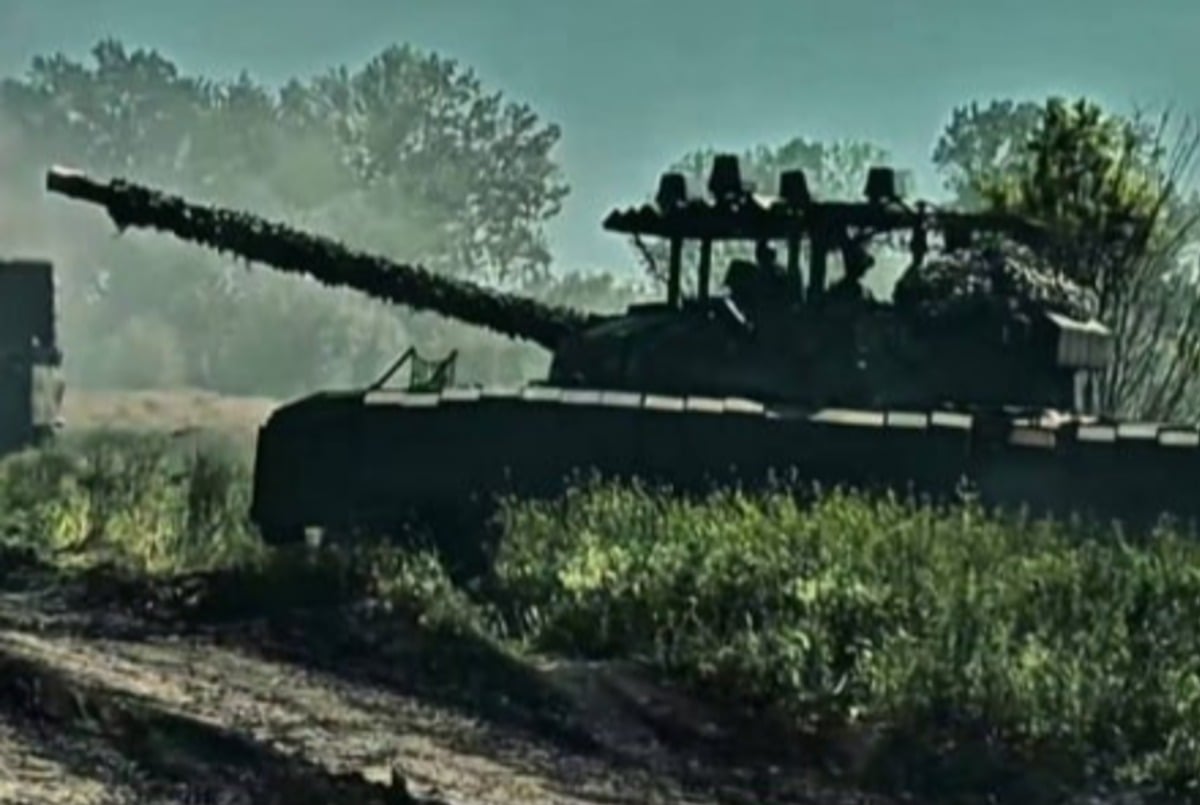
Vulnerability Dynamics in Asymmetric Anti-Armor Warfare
The tactical defeat of improvised armored additions—commonly categorized as cope cages, metal mesh, or heavy cope sheds—on the modern battlefield highlights a fundamental failure in reactive military engineering. The failure of these protective structures during initial combat deployments exposes the structural gap between static mechanical armor design and agile, precision-guided threat vectors. First-Person View (FPV) loitering munitions operate within an asymmetric cost and target-acquisition curve that renders traditional passive countermeasures functionally obsolete unless paired with active non-kinetic or electronic countermeasures.
Understanding why these field-fitted anti-drone modifications fail requires evaluating three core variables: kinetic impact mitigation, field-of-view restriction, and mobility degradation.
+-----------------------------------------------------------------------+
|                       FPV ATTACK VECTOR SPECTRUM                      |
+-----------------------------------------------------------------------+
|                                                                       |
|   1. Direct Kinetic Impact  --> Detonates on Passive Mesh             |
|   2. Standoff Jet Formation --> Shaped-Charge Stream Penetrates Cage  |
|   3. Gap Exploitation       --> Micro-Drones Circumvent Coverage      |
|                                                                       |
+-----------------------------------------------------------------------+
The Mechanics of Shaped-Charge Defeat Mechanisms
The primary intent behind welded steel cages or mesh screens is to disrupt the standoff distance of High-Explosive Anti-Tank (HEAT) warheads or prevent the contact fuze from initiating against the primary armor plate. When an FPV drone equipped with a PG-7VL warhead strikes a flexible or rigid steel barrier, two physical outcomes determine survival:
- Short-Circuiting the Fuze: If the aluminum nose cone of a crushing-fuze warhead squeezes between steel slats without making electrical contact, the warhead fails to detonate.
- Standoff Disruption: If the warhead detonates on the cage, the copper jet formed by the shaped charge must travel across open air before striking the main armor hull.
The physical limitation of this approach lies in the jet-formation dynamics of modern HEAT warheads. A standard PG-7VL shaped charge maintains dangerous armor penetration capabilities even across a standoff distance of 1 to 2 meters. A passive mesh cage welded 30 to 50 centimeters off the turret face fails to disrupt the hypervelocity copper jet sufficiently. The jet retains enough coherent mass and kinetic force to pierce several hundred millimeters of rolled homogeneous armor (RHA) equivalency beneath the cage.
Systemic Trade-Offs in Vehicle Mobility and Awareness
Integrating full-coverage metal hulls or heavy mesh structures—often termed "turtle armor"—introduces immediate operational trade-offs that diminish the platform's combat efficiency.
Center of Gravity and Weight Distribution
Adding hundreds of kilograms of structural steel to the upper periphery of an armored fighting vehicle shifts its center of gravity upward. This shift degrades high-speed stability, increases stress on the suspension units, and accelerates track or tire fatigue during cross-country maneuvers.
Situational Awareness Degradation
Combat awareness relies on unhindered optical and electro-optical sightlines. Enclosing a turret inside a rigid metal frame or slat superstructure blocks the primary commander Sights, thermal imagers, and peripheral vision blocks. This creates blind arcs exceeding 60 degrees. FPV operators exploit these blind spots by approaching the vehicle from angles where internal crew optics cannot track incoming threats.
Turret Rotation and Fire-Control Constraints
Heavy cage structures often require fixing the turret to the hull or severely limiting its arc of traverse. A vehicle incapable of rotating its main armament rapidly loses the ability to engage multiple targets across different sectors, transforming a mobile fire-support platform into a restricted assault gun.
The Cost-To-Target Asymmetric Ratio
Passive physical modifications fail fundamentally because they attempt to solve a software-driven, maneuvering threat with a static structural barrier.
FPV Unit Cost: ~$500  <--->  Armored Vehicle Cost: $2,000,000+
Modifications: Steel Slat/Cages (~$2,000)
Net Tactical Result: High-Cost Target Remains Vulnerable to Saturation Attacks
Because FPV platforms cost two to three orders of magnitude less than the armored platforms they target, an attacker can launch multiple munitions sequentially against a single vehicle. The first strike neutralizes the external cage structure or blows away the outer mesh; subsequent strikes target the exposed primary armor, engine bay, or turret ring.
Integration Deficits with Electronic Warfare Platforms
Passive armor modifications cannot act as a standalone defense. A sustainable survival model requires a layered defense strategy comprising three distinct tiers:
- Detection Layer: Radio Frequency (RF) direction finders and acoustic sensors that detect incoming control signals and motor frequencies prior to terminal strike alignment.
- Soft-Kill Layer: Vehicle-mounted Electronic Warfare (EW) jammers operating across broad frequency bands (2.4 GHz, 5.8 GHz, and non-standard control frequencies like 400-900 MHz) to disrupt the video transmission or control link.
- Hard-Kill Layer: Explosive Reactive Armor (ERA) integrated underneath targeted standoff mesh, combined with automated remote weapon stations capable of tracking micro-air vehicles.
When field forces rely exclusively on welded steel structures without active jammer coverage, the adversary simply adjusts the attack vector or changes control frequencies to bypass passive obstacles.
Strategic Realignment for Modern Armored Doctrine
Military procurement and battlefield field-modifications must move away from heavy static enclosures. Effective force protection demands modular, lightweight standoff systems integrated directly into the vehicle's electronic architecture. Replacing solid steel cages with flexible, high-tensile synthetic netting reduces structural weight while retaining standoff efficiency. Furthermore, coupling kinetic protection directly with omnidirectional EW jamming systems ensures that the drone loses control authority before reaching its terminal approach phase. Continued reliance on un-engineered field welding ensures persistent operational failure against precision loitering threats.


