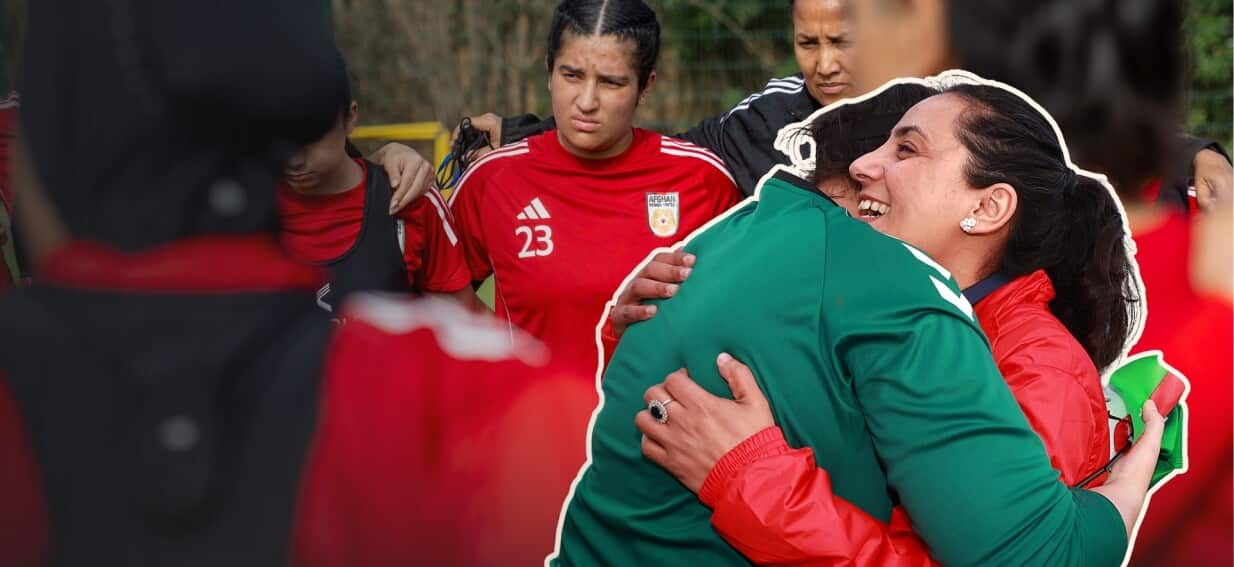
The pitch in Melbourne feels a world away from the dusty fields of Kabul. When the Afghan women's national football team takes the grass now, they aren't just playing for a trophy. They’re fighting for a country that officially says they don't exist. FIFA hasn't recognized them yet. Their own government wants them erased. But these women are still here. They’re winning.
It's been years since the Taliban retook power in August 2021. One of their first moves was banning women from sports. It wasn't just about football. It was about visibility. A woman on a pitch is a woman with agency. To the regime, that’s a threat. Most of the squad fled in a harrowing evacuation, aided by former athletes and international advocates. Today, they live in Australia, training under the banner of Melbourne Victory. They carry the name of a nation that has turned its back on them.
The Struggle for Recognition Beyond the Pitch
Football isn't just a game for these athletes. It’s a political statement. Every time they lace up their boots, they defy the idea that Afghan women should be confined to their homes. Yet, the governing bodies of world football have been slow to catch up. FIFA remains in a complicated spot. They generally recognize member associations based on the governing body within the country. Since the Afghan Football Federation is now under Taliban influence, the exiled team sits in a legal limbo.
Khalida Popal, the team’s founder and a former captain, has been the loudest voice in this fight. She isn't just looking for a place to play. She wants the world to acknowledge that the "official" federation in Kabul is a sham. You can't have a national football program if you exclude half the population. That’s not sports; that’s discrimination.
The players don't care about the red tape as much as you'd think. They focus on the ball. They focus on the girls back home who watch their highlights on smuggled smartphones. When these women score, it isn't just a point on the scoreboard. It’s a signal to every girl in Kabul or Herat that the dream isn't dead.
Life in Australia and the Weight of the Jersey
Transitioning to life in Melbourne wasn't easy. Imagine losing your home, your family, and your identity overnight. Then, imagine being told you have to represent your people while your people are suffering. That’s a lot of pressure for a twenty-something athlete.
The Melbourne Victory FC partnership has been a lifeline. They provide the infrastructure, the coaching, and the kit. But the badge on that kit is what matters. The players still wear the Afghan colors. They sing the old anthem. It’s a way of saying "we are the real Afghanistan."
The training sessions are intense. There’s a grit here you don't see in typical professional clubs. Some players work day jobs or study while trying to maintain elite fitness. They’re playing catch-up. Years of disrupted training in a war zone took a toll on their physical development. But their mental toughness? That’s off the charts. They've outrun the Taliban. A 90-minute match is nothing compared to that.
Why FIFA's Silence is a Problem
FIFA talks a lot about "Football Unites the World." It’s a great marketing slogan. In practice, it’s messy. By not formally recognizing the exiled team, FIFA is essentially allowing the Taliban to dictate who represents Afghanistan.
Critics argue that FIFA’s statutes require member associations to be independent of government interference. The current federation in Kabul is the definition of government-controlled. If FIFA holds to its own rules, they should have suspended the Afghan Football Federation long ago. Instead, we have this weird middle ground.
- The exiled team plays friendlies.
- They participate in local Australian competitions.
- They lobby international human rights groups.
- They wait for a seat at the table.
This isn't just a "women's issue." It’s a governance issue. If a regime can ban an entire gender from a sport and still keep its seat in the global community, what does that say about the integrity of the sport? Honestly, it’s a bad look for everyone involved.
The Grassroots Impact of Exiled Athletes
We often focus on the big matches, but the real work happens in the communities. These players have become mentors. They’re working with refugees. They’re showing young girls that sports can be a tool for liberation.
In Kabul, girls are reportedly playing football in secret basements. They use rolled-up socks as balls. They keep the lights low so the neighbors don't hear. They do this because they saw the national team do it first. The visibility of the exiled team gives those girls a reason to keep moving. It’s a bridge between the life they have and the life they want.
It's also about changing the narrative of the "refugee." These aren't victims waiting for a handout. These are elite athletes who were forced out of their homes. They’re contributing to the Australian sports scene. They’re bringing a unique style of play and a fierce level of competition.
Building a Future Without a Home Base
What happens next? The goal is a full return to the international stage. That means World Cup qualifiers. That means Asian Cup appearances.
The path is blocked by bureaucracy, but the momentum is shifting. More football legends are speaking out. Human rights lawyers are building cases. The players are getting better every single day. They’re no longer just the "refugee team." They’re a squad with tactical depth and genuine talent.
You can support this movement without being a politician. Follow their matches. Share their stories. Pressure sponsors to look at the human side of the game. The more eyes there are on the Afghan women’s national team, the harder it is for FIFA to look away.
If you want to see what true courage looks like, watch their next match. You’ll see players who aren't just running for the ball. They’re running for the right to exist. They’ve already won the biggest fight. The rest is just football.
Start by following the updates from Malala Fund or Human Rights Watch, who have been documenting the legal battle for the team’s recognition. Support local clubs that offer scholarships to displaced athletes. Change happens when the noise becomes too loud to ignore.