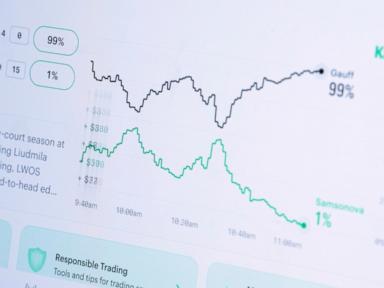
The moral panic over political betting is built on a fundamental misunderstanding of human incentives. Every mainstream pundit and local election official is currently hyperventilating over platforms like Kalshi and Polymarket, claiming that skyrocketing wagers on midterm outcomes will warp democracy, invite corruption, and mislead voters. State administrators are scrambling to pass emergency bans, treating financial contracts like digital snake oil that threatens the sacred integrity of the ballot box.
They have it completely backwards.
Prediction markets do not subvert elections. They expose the absolute bankruptcy of modern polling and media narratives. For decades, I have watched political campaigns burn hundreds of millions of dollars on proprietary focus groups and heavily skewed public opinion polls that exist merely to massage the egos of candidates or manipulate donors. When capital is on the line, the fantasy ends. Real money creates real discipline.
The lazy consensus dominating the press is that wealthy partisans can easily manipulate these order books to manufacture fake front-runners. Critics love to cite behavioral theories suggesting that a massive, well-timed trade can trigger a bandwagon effect, convincing gullible voters to abandon a lagging candidate. This argument treats everyday citizens like toddlers staring at shiny objects, easily swayed by an arbitrary price ticker on an app.
It ignores the core mechanics of liquidity.
Imagine a scenario where a billionaire partisan decides to burn a cool million dollars artificially inflating the odds for an underdog candidate on a regulated exchange. In an equity market or an amateur betting pool, that might cause temporary chaos. In a deep prediction market, that transaction acts as an immediate dinner bell for professional arbitrageurs and counter-party traders. When someone misprices an asset out of partisan delusion, cold-blooded capital descends on that bad trade to vacuum up the easy profit. The market corrects itself faster than any cable news network can issue a retraction.
State officials whining about unlicensed casinos miss the point entirely. They are terrified of a metric they cannot control. Traditional polls operate with zero skin in the game. A pollster whose methodology misses a major shift by ten points faces zero financial penalties; they simply issue another PDF report next Tuesday and collect their retainers. A trader who misjudges a Senate race loses their principal. Which of those two mechanisms deserves your trust?
Naturally, the system has vulnerabilities. Insider trading remains an ongoing battleground, as proven by platforms enforcing suspensions and fines against congressional candidates trying to bet on their own races. Regulations must adapt to police bad actors and prevent conflicts of interest. Pretending that banning these platforms will restore some pristine, uncorrupted civic innocence is pure delusion. State-level restrictions only push the volume offshore or into unregulated gray markets where transparency vanishes.
Instead of treating financial forecasting as a threat to democracy, watch how these exchanges strip away the spin. When the establishment narrative says a race is deadlocked, but millions of dollars are moving decisively in the opposite direction, trust the balance sheet over the press release.
Election-season trading on prediction markets surging and states moving to ban these platforms provides a quick look at why state officials are panicking over these platforms.
http://googleusercontent.com/youtube_content/1


