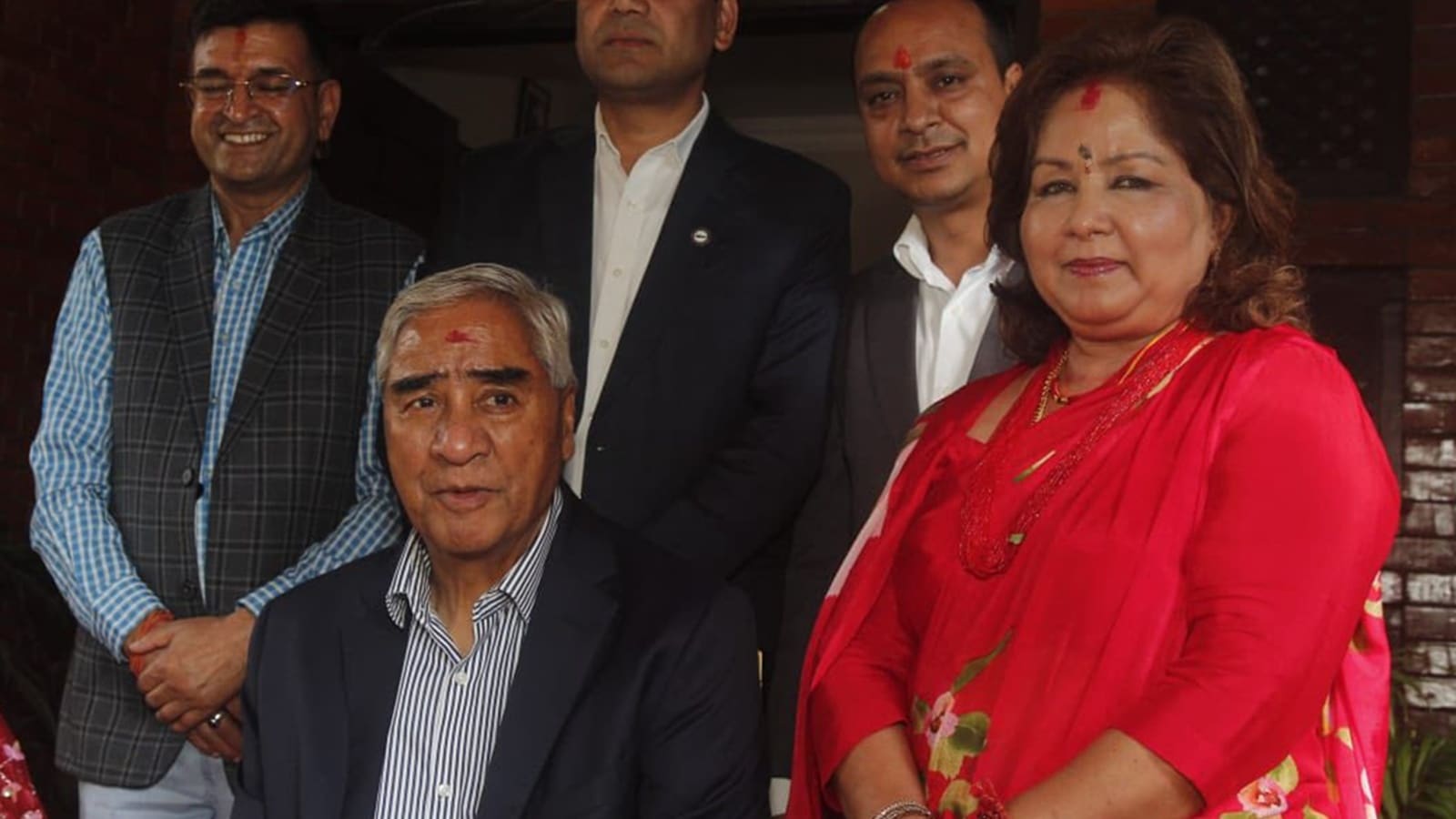
Rumors about the government preparing to arrest former Prime Minister Sher Bahadur Deuba and his wife, Arzu Rana Deuba, aren't just background noise anymore. They've become the focal point of Nepal’s political survival. If you've been following the shifting sands in Kathmandu, you know this isn't just about a single legal case. It's about a high-stakes power play where the line between justice and political vendetta has blurred beyond recognition.
For weeks, the corridors of Singha Durbar have buzzed with talk of the Bhutanese refugee scam and other corruption probes. These aren't just minor files. They're heavy, career-ending dossiers. The current administration finds itself in a tight spot where appearing "tough on corruption" is the only currency left to buy public trust. But moving against a figure like Deuba, a man who has held the premiership five times, is a different beast entirely. It’s a move that could either stabilize the current government or blow the entire coalition to pieces.
Why the Deuba Arrest Talk Is Heating Up Right Now
Political cycles in Nepal usually follow a predictable pattern of backroom deals and sudden betrayals. However, the pressure from the streets and social media has changed the math. The public isn't satisfied with small fish. They want the big names. When you look at the investigation into the fake Bhutanese refugee scandal, the trail keeps circling back to the highest echelons of the Nepali Congress.
Arzu Rana Deuba has been a lightning rod for criticism for years. Her influence within the party and her alleged involvement in various administrative decisions make her a prime target for any government trying to prove its "clean" credentials. If the Ministry of Home Affairs moves forward with an arrest, they're not just executing a warrant. They're declaring war on the largest party in Parliament.
It’s about leverage. The Prime Minister knows that keeping the threat of arrest hanging over the Deuba family is often more effective than the arrest itself. It keeps the Nepali Congress compliant. But once you pull that trigger, the gloves come off.
The Fake Bhutanese Refugee Scandal and the Smoking Gun
We can't talk about these arrest threats without looking at the details of the scam that shook the nation. This wasn't some petty theft. It was a sophisticated operation where Nepali citizens were allegedly promised resettlement in the United States under the guise of being Bhutanese refugees.
The investigation has already snagged former ministers and high-ranking bureaucrats. People like Top Bahadur Rayamajhi and Bal Krishna Khand didn't just fall into this by accident. The sheer scale of the operation suggests that it couldn't have happened without "top-floor" clearance. This is where the names of Sher Bahadur Deuba and Arzu Rana keep popping up in public discourse and leaked statements.
The police have been under immense pressure to follow the money. If bank trails or witness testimonies directly link the Deuba residence at Budhanilkantha to the kickbacks, the government might feel its hand is forced. They can't ignore the evidence without looking like accomplices. Yet, the legal threshold for arresting a former PM is incredibly high. You don't just walk in with handcuffs based on hearsay. You need ironclad proof that can withstand a grueling court battle and international scrutiny.
How Political Alliances Dictate Justice
In a perfect world, the law would be blind. In Nepal, the law often wears a blindfold but keeps its ears wide open to the whispers of party chairs. The current government’s stability depends on a fragile numbers game in the House of Representatives.
If the Maoist-led government pushes too hard against Deuba, the Nepali Congress could easily pull support or strike a deal with the UML to form a new majority. This is the "get out of jail free" card that Deuba has played for decades. He’s a master of the numbers. He knows that his survival is tied to the survival of the government itself.
Honestly, it’s a bit of a stalemate. The Home Minister wants the optics of being a crusader. The Prime Minister wants to stay in power. Deuba wants to protect his legacy and his family. Something has to give. We've seen this movie before where high-profile arrests are teased, only for a "gentleman's agreement" to be reached behind closed doors at midnight.
The Role of Arzu Rana Deuba in the Power Structure
Arzu Rana isn't just the wife of a former PM. She’s a powerful political actor in her own right. Her role as a Member of Parliament and her seat on influential committees give her a layer of protection, but also make her a bigger target for the opposition.
Critics argue that her presence in the party has centralized power within a small circle. This internal friction within the Nepali Congress is important. Not everyone in the party is eager to jump on a grenade for the Deuba family. There’s a younger generation of leaders who see this as an opportunity to "reboot" the party. If the government senses that the Congress rank-and-file won't protest too loudly, the risk of arresting her becomes much lower.
What Happens if the Government Actually Pulls the Trigger
Imagine the scene. A convoy of police vehicles heading toward Budhanilkantha. It would be a seismic event in South Asian politics. An arrest would trigger immediate protests. The streets of Kathmandu would be flooded with party loyalists.
But there’s a flip side. For the average person struggling with inflation and a stagnant economy, seeing the "untouchables" held accountable might actually boost faith in the system. It’s a high-risk, high-reward strategy for the current administration.
The legal proceedings would be a circus. We'd see months of bail hearings, "sudden illnesses" requiring hospital stays instead of jail cells, and a media frenzy that would drown out every other issue in the country. The government needs to be sure they can get a conviction. An arrest followed by an acquittal due to "lack of evidence" would be a political suicide mission for the Prime Minister.
The International Pressure Factor
Nepal doesn't exist in a vacuum. Donor agencies and international partners like the UN and the US have been watching the refugee scam closely. Since it involves the fraudulent use of resettlement programs, it has international legal implications.
Western embassies have been quiet but firm about the need for a transparent investigation. They don't care about the internal politics of Kathmandu as much as they care about the integrity of their own immigration systems. This international pressure is likely what’s preventing the government from simply burying the files. They have to show progress to keep the aid flowing and maintain their global standing.
Managing the Fallout and What to Watch Next
Don't expect a quiet resolution. The next few weeks will be defined by "secret meetings" and public denials. If you see the Prime Minister meeting with opposition leaders more frequently, it’s a sign that they're trying to negotiate a way out that doesn't involve jail time.
The most telling sign will be the movement of the police leadership. If the officers leading the investigation are suddenly transferred or "promoted" to irrelevant posts, you’ll know the deal has been struck. On the other hand, if the court starts issuing new summons for aides and associates of the Deuba family, the noose is tightening.
Keep a close eye on the parliamentary sessions. Watch for the tone of the speeches from the Nepali Congress. If they start attacking the government’s overall performance instead of defending the refugee case, they're pivoting. They’re trying to change the subject before the cuffs come out.
The reality is that "preparing to arrest" is a political statement. Actually arresting is a revolutionary act. In Nepal’s current climate, the government is playing with fire, and everyone is waiting to see who gets burned first. You should watch the Home Ministry's daily briefings; any shift in language regarding "comprehensive investigations" usually precedes a major move. Don't fall for the distraction of minor arrests—the only thing that matters right now is whether the top of the pyramid is finally within reach of the law.
Get ready for a bumpy ride in the coming days. The political stability you see on the surface is paper-thin. When the state decides to go after its former masters, nothing is off the table. Stay skeptical of "official" denials and look at the actions of the central committee members instead. That's where the real story is hidden.



