You’ve probably seen the wild headlines floating around social media over the last few days. A prominent blogger drops a massive accusation, the internet loses its mind, and suddenly everyone thinks Elon Musk was held at gunpoint by a Chinese military operative dressed as a waitress.
It sounds like a bad Hollywood script. But when Donald Trump flew to Beijing for his high-stakes summit with Xi Jinping, he brought along a massive entourage of America's tech elite. Tim Cook, Jensen Huang, and Elon Musk all hitched a ride on Air Force One. With that much intellectual property sitting in a single banquet hall, eyes were bound to wander.
Then came the viral claims from independent blogger Jennifer Zeng. She blasted out a theory that Beijing used active-duty military personnel disguised as servers to spy on Musk and other executives during a state dinner. Let’s break down what actually happened, why the rumors went viral, and the reality of doing business in China.
The Viral Claim Behind the Banquet Tables
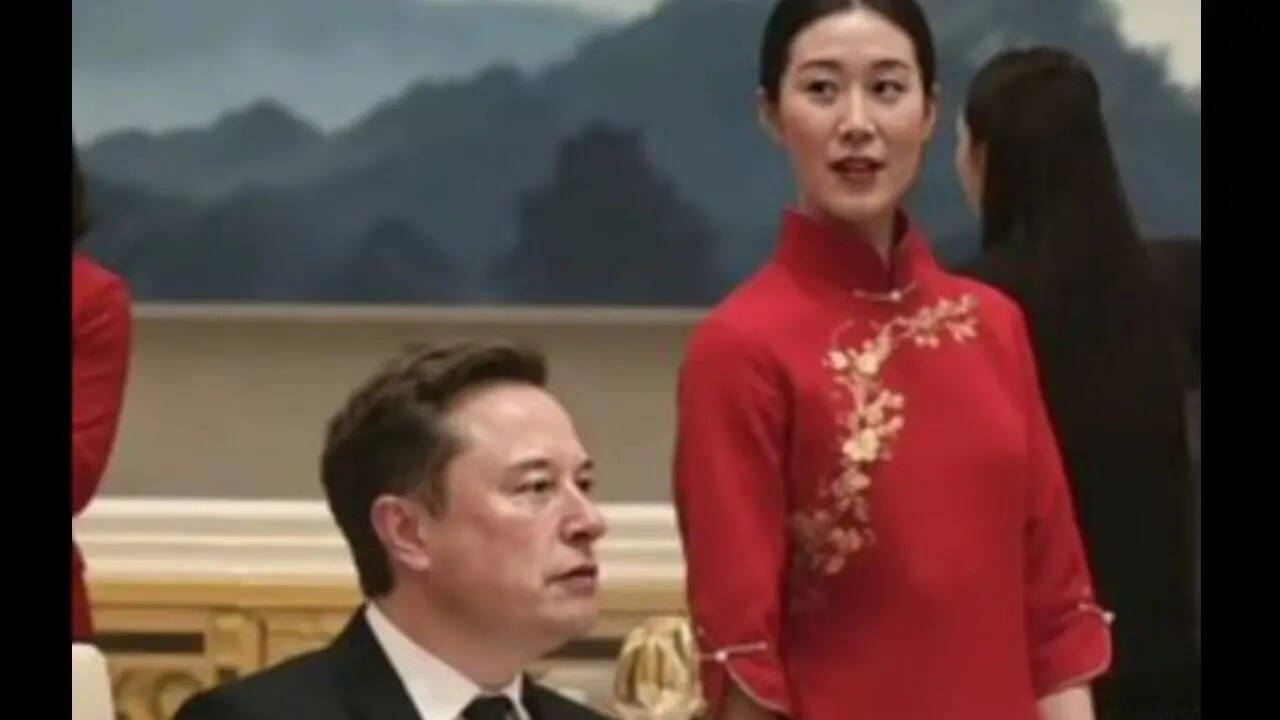
Zeng pointed directly at the staff serving the American delegation. She claimed that a male server standing right behind Musk was actually a highly decorated active-duty officer in the Chinese military.
It gets weirder. Zeng identified one of the female servers as "Major Cheng Cheng," describing her as an elite battalion commander who literally wrote the book on Chinese military ceremonies. She even went as far as tweeting that she suspected the woman had a weapon concealed under her red dress.
Images of these servers in uniform began circulating rapidly across social media platforms like X. If you look at it on the surface, it makes for incredible clickbait. The world's richest man, a room full of trillion-dollar tech secrets, and undercover military operatives hiding weapons under evening wear.
Separation of Internet Fiction From Beijing Reality
Let’s be real for a second. China doesn't need to put a fake mustache on a military major and hand them a soup ladle to spy on Elon Musk.
The Chinese Communist Party runs one of the most sophisticated surveillance states on Earth. If they want to know what a CEO is discussing, they aren't relying on a waitress eavesdropping over the clatter of champagne glasses. They have electronic surveillance, signal intelligence, and cybersecurity operations that can compromise hardware before a delegate even steps off the plane.
State banquets in Zhongnanhai are hyper-vetted, elite diplomatic events. The staff working these rooms are heavily screened, intensely trained, and often belong to specialized state hospitality or security regiments. Finding out that someone serving food at a top-tier communist party function has a military or state-security background isn't a shocking revelation. It’s standard operating procedure for authoritarian regimes.
Even Trump shrugged off the general paranoia surrounding the summit's security, bluntly telling reporters that the United States engages in its own espionage operations. The security game is mutual, expected, and continuous.
Why Tech CEOs Gambled on the Trip Anyway
You might wonder why Musk, Cook, and Huang would willingly walk into an espionage hornets' nest. The answer is simple. The business stakes are too high to stay home.
Consider what these executives are trying to balance.
- Apple’s Manufacturing Pivot: Tim Cook is wrapping up his tenure as CEO, planning to step down in September. He spent years mastering the delicate art of balancing Trump’s tariffs with Apple's massive Chinese supply chain. Cook needed this trip to smooth over Apple's future investments and manufacturing transitions.
- Nvidia’s AI Dilemma: Jensen Huang has a massive headache regarding artificial intelligence. The U.S. Commerce Department previously cleared the export of Nvidia's powerful H200 AI chips to China, but Chinese buyers have faced major regulatory roadblocks from Beijing's own government. Huang needed face time to unlock that bottleneck.
- Tesla’s Core Reliance: Tesla relies heavily on Chinese factory output and battery components. Musk is completely entangled in the Chinese economic ecosystem, making his presence a necessity, despite the obvious intelligence risks.
National security analysts have pointed out the massive friction here. These tech giants are essentially walking a tightrope between American national security interests and their own corporate bottom lines. They know the risks. Their security teams know the risks. They take the meetings anyway because billions of dollars are on the line.
Your Security Playbook for High Risk Travel
You don't need to be a billionaire tech executive to be a target for corporate espionage. If you travel internationally for business, especially to countries with heavy state surveillance, you need to change how you handle your data. Stop treating foreign travel like a domestic commute.
First, leave your primary devices at home. Burner phones and clean laptops are non-negotiable. If you must bring a device, it should be wiped clean of sensitive corporate data before you depart and completely wiped again when you return.
Second, assume every conversation is recorded. Hotel rooms, conference spaces, and yes, even state banquets are compromised environments. Never discuss proprietary code, trade secrets, or sensitive corporate strategy in spaces you don't control.
Finally, lock down your connections. Avoid public Wi-Fi networks entirely. Use encrypted, trusted communication channels, and never plug unknown USB drives or charging cables into your hardware. The threat isn't an undercover operative in a red dress. It's the silent digital tap you never see coming.