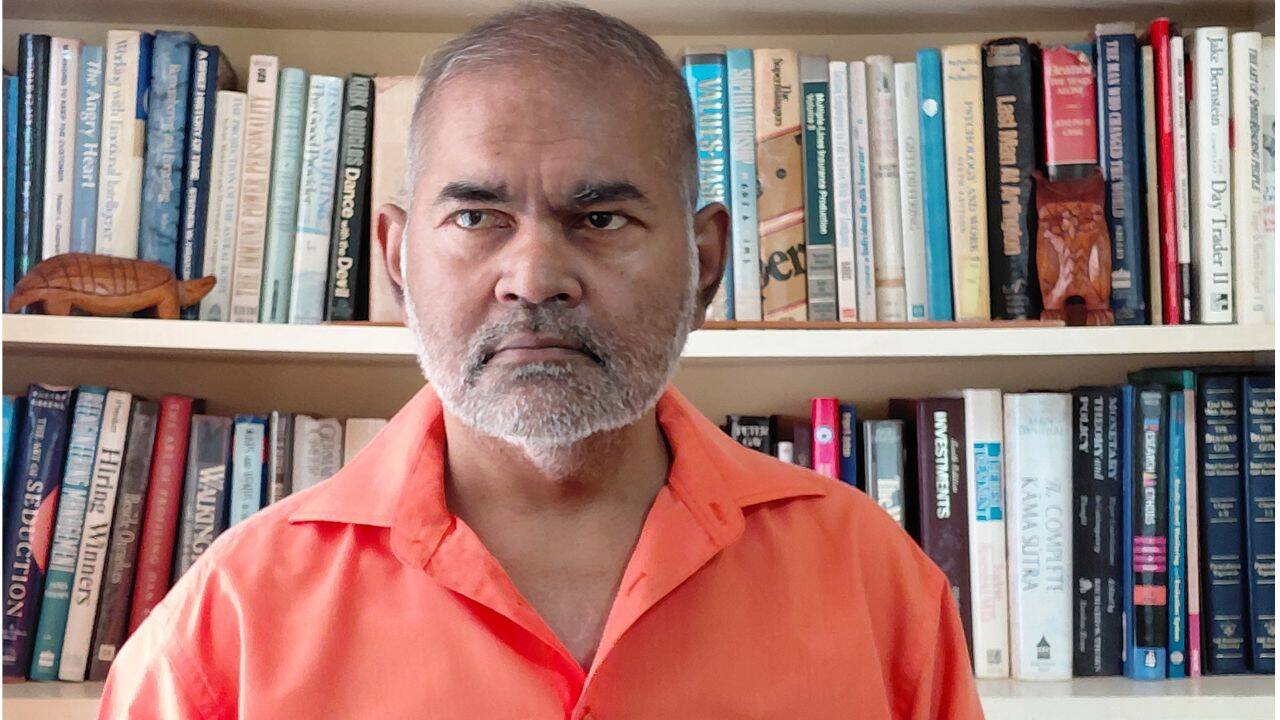
The literary world is eating itself alive over a few rhythms of prose. On June 30, 2026, Trinidadian writer Jamir Nazir was named the overall winner of the prestigious Commonwealth Short Story Prize for his piece, "The Serpent in the Grove." He took home the £5,000 award after beating out thousands of global entries. But his victory didn’t come with simple applause. Instead, it followed weeks of a brutal internet witch hunt that almost ruined his reputation.
Within days of Nazir being announced as the Caribbean regional winner in May, online sleuths decided to play detective. They ran his short story through automated checkers like Pangram. The software flashed a terrifying verdict. It claimed the text was 100% machine-made.
The internet exploded. Critics pointed to repetitive sentence structures like "not X, but Y" as definitive proof of software intervention. The backlash grew so intense that the legendary literary magazine Granta severed its decade-long partnership with the Commonwealth Foundation. They refused to publish the winning entries on their site anymore.
It was a total mess. But it was also based on a massive misunderstanding of how human beings actually write.
The Commonwealth Foundation launched a month-long internal review to get to the bottom of the drama. They didn't rely on automated scanners to do their job. They did actual investigative work. They asked Nazir and other flagged regional finalists, like Maltese writer John Edward DeMicoli and Indian writer Sharon Aruparayil, to show their work.
Nazir handed over his actual history. He provided early handwritten outlines, time-stamped digital documents, personal notes, and inspiration photographs from his childhood in rural Trinidad. The foundation looked at the physical evolution of the text. They realized something crucial. The story wasn't spat out by an algorithm. It was forged through a unique, deeply human process.
The Physical Reality of Modern Writing
Nazir is 62 years old and lives with chronic health conditions. Typing on a standard computer keyboard for hours is physically painful for him. To cope with his disability, he writes using speech-to-text software on his Android mobile phone. He speaks his narratives into existence, then goes through rounds of intense manual editing.
Think about that for a second. When you speak out loud, your sentence structures change. Your cadence shifts. You repeat certain filler words or rhythmic structures that a traditional copyeditor might smooth out.
AI models are trained on billions of pages of human text, including spoken transcripts and conversational scripts. When an automated checker scans a piece of writing that relies heavily on spoken cadences, it screams plagiarism. It sees patterns. It flags the rhythm as synthetic because it closely matches the data sets used to train conversational bots.
This creates a terrifying double standard. If you don't write like an elite, able-bodied academic using standard Western keyboard mechanics, an algorithm might decide you aren't human.
The Absolute Failure of AI Checkers
The tools people use to catch digital cheaters are fundamentally broken. The obsession with checking software has created a culture of paranoia built on a foundation of sand.
During the height of the controversy surrounding "The Serpent in the Grove," different detection programs gave completely opposite answers. Pangram claimed the text was entirely synthetic. At the exact same time, GPTZero checked the exact same prose and classified it as entirely human. QuillBot ran its own scan and reported a zero percent likelihood of machine authorship.
How can a writer defend themselves when the judges are erratic math formulas?
These platforms rely on metrics like perplexity and burstiness. Perplexity measures how predictable the next word in a sentence is. Burstiness looks at the variation in sentence length. If your prose is clean, rhythmic, and highly structured, the software thinks you are a machine.
Pangram itself admits to false positives. The company's own data shows they misclassify creative writing pieces regularly. Yet, a single screenshot of a high percentage score on X or Reddit is enough to trigger a massive public cancellation.
Tech Paranoia Is Killing Post-Colonial Literature
The Commonwealth Short Story Prize exists to elevate voices from regions that traditional Western publishing often ignores. Nazir's story focuses on an impoverished Trinidadian farmer named Vishnu Mohammed who is struggling to support his family while dealing with the dark realities of local rum shops. It is a story rooted in the observations of rural Caribbean life.
When Western researchers run regional literature through automated scanners, they ignore cultural context. Dialects, localized patterns of speech, and oral storytelling traditions don't fit into the neat boxes designed by developers in Silicon Valley.
If a writer uses repetitive phrasing to mimic the oral traditions of Caribbean storytelling, a scanner flags it as robotic. The software cannot differentiate between a calculated stylistic choice and a lazy machine prompt.
Razmi Farook, the director-general of the Commonwealth Foundation, warned that this toxic environment will have long-term consequences. Publicly accusing writers without real evidence creates a climate of fear. It stops emerging writers from submitting their work. They become too afraid that their unique voices will be labeled as synthetic slop by an online mob.
How to Protect Your Own Creative Integrity
You cannot trust the publishing establishment to protect you from algorithmic false positives. Granta panicked and walked away from a historic partnership just to preserve its brand image. If you are a writer working today, you need to build your own paper trail to prove your humanity.
- Turn on version history. Keep your document tracking active in Google Docs or Microsoft Word. A human writer leaves a messy trail of deletions, typos, and rewrites over several weeks. A machine drops a perfect block of text in two seconds.
- Save your scraps. Never delete your early outlines or character notes. Keep your rough, terrible first drafts in a separate folder.
- Document your physical process. If you use assistive tech like speech-to-text or voice notes due to a disability, keep those original audio files. They are your ultimate shield against automated accusations.
The Commonwealth Foundation made the right call by standing behind Jamir Nazir. They proved that human editorial review, deep conversations, and physical evidence matter more than a broken software score. Writers shouldn't have to alter their natural style just to satisfy a paranoid algorithm.