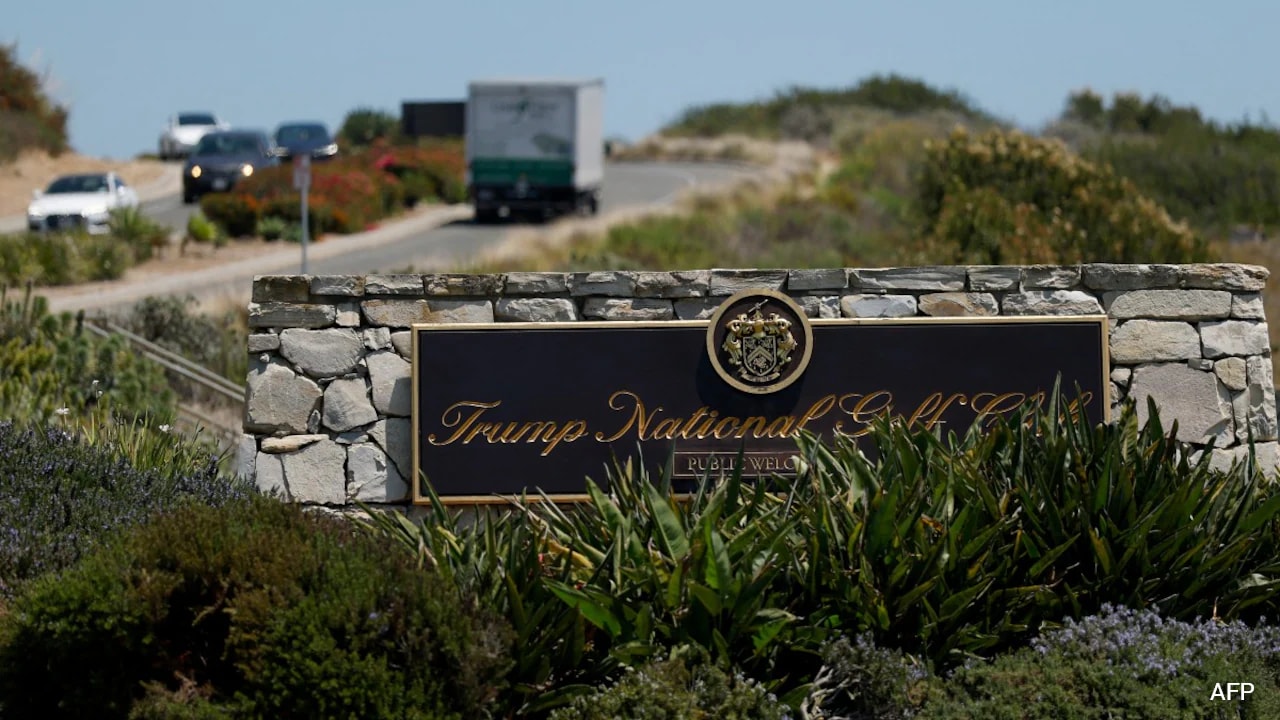
The media loves a neat, linear story. A gunman approaches a perimeter, a heroic intervention occurs, and a crisis is averted. Headlines scream about threats, heightened alert levels, and the fragile bubble surrounding high-profile political figures. It is lazy, sensationalist narrative-building that fundamentally misunderstands how modern threat environments operate. Every time an incident at a golf course or a campaign stop makes the front page, the public is fed a sedative disguised as breaking news.
Let us look past the theater.
When an individual with a firearm is intercepted near a protected site, the immediate instinct of commentators is to frame it as a catastrophic near-miss or a systemic failure of protection. That is a lazy consensus. The reality is far more mundane, yet infinitely more complex. Threat mitigation is not a force field; it is a statistical filtering process operating in an open society.
The Fallacy of Absolute Perimeter Defense
Security professionals know a hard truth that politicians refuse to state publicly: absolute security does not exist in an open democracy. You can stack Secret Service details, local law enforcement, counter-assault teams, and aerial surveillance drones three deep, but you cannot seal a sprawling expanse of turf against a determined individual with a rifle without turning the entire country into a military zone.
The lazy narrative assumes every disruption represents a targeted, highly coordinated assassination plot orchestrated by criminal masterminds. Data tells a completely different story. Most lone-actor intrusions involving public figures or designated properties are driven by grievance, mental instability, or erratic impulse rather than state-sponsored terror.
Consider a scenario where a man wanders toward a perimeter with a weapon. The media labels it an assassination attempt before law enforcement has even processed the suspect's identity or motives. This premature panic serves a single purpose: driving engagement through fear.
Why the Metrics of Threat Assessment are Broken
Traditional threat assessment relies on historical indicators that are increasingly obsolete. We measure success by the number of arrests made at the outer ring, treating those numbers as proof that the system works. But focusing solely on interdiction ignores the upstream conditions that produce these incidents in the first place.
- The False Positive Problem: Over-securing public spaces creates logistical nightmares and alienates the citizenry, trading liberty for the illusion of safety.
- The Copycat Variable: High-profile coverage of security breaches acts as a megaphone, incentivizing unstable individuals seeking notoriety.
- The Resource Drain: Shifting massive tactical footprints to cover sprawling recreational properties pulls resources away from intelligence-led prevention.
I have spent years analyzing operational security frameworks, and I have seen organizations blow millions on physical hardening while completely neglecting digital and behavioral intelligence feeds. They buy more cameras, higher fences, and heavier gates, ignoring the fact that the threat usually manifests first through fragmented digital footprints long before a suspect ever steps foot near a golf course.
Dismantling the People Also Ask Trap
When incidents like this occur, search engines flood with predictable queries. Let us address them by tearing down their flawed premises.
Could this have been prevented entirely?
The question itself betrays a fundamental misunderstanding of probability. Prevention is never 100 percent. In a nation of hundreds of millions of people, with vast stretches of accessible geography, zero-incident security is a mathematical impossibility. Asking if an event could have been prevented implies that every variable can be controlled. It cannot.
Are public figures less safe today than in the past?
Statistically, no. The volume of noise is higher because information travels instantly, but the sophistication and redundancy of protective intelligence operations have scaled exponentially. The danger is not that threats are multiplying uncontrollably; the danger is that our collective panic response is amplifying isolated anomalies into existential crises.
What is the actual protocol during an outer-perimeter breach?
Protocols are designed for containment, identification, and neutralization of risk without creating mass panic. Law enforcement does not panic; they execute predetermined containment geometries. The civilian panic happens entirely on cable news and social media feeds.
The Uncomfortable Truth About Risk Management
If we want to stop treating security like a reality television show, we have to accept trade-offs. Protecting a president, a candidate, or any high-profile public figure requires accepting a baseline of residual risk. You cannot sanitize the entire physical landscape.
When commentators demand ironclad guarantees after every security scare, they are pushing policymakers toward authoritarian architecture. They are asking for a state where freedom of movement is completely eroded in the name of zero risk. That cure is infinitely worse than the disease.
Stop buying the narrative that every armed trespasser is a cinematic villain executing a master plan. Most are symptomatic failures of social safety nets, mental health infrastructure, and digital radicalization, colliding with the omnipresent spotlight of modern political celebrity.
Next time a headline breaks about a perimeter breach, look past the sirens and the frantic anchor commentary. Ask yourself who benefits from making you believe you are living on the edge of total collapse.
The threat is managed. The system is functioning as intended, within the grim statistical realities of a free society. Stop demanding an illusion.