The lazy consensus running through international relations commentary right now is that a hypothetical trilateral alignment between Donald Trump, Vladimir Putin, and Xi Jinping spells doom for India. Columnists across major news desks are hyperventilating about a new "G3", warning that New Delhi is about to be isolated, pushed to the geopolitical sidelines, and forced to pick sides between a transactional Washington and a Eurasian axis.
They are missing the plot entirely.
This panic relies on a fundamental misunderstanding of how hard power works in a multipolar era. The anxiety over a Trump-Xi-Putin power triangle treats nations like high school cliques where getting left out of a lunch table means social death. Global statecraft does not operate on middle school social rules. It operates on leverage, transactional utility, and constant hedging.
Dismantling the Myth of Great Power Collusion
To understand why the mainstream narrative collapses under scrutiny, look at the core premise: that the United States, China, and Russia could ever form a coherent directorate to carve up the globe.
History and basic math make this impossible. Donald Trump’s entire foreign policy doctrine centers on bilateral dominance, protectionist tariffs, and zero-sum economic nationalism. Xi Jinping’s Beijing views American hegemony as an obstacle to be dismantled, not a partner to share global management with. Meanwhile, Vladimir Putin’s Moscow is heavily dependent on Chinese economic life support while simultaneously wary of becoming Beijing’s junior vassal.
When these three leaders talk, they are not designing a harmonious new world order. They are managing friction.
I have watched foreign policy analysts blow entire budgets trying to map out permanent ideological blocs that dissolve the moment a trade deadline hits or a border skirmish flares up. A G3 is not an institutional alliance. It is a high-stakes poker game where every player is trying to cheat under the table.
Why India is Not Sweating the Noise
New Delhi is not watching this hypothetical alignment with dread; New Delhi is weaponizing it.
The mainstream press assumes India's commitment to strategic autonomy is a passive balancing act. It is actually an aggressive, multi-directional offensive. India purchases discounted Russian oil despite fierce American secondary sanctions and tariff threats, maintains a bristling, armed standoff and selective diplomatic engagement with China, and deepens defense ties with Washington through frameworks like the Quad.
This is not confusion. This is mastery of the modern matrix.
Imagine a scenario where Washington, Beijing, and Moscow actually attempt a grand bargain over global security and trade architecture. Who enforces it? If the US and China cannot agree on intellectual property rights or South China Sea navigation, how will they agree on a tripartite division of global influence? They cannot. The moment the photo-op ends, the backstabbing resumes.
India’s calculation is simple: a world where the top three powers are constantly negotiating directly with one another is a world where no single power can dictate terms to New Delhi. Isolation only happens if you lack economic mass. With the world's most populous consumer base and consistent GDP growth, India is too big to isolate and too critical to ignore.
The Real Threat is Domestic Complacency, Not Foreign Triangles
The danger to Indian foreign policy is not a backroom deal struck by Trump, Xi, and Putin. The danger is domestic policy inertia, manufacturing lag, and failing to secure critical supply chains in semiconductors and rare earth elements.
Stop worrying about whether a G3 summit renders BRICS irrelevant. BRICS was never a monolithic anti-Western military alliance anyway; it is a pragmatic platform for the Global South to de-dollarize trade friction and lobby for institutional reform.
The next time you read a breathless breakdown about a new global power triangle reshaping your reality, remember one rule. The loudest commentators are usually the ones least comfortable with ambiguity. Real power doesn't need a formal bloc to make its weight felt. It adapts, it trades, and it keeps everyone else guessing.
We've Lost India, Russia To Deepest China :Donald Trump Days After Modi, Putin,Xi Meet |N18G
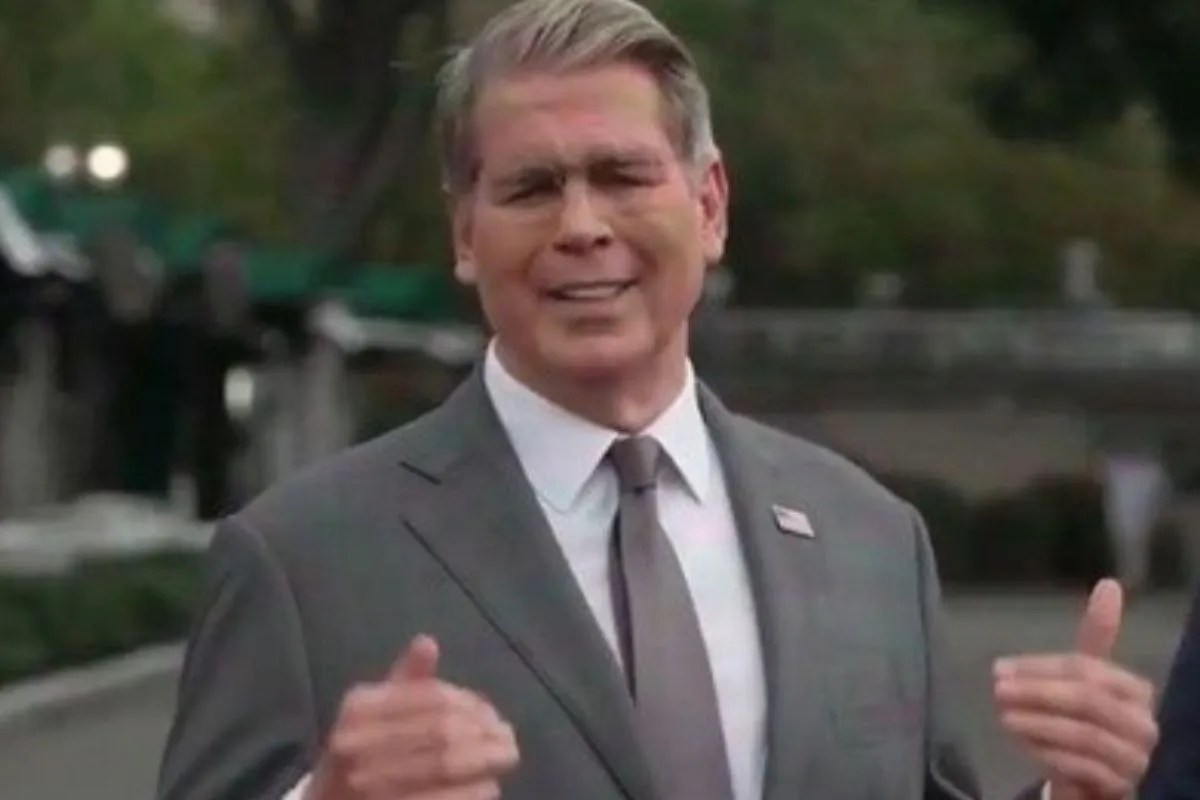
This video captures the immediate western media panic and high-stakes rhetoric surrounding leadership summits that fuel misconceptions about shifting global alliances.