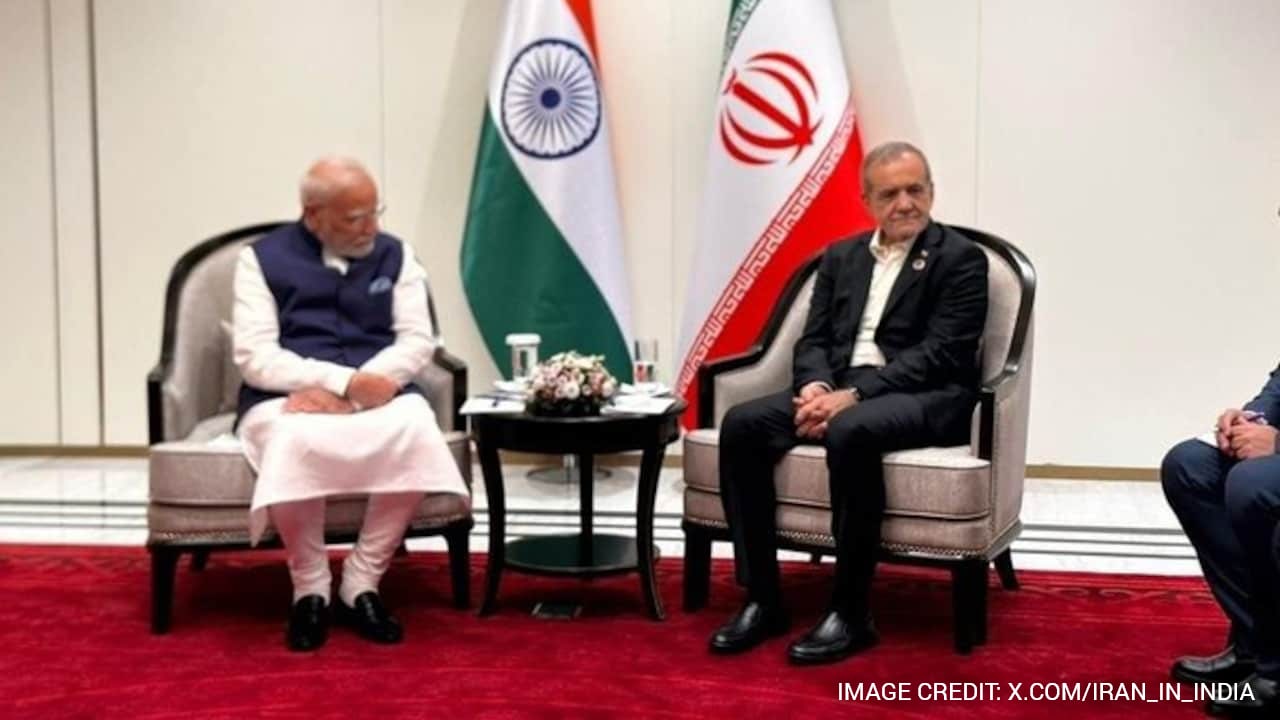
The standard foreign policy column follows a predictable algorithm. Two leaders shake hands at a regional summit in Bishkek, flash forced smiles for the cameras, and desk jockeys in Washington and New Delhi hyperventilate about strategic calculus. The lazy consensus declares that Prime Minister Narendra Modi meeting the Iranian president is a masterstroke of multi-alignment, a clever tightrope walk balancing Washington’s sanctions regime with New Delhi’s ancient civilizational ties to Tehran.
It is a fairy tale.
I have watched diplomats nod politely at closed-door roundtables while their actual policy mechanisms rusted into obsolescence. The truth is much uglier and far more boring than the thriller novel your favorite think-tanker is trying to sell you. India-Iran diplomacy is not a high-stakes chess match. It is a slow-motion hostage situation dictated by American banking compliance, bureaucratic paralysis in South Block, and Tehran’s own historical paranoia.
Let us dismantle the mythology brick by brick.
The Chabahar Delusion
For a decade, the narrative surrounding the Chabahar Port has been treated as a sacred text. The official line claims Chabahar is India’s geopolitical silver bullet, bypassing Pakistan to open up trade routes to Afghanistan, Central Asia, and beyond.
Look at the actual cargo throughput numbers instead of the press releases.
The port operates at a fraction of its capacity. Why? Because the private sector is not suicidal. Try opening a letter of credit for a transaction involving Chabahar through any major international bank. You will find yourself locked out of the SWIFT system faster than you can say secondary sanctions.
India’s Ministry of External Affairs loves the aesthetics of strategic autonomy. They want the optics of checking China’s influence in Gwadar by investing in Chabahar. But when Washington whispers a warning about Office of Foreign Assets Control penalties, New Delhi quietly scales back financing, delays equipment deliveries, and pretends the bureaucratic drag is just standard administrative delay.
Iran knows this. They are not fools. They watch India sign long-term management contracts with great fanfare and then watch Indian state-owned enterprises hesitate to invest actual capital because corporate legal teams are terrified of the US Treasury Department.
Calling this relationship a strategic partnership is like calling a forced marriage a romance. Both sides are trapped by geography and necessity, staring awkwardly at each other across the Arabian Sea while waiting for someone else to make a move.
The Energy Trap
Energy security is the favorite buzzword of the commentariat. The standard argument insists that India needs Iran for cheap crude, and that Modi meets Iranian leadership to secure oil supplies outside the dollar hegemony.
The numbers evaporated years ago.
India completely zeroed out its Iranian oil imports back in 2019 when the Trump administration dropped waivers. Refineries like Reliance and Nayara, configured to process heavy Iranian crude, had to retool or source heavier grades from Latin America and West Africa at higher spot prices. Did the Indian economy collapse? No. Refiners adjusted, found alternative feedstock, and moved on.
When analysts pretend that crude oil is still the glue holding this bilateral framework together, they are living in 2012. Iran is no longer a top-tier energy supplier to India. It is a peripheral headache.
The transaction costs of buying Iranian oil under the current sanction regime outweigh any marginal discount Tehran might offer. Paying in rupees sounds clever on a nationalist blog until you realize Iran has nowhere to spend those trapped rupee reserves except on a narrow basket of Indian agricultural commodities and pharmaceuticals. You cannot run a modern industrial state on basmati rice and generic antibiotics.
The Afghanistan Blind Spot
Every discussion of India-Iran ties eventually stumbles over Afghanistan, usually framed as a shared zone of influence where New Delhi and Tehran coordinate against instability.
Let us look at the geopolitical scoreboard.
When the Taliban retook Kabul in August 2021, India’s embassy went dark, and its decades-long investments in soft power evaporated overnight. Where was the great Indo-Iranian axis then? Tehran quietly cut deals with the new regime, secured its western borders, and managed its own security calculus without picking up the red phone to call South Block.
Iran’s primary objective in Central Asia and South Asia is regime survival and managing domestic dissent. India’s primary objective is economic growth and containing cross-border terrorism originating from its immediate western neighbor. These goals intersect occasionally, but they do not align. Assuming that Tehran views Pakistan through the same existential lens that New Delhi does is a category error born of geographic illiteracy.
Iran wants trade corridors through Pakistan when it suits them. They maintain pragmatic intelligence channels with Islamabad. To imagine that Tehran would sacrifice its complex regional balancing act to serve as India’s proxy against Pakistan is pure delusion.
The Multipolar Mirage
The core error of the traditional analyst class is assuming that multi-alignment means having equal, meaningful partnerships with everyone. It does not. Multi-alignment is often just a polite term for strategic indecision.
Modi’s foreign policy is transactional, pragmatic, and heavily anchored to the Western security architecture through groupings like the Quad, the Initiative on Critical and Emerging Technology, and robust defense trade with the United States and France. In that grand strategy, Iran is not a pillar. It is an anomaly.
When a prime minister meets an Iranian president at a summit in Bishkek or any other regional hub, it is diplomatic maintenance. It is checking a box to ensure the communication lines remain open just enough to prevent Tehran from becoming an outright spoiler in regional trade or a wholly owned subsidiary of Beijing.
To mistake diplomatic maintenance for a grand strategic alignment is to confuse a polite nod in a hotel lobby with a blood pact.
Stop reading the press releases. Look at the balance sheets, the banking restrictions, and the cargo manifests. The real story of India-Iran relations is not about what is being built. It is about what is being quietly abandoned.