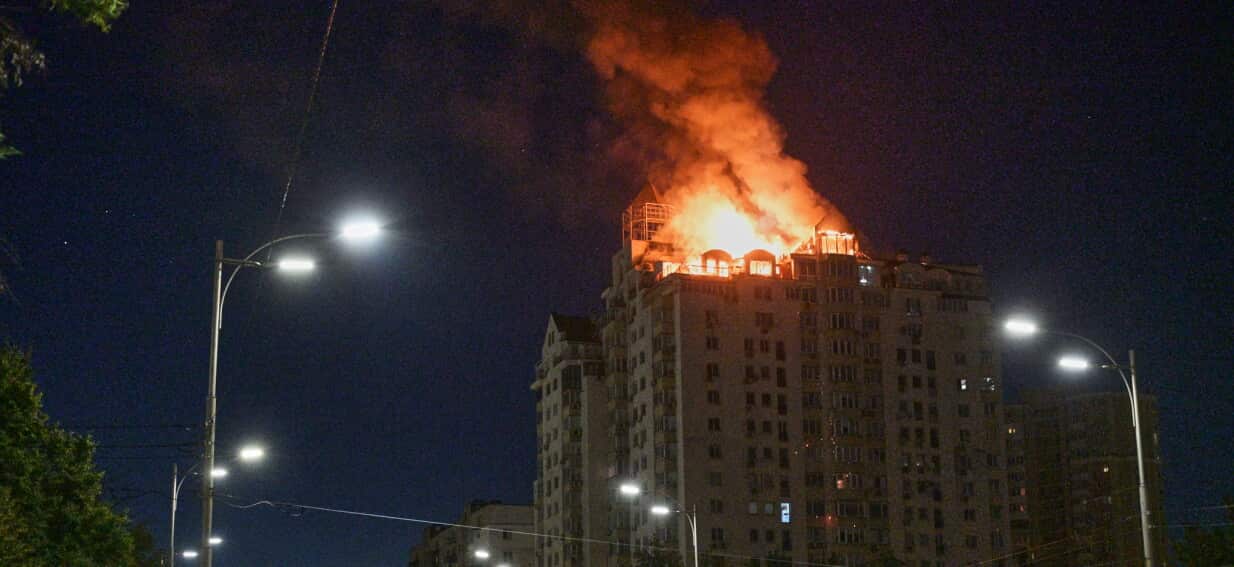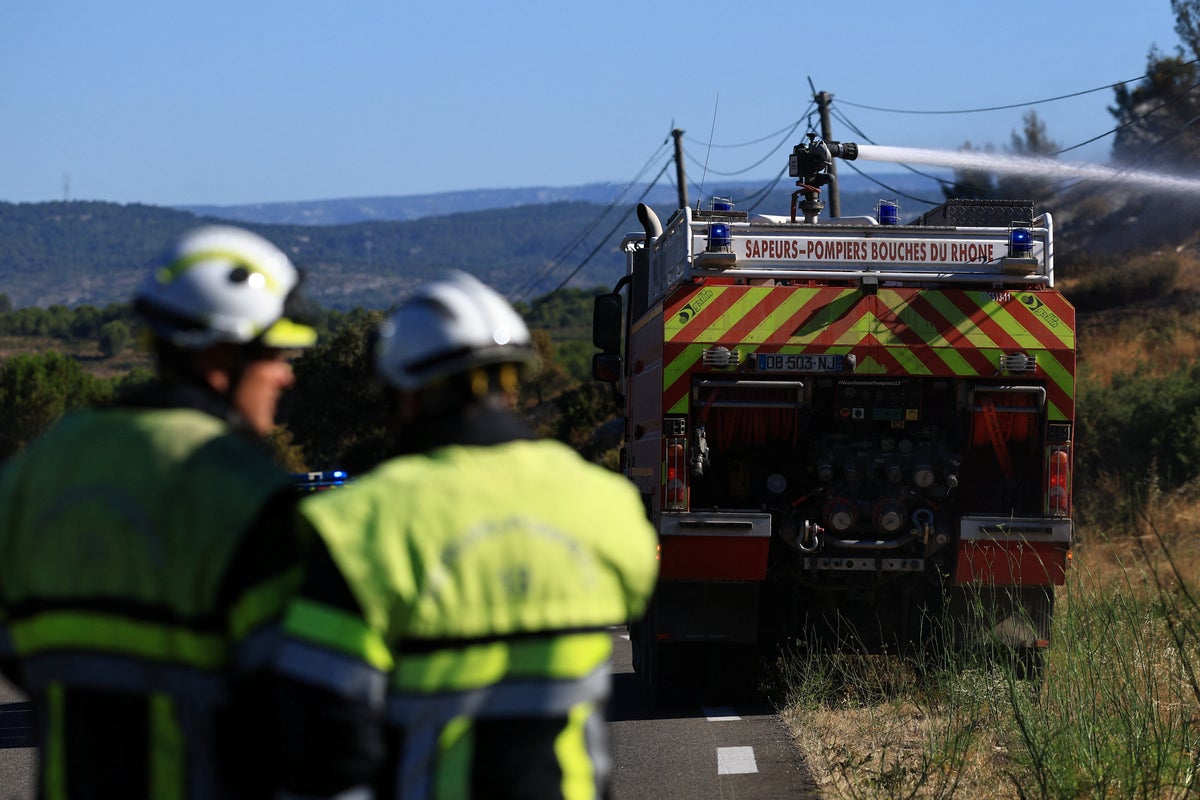
Every summer, Europe plays out a predictable tragedy. As columns of smoke rise over southern France, Greece, and Spain, newsrooms across the globe dust off the same script. They focus on record-breaking temperatures, show dramatic footage of water bombers, and tally the thousands of tourists evacuated from campsites. But this hyper-fixation on immediate weather conditions obscures the deeper, systemic reality. Europe is not just burning because it is hot. It is burning because decades of structural land abandonment, flawed forestry policies, and an over-reliance on reactive suppression have turned the Mediterranean countryside into a tinderbox.
By treating wildfires purely as meteorological crises rather than failures of land management, European governments are fighting a losing battle against geography and economics.
The Fuel Built by Rural Desertion
For centuries, the Mediterranean basin maintained a mosaic landscape. Patches of dense forest were broken up by small-scale farms, olive groves, and grazing livestock. This patchiness created natural firebreaks. When a fire started, it ran out of fuel quickly when it hit a plowed field or a heavily grazed hillside.
That system has collapsed. Over the last sixty years, millions of people abandoned traditional agriculture for urban centers.
When farmers walk away, the land does not return to a pristine, resilient ecosystem. Instead, it undergoes rapid secondary ecological succession. Hardwood forests are replaced by highly flammable, dense scrubland and invasive pine species. Shrubs like Cistus and gorse, which thrive on disturbance and burn with extreme intensity, reclaim the terraces. Without goats and sheep to clear the understory, the biomass accumulates year after year.
The result is a continuous, unbroken carpet of fuel stretching across mountain ranges and right up to the edges of expanding resort towns. When an ignition occurs—whether by lightning, a discarded cigarette, or downed power lines—the fire no longer crawls through the grass. It climbs into the canopy almost immediately, creating high-intensity crown fires that defy conventional containment.
The Illusion of the Water Bomber
Public pressure demands visible, heroic action. Politicians love nothing more than standing in front of a fleet of Canadair water bombers, promising that more aviation assets will solve the crisis. This air-centric strategy is an expensive illusion.
Water bombers do not extinguish massive wildfires. They merely cool the flanks of a fire to allow ground crews to get close enough to dig containment lines.
When a wildfire reaches a certain energy threshold, the ambient heat evaporates the dropped water before it even hits the burning vegetation. Furthermore, these aircraft are entirely dependent on specific conditions. They cannot fly at night, they cannot operate in zero-visibility smoke, and extreme winds—the very force that drives the most destructive blazes—often ground them entirely.
Investing heavily in an aerial armada comes at a direct cost to ground operations. Across southern Europe, the number of permanent, year-round forestry workers and rangers has steadily declined. They have been replaced by seasonal, short-term firefighting crews who lack deep knowledge of local terrain and fuel dynamics. Suppressing fires on the ground requires grueling, manual labor carried out months before the summer season starts. It means cutting fuel breaks, managing biomass, and conducting prescribed burns.
The Fire Suppression Paradox
The most uncomfortable truth in wildfire management is that putting out small fires makes future fires worse. This is known among ecologists as the suppression paradox.
For nearly a century, European policy has favored total suppression. Every smoke plume must be snuffed out instantly. While this protects property in the short term, it disrupts the natural fire cycle. Historically, frequent, low-intensity fires cleared out the dead wood and leaf litter without killing mature, thick-barked trees.
[Total Suppression Policy] ──> [Zero Low-Intensity Fires] ──> [Massive Fuel Accumulation] ──> [Uncontrollable Mega-Fire]
By preventing these minor burns, Europe has artificially inflated its fuel load. The forests are now overloaded with dead biomass. When a fire finally escapes initial attack during a heatwave, it encounters so much accumulated fuel that it instantly transforms into a mega-fire. These conflagrations generate so much energy that they create their own weather systems, including pyrocumulonimbus clouds that cause erratic winds and drop dry lightning kilometers away from the main front. Total suppression has not eliminated fire; it has simply back-loaded the risk, ensuring that the fires that do break through are catastrophic.
The Urban-Wildland Interface Trap
The geography of risk has shifted dramatically because of how European towns have expanded. The desire for a rustic lifestyle has driven a massive construction boom in the Urban-Wildland Interface (WUI)—the zone where housing meets flammable vegetation.
In places like the French Riviera or the coastal hills of Portugal, villas and housing developments are built directly into dense pine and eucalyptus forests.
+------------------------------------------------------------+
|             THE URBAN-WILDLAND INTERFACE TRAP              |
+------------------------------------------------------------+
|  [ Dense Pine/Eucalyptus Forest ]                          |
|         │                                                  |
|         ▼                                                  |
|  [ Luxury Villas / Campsites ] <── Single evacuation road  |
|         │                                                  |
|         ▼                                                  |
|  [ Firefighters forced into defensive property protection ] |
|         │                                                  |
|         ▼                                                  |
|  [ Fire moves unchecked through the broader landscape ]     |
+------------------------------------------------------------+
Many of these communities feature single-access roads, lack adequate water pressure for firefighting, and are surrounded by unmanaged private property. When a fire approaches, emergency services face an impossible tactical choice. They must divert their limited resources away from cutting off the head of the wildfire to perform defensive property protection and civilian evacuations.
While crews are busy defending individual homes or clearing congested holiday campsites, the main fire front moves unchecked through the broader landscape. Local zoning laws rarely enforce strict defensible space regulations, which would require property owners to clear all brush within 30 meters of their homes. Without these mandates, private residences act as fuel escalators, drawing the fire directly into suburban neighborhoods.
Reclaiming the Landscape
Fixing this structural vulnerability requires moving past emergency management and returning to active land management. Europe cannot log or pave its way out of this issue, but it can use targeted interventions to alter the fuel profile of the continent.
Smart Reforestation
Decades of commercial forestry promoted monocultures of fast-growing resinous trees like Pinus pinaster and Eucalyptus globulus. These species are highly pyrophytic; their needles and leaves are packed with volatile oils that accelerate fire spread. Transitioning these areas back to native broadleaf species such as holm oak, cork oak, and chestnut creates natural speed bumps for wildfires. Broadleaf forests retain more moisture, cast denser shade that suppresses flammable undergrowth, and burn at significantly lower intensities.
Subsidized Agropastoralism
Instead of spending millions on seasonal firefighting aircraft, regional governments should divert funds to support the rural economy. Subsidizing goat and sheep herders to graze their flocks in strategically designated fuel breaks is a highly effective way to maintain low fuel loads. This biological mastication keeps critical corridors clear at a fraction of the cost of heavy machinery or chemical clearing.
Prescribed Burning Frameworks
Europe needs to normalize the deliberate use of fire during the cooler winter and spring months to consume accumulated undergrowth. Currently, bureaucratic hurdles, liability fears, and public resistance restrict the widespread use of prescribed burning. Countries like Portugal have begun to reform their legal frameworks to empower trained burn bosses, but the practice remains underutilized in France and Italy due to strict air quality regulations and political risk aversion.
The current trajectory is unsustainable. Southern Europe cannot afford to evacuate tens of thousands of citizens every July while watching its civil protection budgets evaporate into the smoke. Relying on heavier machinery and more water bombers to tackle an exponentially growing fuel load is a strategy built on a fundamental misunderstanding of the landscape. The solution lies not in fighting the flames with more intensity when the summer arrives, but in changing the fabric of the land during the winter so that the flames lose their power to destroy. Reversing the neglect of the rural interior and breaking the cycle of total fire suppression is the only viable path forward. Otherwise, the continent will continue to burn, year after year, precisely according to plan.