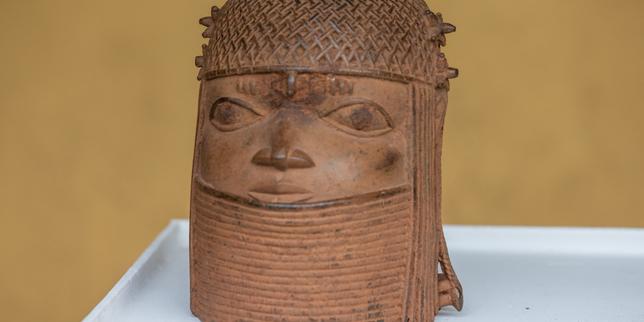
The debate over the restitution of looted African cultural property isn't just about old statues in dusty cabinets. It's about a massive, ongoing theft of history that most European governments still don't want to talk about. While France made headlines a few years ago by returning 26 artifacts to Benin, the rest of the continent is moving at a snail’s pace. Honestly, it’s embarrassing.
If you walk through the British Museum or the Humboldt Forum, you’re seeing the spoils of war. These objects weren't "acquired." They were taken at gunpoint during "punitive expeditions" or "scientific missions" that were anything but scientific. For decades, the standard response was that African museums couldn't handle the tech or climate control needed to keep these items safe. That argument is dead. It was always a thin veil for gatekeeping.
Now, the pressure is mounting. Public opinion is shifting. People want to know why their local museum looks like a crime scene from the 19th century.
Germany is leading the way while others drag their feet
Germany has actually stepped up in a way that puts its neighbors to shame. In 2022, they signed a deal to return over 1,100 Benin Bronzes to Nigeria. This wasn't just a loan or a "long-term deposit." It was a full transfer of ownership. It changed the game because it acknowledged that the items were stolen. Period.
The German approach is different because it isn't just about one-off gestures. They've set up the "German Contact Point for Collections from Colonial Contexts." It's a central hub where nations can actually find out what Germany has. You’d be surprised how many countries don't even have a clear inventory of their colonial loot.
But even in Germany, it's not perfect. There’s internal bickering about where the art goes once it hits Nigerian soil. Does it go to the state? The Oba (the traditional ruler)? European critics use this internal complexity as an excuse to stop future returns. That's a mistake. How a sovereign nation manages its own heritage isn't Europe's business.
The British Museum and the wall of legal jargon
The UK is the biggest roadblock. If you want to see the most famous Benin Bronzes, you go to London. But the British Museum hides behind the British Museum Act of 1963. This law literally forbids the institution from "de-accessioning" items unless they are duplicates or "unfit for retention."
It’s a convenient shield. The museum's board can say, "We’d love to help, but our hands are tied by the law!" Meanwhile, the government says, "We don't interfere in museum business." It’s a loop of bureaucracy designed to keep the statues in London.
There's a subtle shift happening, though. The Horniman Museum in London ignored the trend and returned 72 items to Nigeria in 2022. They’re a smaller, independent museum, so the 1963 Act doesn't apply to them. Their move proved that when the legal excuses vanish, the moral path is actually pretty simple. You give back what isn't yours.
Belgium and the ghost of King Leopold
Belgium has a darker history than most. The Royal Museum for Central Africa in Tervuren is basically a monument to the exploitation of the Congo. For years, it was a time capsule of colonial propaganda.
Lately, Belgium has tried to pivot. In 2022, they passed a law creating a legal framework for the restitution of stolen goods to the Democratic Republic of Congo (DRC). They've already handed over a massive inventory of 84,000 objects. Think about that number. 84,000.
The Belgian model focuses on "shared heritage" and scientific cooperation. They’ve returned a few symbolic items, like a gold-capped tooth belonging to the murdered independence leader Patrice Lumumba. It was a gruesome relic of a brutal era. While the physical return of all 84,000 items will take decades, the legal admission that they belong to the DRC is a massive hurdle they’ve actually cleared.
Why the "Universal Museum" argument is total nonsense
You’ll often hear museum directors talk about the "Universal Museum" concept. The idea is that places like the Louvre or the British Museum serve humanity by keeping everything in one place. They argue that art is safer and more accessible to a global audience in Paris or London than in Lagos or Kinshasa.
This is peak Eurocentrism.
It assumes that a "global audience" only exists in the West. If you’re a student in Benin City, why should you have to buy a plane ticket and get a difficult-to-obtain visa just to see your own ancestors' work? The "universal" tag is just a way to justify holding onto stolen property. It’s about power, not education.
France and the promise of a new law
Emmanuel Macron’s 2017 speech in Ouagadougou was supposed to be the turning point. He said African heritage can’t be a prisoner of European museums. Since then, we've seen the return of the 26 artifacts to Benin and a sword to Senegal.
The problem is that France, like the UK, requires a specific law for every single return. Their legal system views museum collections as "inalienable." To fix this, the French government is working on a "framework law" that would allow for returns without needing a vote in Parliament every time a country asks for its stuff back.
But it’s stalling. The French Senate is worried about "emptying our museums." It’s an irrational fear. Even if every stolen item went back tomorrow, the Louvre would still be packed. We’re talking about a tiny fraction of their total inventory, but it’s the fraction that matters most to the people it was taken from.
The Netherlands is quietly doing it right
The Dutch deserve more credit here. They’ve adopted a policy that is remarkably straightforward. If a formerly colonized country asks for something and it can be proven the item was taken by force, it goes back. No questions asked.
In 2023, they returned hundreds of objects to Indonesia and Sri Lanka. This included the "Lombok treasure," a haul of jewels and precious metals. They didn't make a huge fuss or demand "research partnerships" as a condition. They just looked at the history, saw the theft, and shipped the crates.
What happens when the art goes back
Critics love to claim that returned art will just disappear into private collections or be sold on the black market. This hasn't happened. In Benin, the returned statues were greeted by thousands of people in the streets. They are currently being housed in a museum in the royal palace of Abomey while a massive new international-standard museum is built.
Restitution isn't just a logistics problem. It’s an emotional and spiritual one. For many African communities, these objects aren't "art"—they’re spiritual vessels or historical records. Imagine if someone stole the original US Constitution and kept it in a basement in Moscow, then told Americans they weren't "ready" to take care of it. You'd be livid.
The role of the Vatican and private collectors
We can’t ignore the Vatican. Their museums hold a massive amount of indigenous and African art sent by missionaries. Pope Francis has hinted at being open to returns, but the Vatican’s bureaucracy is famously opaque. They returned three fragments of the Parthenon to Greece recently, which suggests the door is opening, but Africa is still waiting in line.
Then there’s the private market. Sotheby’s and Christie’s still auction off "tribal art" with murky origins. This is where the real "disappearance" happens. Once an item enters a private billionaire's living room, it’s gone. European governments need to regulate these sales much more strictly if they actually care about cultural heritage.
The steps you should take to stay informed
If you care about this, don't just take a museum’s plaque at face value.
Start by checking the "Provenance" section of a museum's website. If an African object arrived between 1870 and 1930, there’s a very high chance it was looted. Look for the Benin Bronzes specifically—they are the litmus test for any museum's ethics.
Support organizations like "Open Restitution Africa." They track what’s where and who is actually following through on their promises.
If you visit a major European museum, ask the staff about their restitution policy. Public pressure is the only reason the needle has moved this much in the last five years. Governments only act when they realize the status quo is becoming a PR nightmare. The goal isn't to empty every museum in Europe; it's to ensure that African history belongs to Africans first.