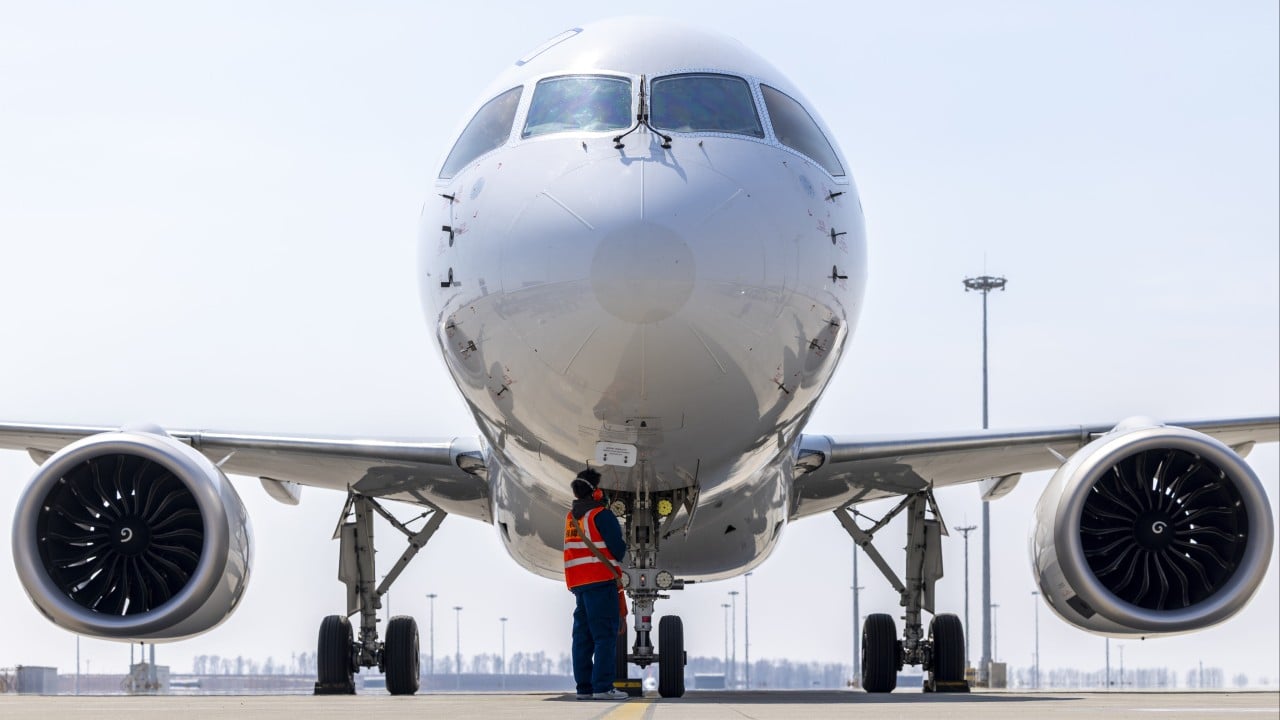
Western aviation commentators are breathing a premature sigh of relief because European test pilots found "no major hardware risks" with COMAC's C919. They think the story is about whether Chinese aerospace can build an airplane that stays in the sky without shedding parts. They are asking the wrong question entirely.
Building a flying tube with twin engines and modern avionics is no longer a localized miracle. In 2026, airframe engineering is an exercise in global supply chain integration. The C919 flies reliably because its flight control systems come from Honeywell, its CFM LEAP-1C engines are built by a Safran-GE joint venture, and its landing gear relies on European expertise. Passing basic European Union Aviation Safety Agency (EASA) hardware checks was always the baseline, not the breakthrough.
The real friction has almost nothing to do with metal fatigue, hydraulic pressure, or aerodynamic stability. The real battleground is the operational friction of global air transport, and that is where the narrative falls apart.
The Hardware Illusion
Aviation media loves a hardware story. Wing flex tests, cabin pressure cycles, and flight control software make for clear, quantifiable benchmarks. When EASA pilots step out of a simulator or a test flight and report zero critical flaws, mainstream outlets report it as a monumental hurdle cleared.
It is not. It is an entry ticket to an arena COMAC cannot yet navigate.
Modern commercial aviation does not run on airworthiness alone. It runs on flight-hour guarantees, regional spare-part pooling, and maintenance turnaround times measured in minutes, not days. I have watched legacy airlines reject lower-cost aircraft simply because a replacement engine valve would take 36 hours to reach a gate in Frankfurt instead of six.
Let us break down the operational mechanics that the "no major hardware risks" headline glosses over:
- Component Supply Vulnerability: Over 60% of the C919's critical sub-assemblies originate from Western suppliers. The exact same suppliers who prioritize Boeing and Airbus production lines during global shortages.
- Maintenance, Repair, and Overhaul (MRO) Infrastructure: EASA certification does not magically erect heavy MRO facilities in Munich, London, or Atlanta. Without a global network of certified technicians and localized parts depots, an aircraft is a liability the second it touches down outside its home market.
- Type Rating and Pilot Mobility: Airlines optimize fleets around pilot availability. Transitioning crews to a new platform requires simulator time, specialized type ratings, and union negotiations. A glitch-free airframe does not reduce the financial drag of retraining a long-haul pilot pool.
The Certification Trap
The media treats EASA validation as a binary switch: once approved, international sales will follow. This reflects a fundamental misunderstanding of regulatory geopolitics and fleet economics.
EASA certification is a necessary condition, but it is entirely insufficient to alter global market share. Regulatory bodies do not buy airplanes; risk-averse airline CFOs buy airplanes.
When a Western carrier structures a fleet order, the balance sheet logic is relentless:
- Residual Value Uncertainty: How much is a ten-year-old C919 worth on the secondary market? Nobody knows. Without a deep, liquid market for used airframes and engines, lease rates skyrocket to offset residual risk.
- Financing Costs: Aircraft lessors finance the vast majority of commercial fleets. Higher perceived operational risk translates directly into higher borrowing rates for operators trying to lease the platform.
- Insurance Premiums: Underwriters do not care that European pilots enjoyed their test flights. They care about decades of operational safety data. Until the C919 accumulates millions of revenue flight hours across diverse weather regimes and congested airspaces, insurance premiums will remain an uncompetitive drag.
Imagine a scenario where COMAC offers the C919 at a 20% discount against an Airbus A320neo. Once an international operator factors in elevated insurance premiums, higher lease rates, custom MRO logistics, and pilot retraining costs, that 20% upfront discount vanishes into operating losses within three years.
The Dual-Source Dilemma
COMAC’s strategic goal was never to dominate Western skies overnight. The long game has always been domestic dominance within China's massive aviation market, followed by expansion into Belt and Road partner nations.
Yet even on its home turf, COMAC faces a structural paradox:
The C919 relies on Western component suppliers to earn the international credibility required for export. But that very reliance leaves the program exposed to export controls, geopolitical supply chain chokepoints, and tariff volatility.
If COMAC replaces those Western components with domestic Chinese alternatives (such as the CJ-1000A engine), it secures supply chain independence. But doing so resets the regulatory clock. EASA will not validate an airframe that swaps out certified Western engines for unproven domestic powerplants without restarting years of rigorous testing.
You cannot have both rapid international validation and complete domestic supply chain autonomy. Every step toward one sabotages the other.
The Cold Reality of Fleet Mechanics
Airbus and Boeing are not sweating EASA’s flight test reports. They are not worried about whether China can build a safe plane. They know China can.
What keeps legacy manufacturers secure is their impenetrable operational ecosystem. Airbus does not just sell the A320; it sells an invisible, hyper-optimized logistical web that guarantees a broken part in Denver is replaced before the morning departure rush.
Until COMAC can match that invisible infrastructure—a process that takes decades and hundreds of billions in capital expenditure—passing flight tests is merely academic.
The C919 is a capable aircraft. Its engineering is sound, its safety profile meets standards, and its test results are genuine. But confusing a successful test flight with a threat to the global duopoly is a rookie mistake.
The aviation market is not won in the air. It is won on the tarmac, in the supply depot, and on the lessor’s balance sheet. Until COMAC solves those problems, a clean bill of health from European pilots is just a headline without a market.