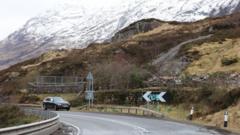
The physical demolition of Allt-na-Reigh, the Highland cottage formerly owned by Jimmy Savile, represents a terminal solution to a persistent failure in symbolic asset management. For fifteen years, the structure functioned as a visual magnet for "dark tourism" and a recurring trauma trigger for the community, demonstrating that some properties possess a negative utility so profound that total asset liquidation is the only viable path to restoration. The decision to raze the site, rather than repurpose or sell it, follows a logic of psychological sanitation—a process where the economic value of the land is secondary to the removal of a toxic cultural landmark.
The Taxonomy of a Contaminated Site
Properties associated with extreme moral failure or systemic abuse fall into a category of "stigmatized real estate" that standard market theories fail to capture. While typical stigma—such as a property where a natural death occurred—results in a temporary price discount, "high-infamy stigma" creates a permanent structural deficit. Allt-na-Reigh ceased to be a residential asset and became a medium for protest, graffiti, and morbid curiosity.
The site’s degradation can be categorized by three distinct failure points:
- Vandalism and Aesthetic Liability: The cottage became a canvas for public outrage, requiring constant maintenance or, conversely, serving as a deteriorating eyesore that harmed the local Highland tourism brand.
- The "Shrine" Effect: Proximity to the site attracted two opposing but equally disruptive groups: those seeking to deface it and those practicing a form of dark voyeurism. This created a persistent security and privacy burden for the neighboring Glencoe community.
- Insolubility of Branding: No amount of renovation could decouple the structure from its 20th-century history. The physical architecture—specifically its white-washed walls and isolated positioning—was too tightly integrated with the public’s visual memory of the owner.
The Economic Logic of Destruction
From a traditional investment perspective, destroying a standing structure is a net loss of capital. However, the demolition of Allt-na-Reigh follows a "Net Present Value of Peace" framework. The ongoing costs of maintaining a controversial shell—comprising security, legal liability, and the erosion of local social capital—eventually exceed the cost of demolition and the loss of the building’s functional value.
The Cost Function of Maintenance vs. Erasure
The decision-makers faced a binary choice:
- Adaptive Reuse (The High-Risk Path): Converting the cottage into a mountaineering hut or a museum. This failed because any functional use would be overshadowed by the site’s history, effectively "poisoning the well" for any organization associated with it.
- Controlled Demolition (The Mitigation Path): Reducing the structure to its foundation to reset the land's narrative. This path accepts a 100% loss on building equity to reclaim the intrinsic value of the location.
The National Trust for Scotland and local authorities recognize that the Highlands' value proposition is built on "sublime isolation" and "natural purity." A structure that radiates modern horror acts as a pollutant in this specific economic ecosystem. By removing the cottage, the stakeholders are effectively de-leveraging the landscape from a toxic historical debt.
Mechanical Neutralization of Memory
Demolition in this context is an act of "spatial censorship." It operates on the principle that if the physical coordinates of a trauma are erased, the psychological tether to that trauma is weakened. This is not a new phenomenon; it mirrors the treatment of 25 Cromwell Street in Gloucester or the residence of the Dunblane shooter.
The process involves specific stages of neutralization:
- Visual Displacement: The removal of the roofline and walls breaks the "silhouette" of the infamy. When a hiker looks toward the site from the A82, the absence of the familiar shape prevents the automatic retrieval of the associated narrative.
- Substrate Cleansing: Often, these projects involve removing not just the building, but any distinctive landscaping or perimeter markers that defined the property's boundary.
- Natural Succession: The final stage is allowing the local flora to reclaim the footprint. In Glencoe, the goal is for the site to return to a state of "wildness," which, in the Scottish context, is the ultimate form of anonymity.
Constraints and Limitations of Architectural Erasure
While demolition provides a physical terminus, it does not provide a digital one. The "digital footprint" of Allt-na-Reigh—its coordinates, photographs, and historical records—remains accessible. This creates a disconnect between the physical reality (an empty field) and the digital reality (a permanent record of what occurred there).
The limitation of this strategy is that it may inadvertently create a "hollowed-out monument." By removing the building, the emptiness itself can become a marker of what was once there. However, for the local residents of Glencoe, the primary objective was never the erasure of history, but the removal of a daily visual burden. The distinction is critical: the goal is the cessation of the building as a functional catalyst for new trauma, not the revisionist deletion of past events.
Strategic Realignment of the Glencoe Landscape
The removal of the structure allows for a pivot in land management. Without the cottage, the area can be re-integrated into the wider Glencoe National Nature Reserve. This shift moves the land from "Private Stigmatized Asset" to "Public Natural Asset."
For the survivors of Savile’s abuse, the demolition serves as a form of symbolic justice that the legal system failed to provide during his lifetime. The physical weight of the stones being crushed mirrors the dismantling of the perpetrator’s public persona.
The final strategic move for the Glencoe community is the implementation of a "Passive Land Use" policy. The site should not be marked with a plaque, nor should it be overtly celebrated. The most effective way to finalize the neutralization of Allt-na-Reigh is to ensure that the land becomes so unremarkable that it eventually disappears from the mental map of the Highlands altogether.
Ensure the site is seeded with indigenous grass and heather species immediately following the removal of the foundation rubble. Prevent the installation of any "interpretive signage" that references the former owner. Success is defined by a future state where a visitor can stand on the former site and find nothing to distinguish it from the surrounding moorland.