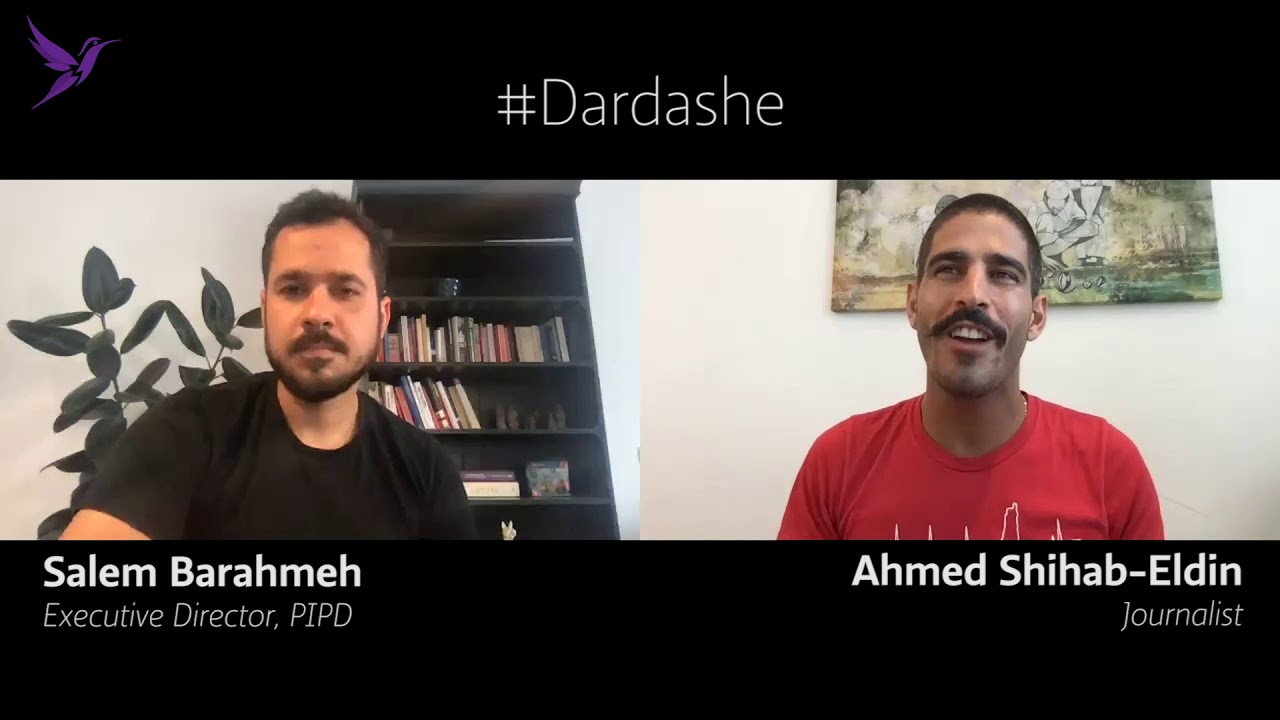
The Kuwaiti government recently moved to revoke the citizenship of Ahmed Shihab-Eldin, an Emmy-nominated journalist and high-profile Palestinian-American-Kuwaiti storyteller. This decision is not an isolated bureaucratic hiccup or a routine paperwork dispute. It is a calculated strike. By stripping a globally recognized voice of his legal identity, Kuwait has signaled a sharp departure from its historical reputation as the most liberal corner of the Gulf.
The primary motive lies in a tightening grip on dissent that transcends national borders. Shihab-Eldin has spent years documenting the Palestinian struggle and critiquing regional power structures to millions of followers. In the eyes of the Kuwaiti Ministry of Interior, the legal justification likely rests on Article 11 of the 1959 Nationality Law, which prohibits citizens from holding dual nationality without specific authorization. However, the selective enforcement of this law reveals its true function as a political weapon.
The Weaponization of the 1959 Nationality Law
For decades, Kuwaiti authorities looked the other way regarding dual citizenship. It was an open secret. Thousands of Kuwaitis hold secondary passports from the United States, the United Kingdom, or neighboring Saudi Arabia. It functioned as a social safety valve, allowing the elite and the educated middle class to move freely between the East and West.
That era of "don't ask, don't tell" has vanished.
The state is now auditing its citizenry with a level of granular intensity that suggests a demographic purge. By focusing on the 1959 law, the government can frame the removal of citizenship as a purely administrative correction rather than political persecution. This provides a thin layer of legal cover. But when the target is a journalist who has been vocal about the war in Gaza and the shifting alliances in the Middle East, the "administrative" excuse collapses under the weight of its own timing.
Revocation is the ultimate silencing tool. Without a passport, an individual loses the right to travel, the right to own property, and the right to legal protection. It effectively turns a citizen into a ghost. For Shihab-Eldin, who maintains a massive digital footprint, the move is intended to serve as a warning to the broader Kuwaiti diaspora: your physical distance does not make you immune to the state's reach.
The Death of the Kuwaiti Parliament’s Shadow
Kuwait was always different. Unlike the absolute monarchies in Riyadh or Abu Dhabi, Kuwait boasted a feisty, elected parliament and a press corps that actually bit. It was the only place in the Gulf where you could find genuine public debate.
That exceptionalism is being dismantled brick by brick.
Earlier this year, the Emir suspended parliament and several articles of the constitution. The domestic political space has shrunk to a pinhole. In this vacuum, the executive branch no longer feels the need to justify its actions to a legislative body. The targeting of Shihab-Eldin happens in this specific context of institutional collapse. When there is no parliament to question the Ministry of Interior, the definition of a "loyal citizen" becomes whatever the ministry decides it is on a Tuesday morning.
The Palestinian Factor and Regional Realignment
One cannot analyze this move without looking at the map. Shihab-Eldin’s identity is inextricably linked to the Palestinian cause. Historically, Kuwait was a staunch supporter of Palestine, a stance solidified by its own experience of occupation in 1990. However, the regional wind is blowing in a different direction.
As Gulf states navigate complex backchannel negotiations and balance their relationships with Washington, vocal activists become liabilities. Shihab-Eldin’s reporting doesn't just critique Israel; it highlights the perceived complicity of Arab governments. This makes him a "troublemaker" in a region that is currently prioritizing stability and economic diversification over ideological purity. By cutting ties with him, Kuwait signals to its neighbors and Western allies that it is cleaning house. It is shedding the activists to make room for the pragmatists.
The Bidoon Parallel and the Hierarchy of Belonging
To understand how easily citizenship can be taken, one must look at those who never had it. The Bidoon—Kuwait’s stateless population—number in the hundreds of thousands. They live in a legal purgatory, denied basic rights despite generations of residency.
The government has long used the threat of "Bidoon-ization" to keep its citizens in line. By revoking the citizenship of high-profile figures, the state is demonstrating that the line between "privileged citizen" and "stateless outcast" is porous. It is a psychological tactic. It reminds every Kuwaiti that their rights are not inherent or "natural," but are instead a revocable gift from the ruling family.
Why Global Outcry Matters Less Than You Think
In the past, a journalist with Shihab-Eldin’s credentials would have been protected by the threat of international PR damage. That math has changed. The current global political climate is fractured. Middle Eastern states have watched as Western nations struggle with their own internal divisions and hypocrisies regarding free speech.
Kuwaiti officials have likely calculated that the "outrage cycle" on social media will last a week, while the permanent removal of a critic lasts a lifetime. They are betting on the world's short memory. They are also betting that the United States—where Shihab-Eldin has deep ties—will not burn diplomatic capital over a citizenship dispute involving a dual national during a period of regional volatility.
The Technicality of Identity
The legal mechanism used against Shihab-Eldin is often framed around "fraud" or "dual loyalty." In many of these cases, the state alleges that the individual obtained citizenship through false pretenses or failed to disclose a second passport.
The burden of proof is shifted entirely onto the individual. In a court system that is increasingly shadowed by security mandates, "proving" your loyalty or the validity of your decades-old paperwork is a near-impossible task. It is a Kafkaesque trap. If you fight it, you are seen as defiant. If you remain silent, you accept your erasure.
Shihab-Eldin’s case is particularly poignant because his work is about the very concept of identity and narrative. By stripping his citizenship, the state is attempting to seize control of his narrative. They are saying: "You are not who you say you are."
The Impact on Independent Media
This isn't just about one man. It’s about the infrastructure of independent journalism in the Middle East. If a journalist of Shihab-Eldin’s stature can be rendered stateless for his commentary, the message to junior reporters is deafening.
We are seeing the rise of the "Certified Influencer" model, where media personalities are permitted to exist only if they function as extensions of state branding. The investigative reporter is being replaced by the content creator who knows exactly where the red lines are drawn. Shihab-Eldin stepped over the line, and the line moved to swallow him.
The disappearance of the "middle ground" in Kuwaiti politics has created a dangerous environment for anyone with a platform. You are either a cheerleader for the state’s vision or a target for its correction. There is no longer a space for the critical friend or the patriotic dissenter.
Digital Sovereignty and the New Exile
In the 20th century, exile meant moving to Paris or London and writing a book that would be smuggled back home in a suitcase. In 2026, exile is different. Shihab-Eldin can still reach his audience via Instagram, TikTok, and X. He is not silenced in the traditional sense.
But the state is asserting a different kind of power: the power over the physical body and legal existence. They may not be able to stop his tweets, but they can stop him from visiting his family, attending a funeral, or standing on the soil he calls home. This is the new frontier of authoritarianism. It is a hybrid of ancient banishment and modern bureaucratic warfare.
The move against Shihab-Eldin is a definitive end to the myth of the "Kuwaiti Exception." The country is no longer the Gulf's quirky democracy. It has aligned itself with the broader regional trend of total social and political synchronization.
For the international community, this is a signal that the safeguards for press freedom in the region have failed. For Kuwaitis, it is a reminder that their passport is a lease, not a deed. The state has the keys, and they just changed the locks.
Don't look for a reversal or a diplomatic compromise. This is the new standard operating procedure. When the state decides that a voice is too loud, it simply deletes the person behind it. The erasure is the point.