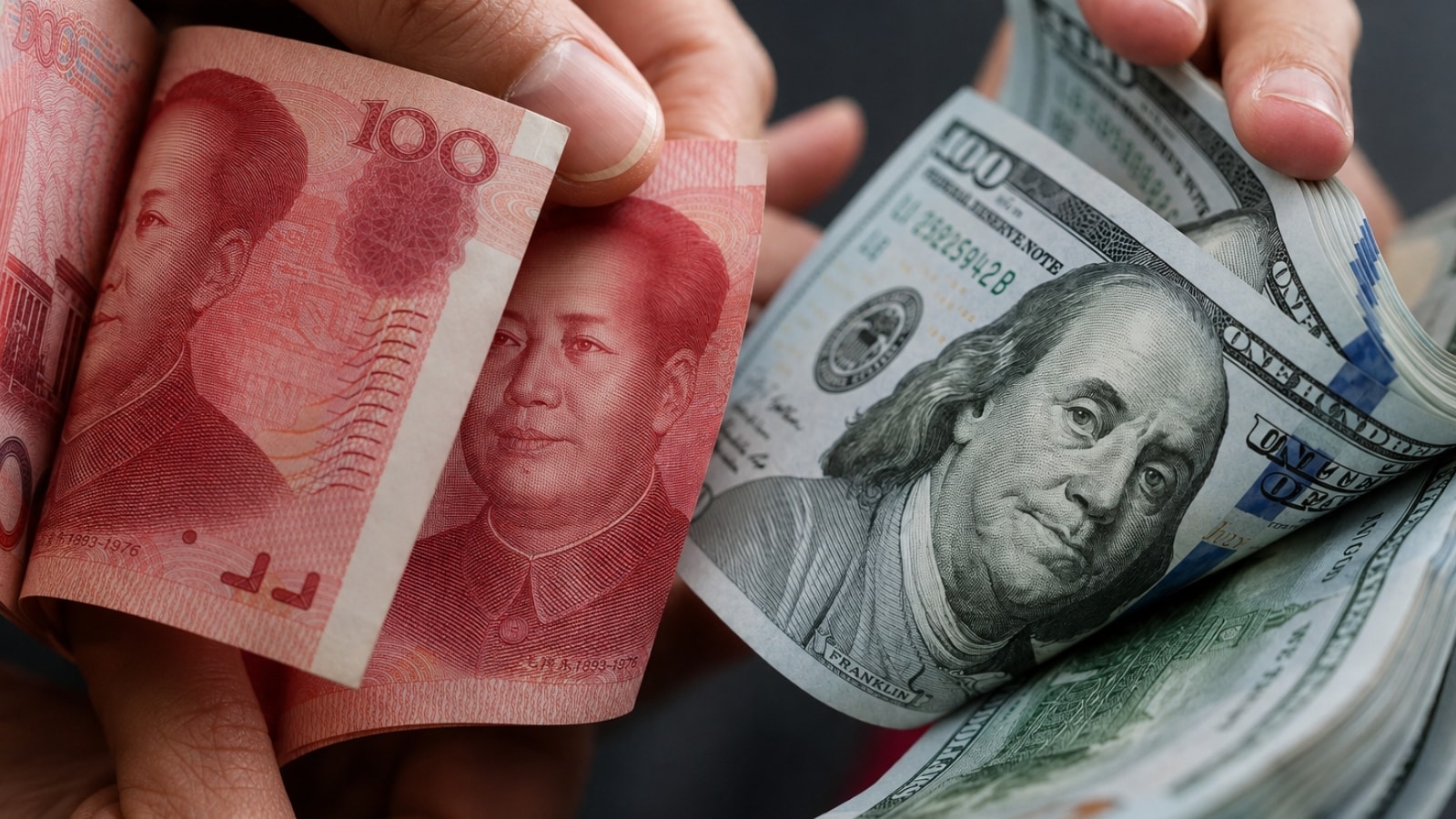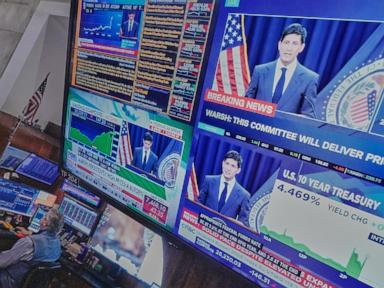
For over a decade, Wall Street operated under a comforting assumption. Whenever the markets stumbled, the Federal Reserve would step in with monetary painkillers. This implicit safety net—the famous "Fed put"—conditioned an entire generation of traders to buy every dip. Now, that era is over. A quieter, more hands-off central bank is stepping back from its role as the market's constant caretaker. Without the Fed actively suppressing volatility and capping interest rates, investors are entering a harsher economic environment. Borrowing costs will stay structurally higher, and asset prices will swing wildly as the market learns to price risk without a government backstop.
The Cost of Central Bank Silence
For years, monetary policy dictated every tick of the ticker tape. Every speech, dot plot, and press conference was dissected like holy scripture. But the central bank is intentionally lowering its profile, aiming to let economic data, rather than forward guidance, drive the narrative.
This shift is not a mere change in communication strategy. It is a fundamental rewiring of financial mechanics. When the central bank recedes into the background, it stops artificially smoothing out the bumps in the road.
Consider the mechanics of the bond market. For years, massive quantitative easing programs made the central bank the buyer of last resort. This relentless demand kept treasury yields low and predictable. With that constant intervention removed, private capital must do the heavy lifting. Investors now demand a term premium—extra compensation for the risk of holding long-term debt. The immediate result is a structural upward pressure on borrowing costs across the entire economy, from corporate credit to residential mortgages.
Higher rates are not a temporary spike. They are the new baseline.
Why the Old Playbook is Broken
Many fund managers still operate on the assumption that inflation will permanently return to historical baselines, allowing policy rates to plunge back toward zero. This is a dangerous miscalculation.
The macroeconomic tailwinds that kept inflation and interest rates low for thirty years have reversed. Secular forces are now actively pushing costs upward.
- Deglobalization: The unwinding of global supply chains means companies are prioritizing resilience over cost-efficiency, near-shoring production at a much higher price point.
- Demographics: Aging populations across major economies mean labor shortages are becoming structural, keeping upward pressure on wages.
- The Green Transition: Rebuilding industrial infrastructure to meet climate mandates requires trillions of dollars in capital expenditure, driving up the cost of raw materials and energy.
When the Federal Reserve stays quiet in this environment, it signals that it is willing to tolerate these higher structural rates rather than aggressively cutting to spark growth. The central bank understands that forcing rates back to zero would simply reignite inflationary pressures.
The Illusion of Liquid Markets
Market liquidity looks pristine on paper during a bull market. But true liquidity is tested during a sell-off.
Without the central bank actively managing expectations, market participants must guess how policymakers will react to negative economic data. This creates a dangerous information vacuum. When asset managers cannot predict the central bank's next move, their default reaction to bad news is to pull back, reduce risk, and hoard cash.
This behavior turns minor market corrections into cascading liquidity crises. The sudden air pockets seen in intraday trading are a direct consequence of this new reality. Algorithms control the vast majority of daily trading volume, and these models are tuned to historical data from an era of heavy central bank intervention. When confronted with a hands-off Fed, these systems systematically misprice risk, leading to violent, unpredictable swings in asset valuations.
The Corporate Debt Time Bomb
The true damage of a quieter Fed and structurally higher rates will not be measured in stock market percentages. It will be measured in corporate bankruptcies.
During the era of free money, hundreds of companies survived purely by rolling over cheap debt. They did not need to be highly profitable; they just needed an open credit window. As billions of dollars in corporate bonds mature, these entities face a brutal refinancing wall.
A company that comfortably serviced its debt at a 3% interest rate cannot survive when that debt re-prices at 7% or 8%.
The corporate world is bifurcating into two distinct camps. On one side are the cash-rich giants that do not need to borrow and are actually earning yield on their reserves. On the other side is a vast army of zombie enterprises that are burning through cash and facing imminent credit downgrades.
As these weaker companies begin to default, credit spreads will widen. Banks, facing their own regulatory pressures and higher funding costs, will tighten lending standards even further. This creates a self-reinforcing credit crunch that operates entirely independent of explicit central bank policy shifts.
The Reality of the Transition
This transition will not be smooth, and it will not be painless. Wall Street is currently going through a painful process of withdrawal from its addiction to cheap money.
For the individual investor, the implications are stark. The passive strategy of buying broad index funds and waiting for the central bank to rescue the market during a downturn is no longer viable. Asset allocation now requires a rigorous focus on balance sheet strength, free cash flow, and pricing power. Companies that rely on financial engineering and constant debt issuance to boost their stock prices will be systematically weeded out.
The Federal Reserve's retreat from the spotlight is an attempt to restore normalcy to a financial system that has been distorted by a decade of emergency measures. But normalcy after a long period of excess feels like a crisis. The volatility we see today is not a temporary malfunction of the markets. It is the sound of the financial system adjusting to a world where money has a real cost, and risk has real consequences.