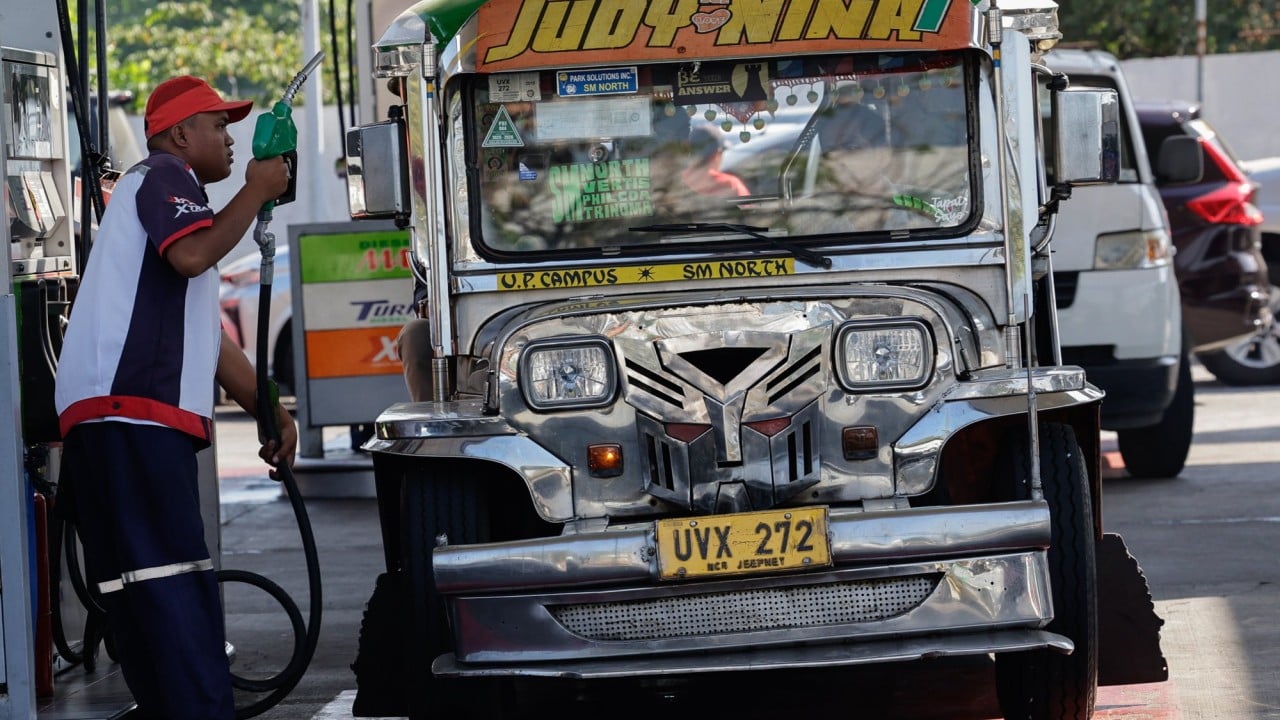
The pre-dawn air in Manila usually tastes of salt and old exhaust, but lately, it smells of nothing but anxiety. For a jeepney driver like "Efren"—a composite of the thousands currently gripping steering wheels with white-knuckled intensity—the dashboard is no longer a tool. It is a countdown clock. Every millimeter the fuel needle drops toward the red "E" isn't just a technicality. It is a meal skipped. It is a tuition payment missed. It is the slow, grinding sound of a nation’s gears seizing up.
While Efren watches the pumps, President Ferdinand Marcos Jr. is watching the calendar. The ASEAN Summit looms. It is the kind of international stage where handshakes are choreographed and the world’s cameras focus on the "Bagong Pilipinas" (New Philippines) branding. But there is a ghost at the feast: a fuel crisis that has moved past "inconvenient" and settled firmly into "existential."
The question rippling through the corridors of Malacañang isn't just about logistics. It is about the optics of hosting a regional gala while the host's own house is shivering in the dark.
The Mathematics of Misery
Energy isn't abstract when you can't afford it. The Philippines finds itself caught in a pincer movement of global volatility and domestic fragility. As international oil prices dance to the tune of Middle Eastern instability and Eastern European trench warfare, the local impact is felt in centavos that add up to catastrophe.
The country imports nearly all its fuel. When the global market twitches, the Filipino commuter bleeds. We are seeing a ripple effect that starts at the pump and ends at the dinner table. If it costs more to move a sack of rice from the fields of Isabela to the markets of Quezon City, that rice becomes a luxury. Inflation isn't a graph in a central bank report; it’s the physical weight of a grocery bag that feels lighter every week despite costing more.
The pressure to postpone the ASEAN Summit stems from a simple, brutal logic: How can the government justify the massive expenditure of a high-security, high-luxury international event when the transport sector is on the verge of a total strike?
Consider the friction. A summit requires cleared roads, massive motorcades, and a temporary suspension of the very chaos that defines Manila. To the average citizen waiting three hours for a bus because half the fleet stayed home to save on diesel, those black tinted SUVs look less like diplomacy and more like an insult.
The Invisible Stakes
There is a specific kind of silence that falls over a city when the engines stop. It happened during the height of the pandemic, and the memory of that stillness haunts the current administration.
Marcos Jr. campaigned on a platform of continuity and a return to glory. To postpone the summit would be a public admission that the engine of the state is sputtering. It would signal to his neighbors—Vietnam, Indonesia, Thailand—that the Philippines is currently a "sick man" once again, unable to manage its own internal fires long enough to host a weekend meeting.
But the alternative is equally risky.
Holding the summit amidst a fuel-induced domestic crisis risks a "Marie Antoinette moment." If the jeepney drivers carry out their threat of a nationwide transport strike during the arrival of heads of state, the world won’t see the New Philippines. They will see a paralyzed archipelago. They will see a government that can talk to presidents but cannot talk to its own people.
The logistics are a nightmare. Every gallon of fuel diverted to ensure the summit’s motorcades and generators remain powered is a gallon taken from the public supply. It is a zero-sum game played with a volatile liquid.
Beyond the Pump
Why is this happening now? The crisis is a symptom of a much deeper, older rot. For decades, the Philippines has failed to diversify its energy mix or build a strategic reserve that could cushion these shocks. We are a nation built on a "just-in-time" delivery system for a world that is no longer timely or reliable.
The Department of Energy speaks of "mitigation measures" and "targeted subsidies." These are words that sound good in a press release but feel like paper shields against a hurricane. A subsidy that takes three months to process is useless to a driver who needs to buy diesel today to earn enough to buy rice tonight.
The tension isn't just about the price of a liter of gasoline. It’s about the erosion of the social contract. When people can no longer move, they can no longer participate in the economy. When they can no longer participate, they begin to look for someone to blame.
The ASEAN Summit was supposed to be the moment Marcos Jr. solidified his role as a regional leader. Instead, it has become a crucible. If he goes ahead, he risks a PR disaster on a global scale if protests erupt. If he postpones, he looks weak on the international stage.
The Weight of the Chair
Diplomacy is often described as the art of the possible. Right now, in Manila, the "possible" is shrinking.
The summit agenda is packed with talk of South China Sea tensions and regional trade agreements. These are vital issues, certainly. But there is a disconnect between the high-level talk of maritime borders and the grounded reality of a mother in Tondo wondering if the price of a tricycle ride to the health clinic has doubled since yesterday.
There is a psychological cost to this uncertainty. It breeds a sense of precariousness. When a country's leadership is seen prioritizing the comfort of foreign dignitaries over the mobility of its own workforce, the resentment doesn't just evaporate once the delegates fly home. It lingers. It settles into the soil.
The government’s hesitation to call off the event speaks to a desperate need for legitimacy. They want to show the world that the Philippines is "open for business." But business requires movement. Business requires a functioning transport system. Business requires a population that isn't one fuel hike away from the poverty line.
The Human Component
Let’s go back to Efren. He doesn't care about the ASEAN communiqué. He doesn't care about the "Joint Statement on Regional Cooperation." He cares about the fact that his tank is half-empty and his pockets are entirely so.
If the summit happens, the roads he relies on will be blocked for "security reasons." He will lose even more hours of earning potential. To him, the summit isn't a sign of national progress; it’s an obstacle to his survival.
The true fuel crisis isn't just in the tanks of the vehicles. It is in the exhaustion of the people. There is only so much "resilience" a population can show before the word starts to feel like a trap. We are told to be resilient so that the people in power don't have to be competent.
The decision to postpone or persevere is ultimately a choice of which audience Marcos Jr. fears more: the nine other leaders of Southeast Asia, or the millions of Filipinos who are tired of being told to wait for the benefits of a "growing economy" to trickle down to the gas station.
The lights of the summit venues are being tested. They are bright, expensive, and steady. But outside those guarded gates, the streetlights are flickering, powered by a grid that is straining and a public whose patience is running as dry as a desert well.
The ink on the summit invitations is dry, but the asphalt on the streets of Manila is hot with a different kind of energy. It is the heat of a population that is tired of being the backdrop for a story they aren't actually allowed to star in.
In the quiet offices of the palace, the planners are looking at seating charts. They are worried about who sits next to whom. They should be worried about who isn't sitting at the table at all—the thousands of Efrens, whose presence is only felt when their engines finally, decisively, stop.
The empty tank and the empty chair are one and the same. They represent a vacuum where a strategy should have been. The summit may happen, and the photo ops will be beautiful. But the real story is written in the exhaust and the silence, and that is a story no amount of diplomacy can ever truly erase.
The city is waiting for the next price hike. It is waiting for the next speech. But most of all, it is just waiting. And waiting, as any commuter will tell you, is the most expensive fuel of all.