The chalk dust on the blackboard had not even settled yet. It lingered in the slant of the morning sun, catching the motes of a Tuesday that was supposed to look like every other Tuesday.
Roshan Mijav sat at Roll Number 31.
In school registers across the world, numbers are just administrative armor. They are ink on cheap paper, neat columns meant to track attendance, fees, and state-mandated metrics. But in a classroom filled with the scent of wet slate and cheap graphite, a roll number is a living pulse. It is the exact cubic foot of space where a child leans their elbows, carves their initials into the underside of a wooden desk, and loses their erasers.
Then the mountain moved. Or the river swelled. Or the earth simply shrugged beneath a fragile infrastructure built on ambition and hollow safety codes.
When the tragedy struck Nepal, the news cycles did what they always do. They delivered the macro shockwave. They counted the thousands displaced, the billions in structural damage, the political finger-pointing echoing through Kathmandu's stone corridors. We watched the flickering aerial shots of brown torrents carving through green valleys. We heard the grim announcers rattle off statistics like a weather report.
Numbers. Always numbers.
Statistics are an anesthetic. They dull the nervous system so we can keep eating breakfast while the world burns. One thousand dead becomes a ledger entry. Ten thousand homeless becomes a humanitarian budget line. But history is not made in the aggregate. It is made in the particulars.
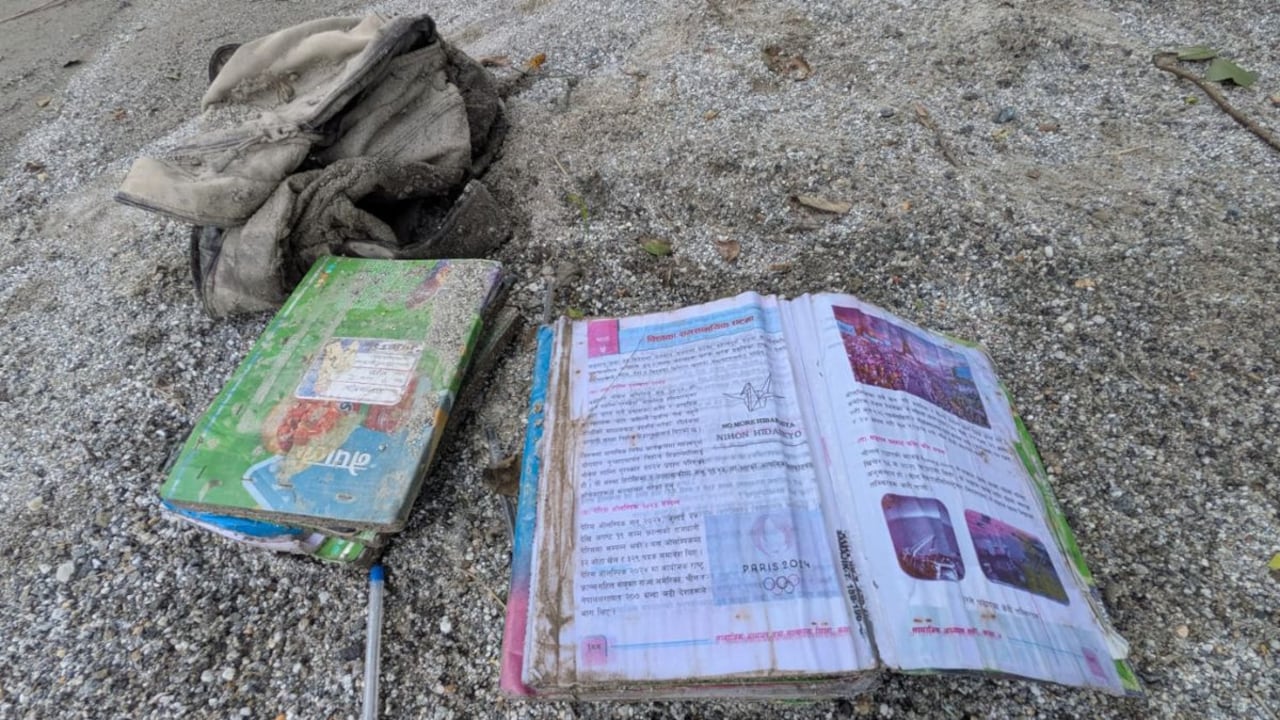
Consider what happens when the flood recedes, the cameras pack their lenses, and the international aid convoys roll back to the highway. The mud dries. The weeping quiets into a dull, permanent ache. And someone opens a sodden, waterlogged backpack pulled from the debris.
Inside lies a textbook.
It is dog-eared at page forty-two. It has a blue plastic cover wrapped by a mother who stayed up late by candlelight, smoothing down the edges with the palm of her hand. On the inside flyleaf, written in the clumsy, earnest script of a student who still had to ask permission to sharpen a pencil, is a name.
Roshan Mijav, Roll Number 31.
That is the true cost of the Nepal tragedy. Not the concrete. Not the severed power lines. Not the economic projections that will take a generation to correct. The true cost is measured in unsharpened pencils, in the silence that sits in the back row of a classroom, and in the sudden, terrifying realization that the systems we trust to protect our children are often built on paper thin enough to tear in the first real wind.
I have walked those mountain paths. I have felt the thin, biting Himalayan air burn the back of my throat, and I have seen how fragile human settlement is when clinging to the sheer ribs of the world. There is a haunting beauty to the villages perched on those slopes, but it is a beauty bought on credit. Everyone living there knows the terms of the loan. They know the monsoon is not just a season, but a test of endurance.
Yet, knowing the risk and accepting the institutional negligence that amplifies that risk are two entirely different atrocities.
When schools collapse under the weight of monsoon rains or minor tremors, we call it a natural disaster. It is a comforting lie. Mother Nature provides the trigger, but human greed, corner-cutting, and institutional apathy pull the hammer back. Why were those school buildings constructed without proper foundations in a known seismic and flood zone? Why did the inspection reports gather dust in municipal drawers while contractors collected checks meant for steel rebar and cement?
These are not abstract policy questions. They are questions written in the margins of Roshan's math notebook.
The tragedy in Nepal laid bare a universal truth that we spend our lives trying to unsee: our infrastructure is a mirror of our collective priorities. If a school building is the first thing to disintegrate when the earth shakes, we are not just failing to engineer buildings; we are failing to engineer a future. We are telling the children in the front row, and the ones at Roll Number 31, that their presence on this earth is provisional, contingent on whether the weather decides to be merciful.
Mercy is a poor substitute for architecture.
When we look at the textbooks recovered from the wreckage, we are peering through a keyhole into a stolen universe. We see the ink smeared by river water, the algebra problems left half-solved, the margins where a mind was expanding, learning to question, learning to dream of a life beyond the ridges of the valley. Every unread chapter is a lost innovation. Every empty seat is a missing voice in the parliament, a silent clinic, a painting never hung, a bridge never built.
We grieve the dead, but we must also grieve the unrealized.
The recovery effort in Nepal will eventually fade from the front pages. New crises will eclipse the old ones. The news cycle demands fresh blood and different geographies to keep our attention hooked. But in the villages where the hillsides gave way, the calendar is permanently split into two eras: before Roll Number 31, and after.
A mother still sweeps a floor that no longer needs sweeping quite as often. A teacher still calls out a name from force of habit, only to catch their breath in the quiet space between the desks.
The chalk dust finally settles. The wind whispers through the empty window frames of a roofless schoolroom. And somewhere in the dark, the unwritten pages of a thousand textbooks turn themselves in the draft, waiting for a hand that will never reach out to hold them.