The coffee in the press room goes cold faster than usual when the schedule stays blank.
Diplomacy is a business of margins, whispers, and choreography. Every movement is rehearsed months in advance. Every handshake is weighed for its optics, its angle to the camera, its precise duration. Yet, sometimes, the most profound statement a superpower can make is complete, deafening silence.
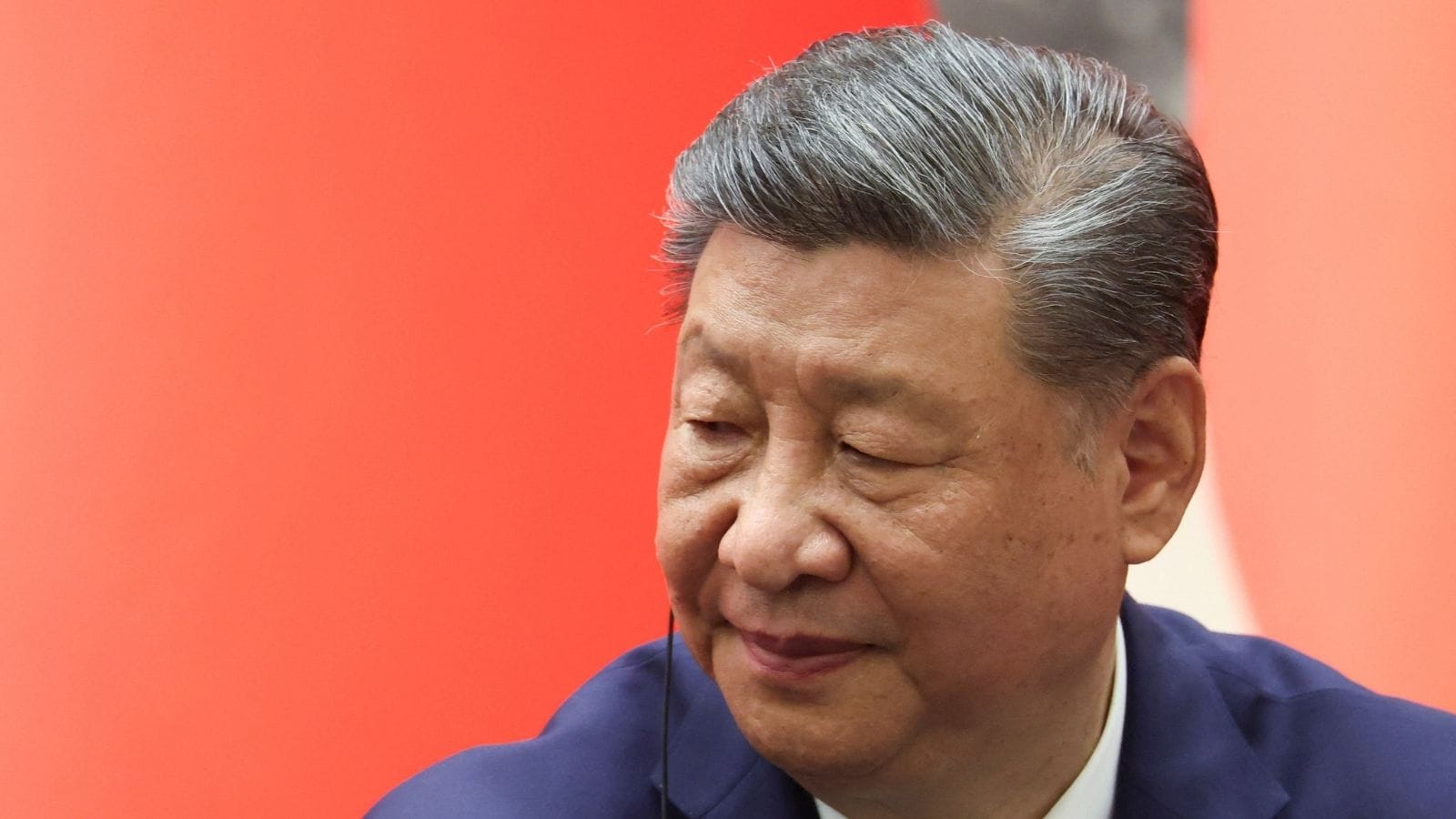
Consider the quiet that currently surrounds Beijing. Xi Jinping’s upcoming movements, specifically regarding the high-stakes BRICS gathering, remain stubbornly unconfirmed. No sleek press releases. No smiling spokespersons offering reassuring nods. Just a heavy, expectant void where an itinerary ought to be.
To understand why this matters, you have to step away from the polished mahogany tables of international summits and look at how global power actually functions on the ground. Power is gravity. When a heavy mass shifts, everything else in the room wobbles.
Imagine standing in a bustling port city in the Global South, say, Dar es Salaam or Salvador. You watch container ships unload cranes, steel, and digital infrastructure financed by Beijing. The local dockworkers speak of loans, currency swaps, and alternate financial corridors designed to bypass traditional Western banking systems. To these workers, BRICS is not an acronym for an abstract economic bloc; it is the promise of a different architectural blueprint for the world. It is an alternative to the Washington Consensus. It is a lifeline, or a trap, depending on who you ask.
And at the center of that architectural ambition stands Xi.
When his attendance at a major summit hangs in the balance, it sends a tremor through financial markets and diplomatic corridors alike. Is it a scheduling conflict? A domestic economic firestorm demanding his full attention in Zhongnanhai? Or is it a calculated diplomatic snub—a message delivered not by shouting, but by simply refusing to show up?
In international relations, absence is a weapon.
To decode this uncertainty, we must look past the shiny veneer of multilateral solidarity. BRICS is often marketed as a unified front, a harmonious choir of rising economies demanding a multipolar world. But choirs require tuning. Behind closed doors, competing national interests pull hard against one another. New Delhi and Beijing share a heavily militarized border and a deep-seated strategic suspicion, even as they sit side by side in group photographs. Brasília and Pretoria navigate their own domestic pressures, balancing traditional ties with Western economies against the gravitational pull of Chinese trade.
When the anchor of the bloc hesitates to confirm his presence, it exposes the fragility underneath the grand rhetoric. It reminds everyone in the room that this coalition is an alliance of convenience, not a brotherhood of shared destiny.
I remember sitting in a dimly lit café in a developing capital years ago, listening to a local economist trace lines on a paper map. He pointed to the ports, the highways, the digital cables, and said something that stayed with me: "When elephants dance, the grass gets crushed. But when the biggest elephant stays home, the grass stops moving altogether, and nobody knows whether to breathe or run."
That is the exact tension playing out right now.
If Xi decides not to board the presidential aircraft, the summit changes character entirely. It transforms from a theater of triumphant expansion into a crisis management seminar. Analysts will scramble to rewrite their columns. Diplomats will burn midnight oil drafting ambiguous joint communiques to paper over the empty seat. The narrative shifts instantly from the rise of a new global order to the internal friction of a bloc struggling to find its footing.
Conversely, if a late confirmation drops, the machinery snaps back into motion. The red carpets roll out. The motorcades line up. The cameras capture the smiles, the handshakes, and the declarations of a new dawn.
Yet, the delay itself remains the true story.
It reveals the supreme centralization of modern statecraft. In systems where power is diffused across legislative bodies and public debates, schedules are routine. In systems built around a single, towering political figure, every absence is deliberate. Every delay is a signal.
The world waits. The tea grows cold. And somewhere in Beijing, a brush hovers over a document, deciding whether the signature will drop today, or tomorrow, or not at all.