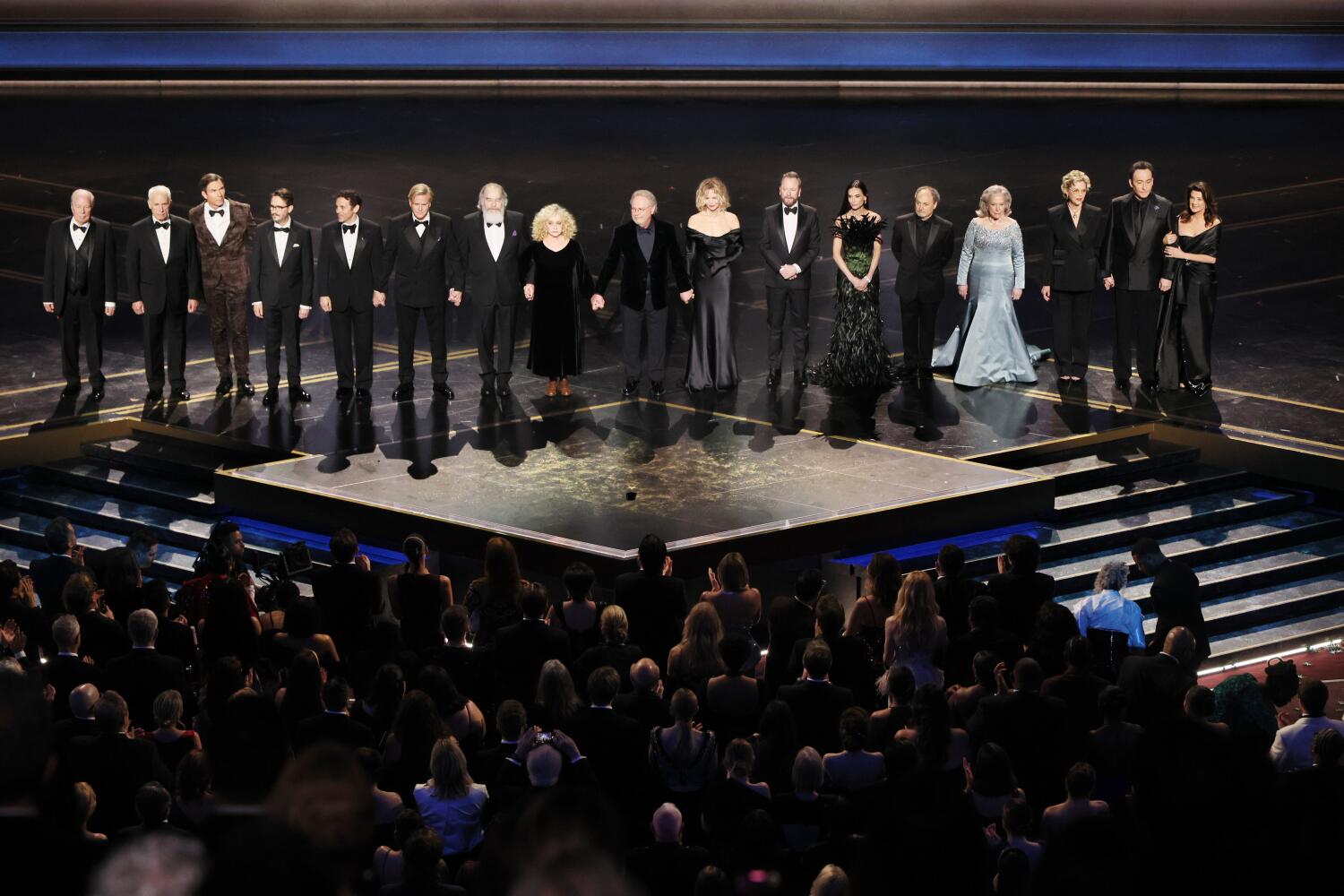
The lights inside the Dolby Theatre possess a specific, artificial heat. They bake the air until it smells of expensive hairspray and nervous sweat. When the presenter walks toward the microphone, the silence in the room isn't just quiet; it is heavy. It is a vacuum. Everyone is leaning into the spotlight, waiting for a name to bridge the gap between a performance and a legacy.
When the name "Sean Penn" echoed through the rafters, the applause followed a familiar script. It was loud. It was respectful. But as the cameras panned toward the front rows, looking for the rugged, weather-beaten face of the man who had just won Best Supporting Actor for One Battle After Another, they found nothing. Just a seat. Empty.
Winning an Oscar is supposed to be the pinnacle of a certain kind of secular religion. We are taught that the golden statuette is the ultimate validation of a human being’s creative worth. Yet, for Penn, the win seemed to exist in a different dimension than the ceremony itself. He wasn't there to claim the physical object. He was somewhere else, likely far away from the tuxedos and the $500-a-plate dinners, inhabiting the same restless energy that defines his best work.
The Weight of the Win
One Battle After Another is not a film that invites comfort. It is a grueling, visceral look at the intersection of veteran trauma and the fading American dream. Penn plays a man whose life is a series of slow-motion collisions. To watch him on screen is to watch a man who has forgotten how to breathe without pain.
The Academy loves a comeback, and they love a transformation. But this win felt different. It wasn't about the makeup or the prosthetic scars. It was about the exhaustion. Penn didn't look like he was acting; he looked like he was vibrating at a frequency only dogs and the deeply broken can hear.
The irony of the night was palpable. While Hollywood celebrated his "supporting" role, the performance itself was an act of total emotional surrender. He carried the film. He provided the gravity. Without him, the story would have floated away into the ether of melodrama. By awarding him the Oscar, the industry was essentially trying to pull him back into the fold. They were saying, "You are one of us."
Penn’s absence said something else entirely.
The Invisible Stakes of Absence
Consider the logistics of the Oscars. There are publicists who spend months coordinating the precise moment an actor steps out of a limousine. There are stylists who agonize over the tilt of a bowtie. For an actor to simply not show up is a quiet act of rebellion. It suggests that the work—the grueling months of filming, the psychological toll of inhabiting a broken soldier—is the only part that matters.
Imagine a young filmmaker sitting in the back of that theater. They see the empty chair. They see the trophy being accepted by a proxy, a standard "thank you" read from a piece of paper. To that filmmaker, the message is clear: The art is not the party. The art is what happens when the cameras are rolling and the soul is exposed.
Penn has always been a polarizing figure. He is a man who goes to war zones when he could be at beach houses. He is a man who speaks when silence would be more profitable. This win for One Battle After Another marks a rare moment where his artistic brilliance and his public persona finally fused. He won for playing a man who is tired of the world’s noise.
How fitting that he refused to add to the noise of the night.
Why We Care About the No-Show
We live in an age of total access. We expect celebrities to be available to us 24/7 through a glass screen in our pockets. We want the "behind-the-scenes" footage. We want the red carpet interview where they tell us who they are wearing. When an artist denies us that access, it creates a friction.
That friction is healthy.
It reminds us that there is a boundary between the creator and the creation. Penn’s performance in One Battle After Another was a gift to the audience. The Oscar was the audience’s way of saying thank you. But Penn doesn't owe us the sight of him in a tuxedo. He doesn't owe us a tearful speech about his childhood or a joke about the length of the ceremony.
The invisible stakes here involve the very nature of fame. If you can win the highest honor in your field without participating in the pageantry, what does that say about the pageantry? It suggests that maybe, just maybe, the work can still stand on its own.
The Performance That Defined a Year
To understand why the Academy couldn't ignore him, you have to look at the "Battles" he portrayed. The film centers on a specific kind of American loneliness. It’s the loneliness of the man at the end of the bar who hasn't spoken to his daughter in five years. It’s the loneliness of the person who did everything "right"—went to war, worked the job, paid the taxes—and still ended up with nothing but a rusted truck and a box of medals.
Penn navigated this role with a terrifying lack of ego.
Most actors, when playing "broken," still want to be liked. They want the audience to see the glimmer of the movie star beneath the grime. Penn buried the movie star. He leaned into the ugliness. He allowed himself to look old, small, and redundant.
There is a scene halfway through the film where his character tries to fill out a job application at a local hardware store. His hands shake. Not the theatrical shake of a "prestige" performance, but the subtle, rhythmic tremor of a nervous system that has spent too much time in a state of high alert. He doesn't get the job. He walks out into the sunlight, and for thirty seconds, the camera just stays on his back.
In those thirty seconds, Penn tells the story of an entire generation of Americans who feel they have been forgotten.
The Aftershocks
The Oscar for One Battle After Another will eventually find its way into a box or onto a shelf. In twenty years, people will look back at the list of winners and see Penn's name for the third time. They will see the record. They will see the stats. But what they won't see is the empty chair.
They won't see the silent statement made by an artist who had nothing left to prove and no desire to stand on a stage and be stared at.
Penn’s absence was the most powerful performance of the night. It was a reminder that the "one battle after another" isn't just a movie title—it's the life of anyone who takes their craft seriously. It’s the battle to remain human in a world that wants to turn you into a brand. It’s the battle to tell the truth when the truth is ugly and doesn't fit into a 30-second acceptance speech.
As the credits rolled on the broadcast and the lights in the Dolby Theatre finally dimmed, the vacuum remained. The seat where a legend should have been was still empty. It was a haunting image. It was the only image that mattered.
The trophy was awarded. The battle was won. And the man who won it was already back in the shadows, looking for the next war to fight.