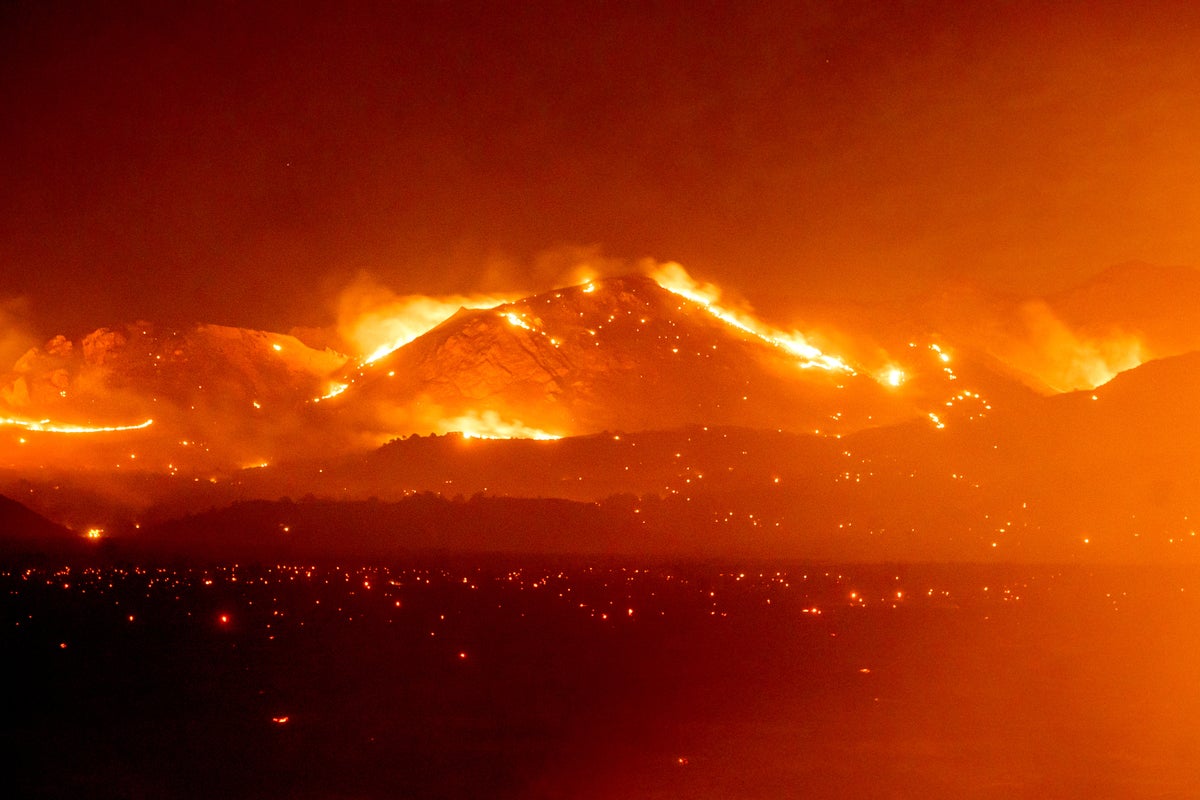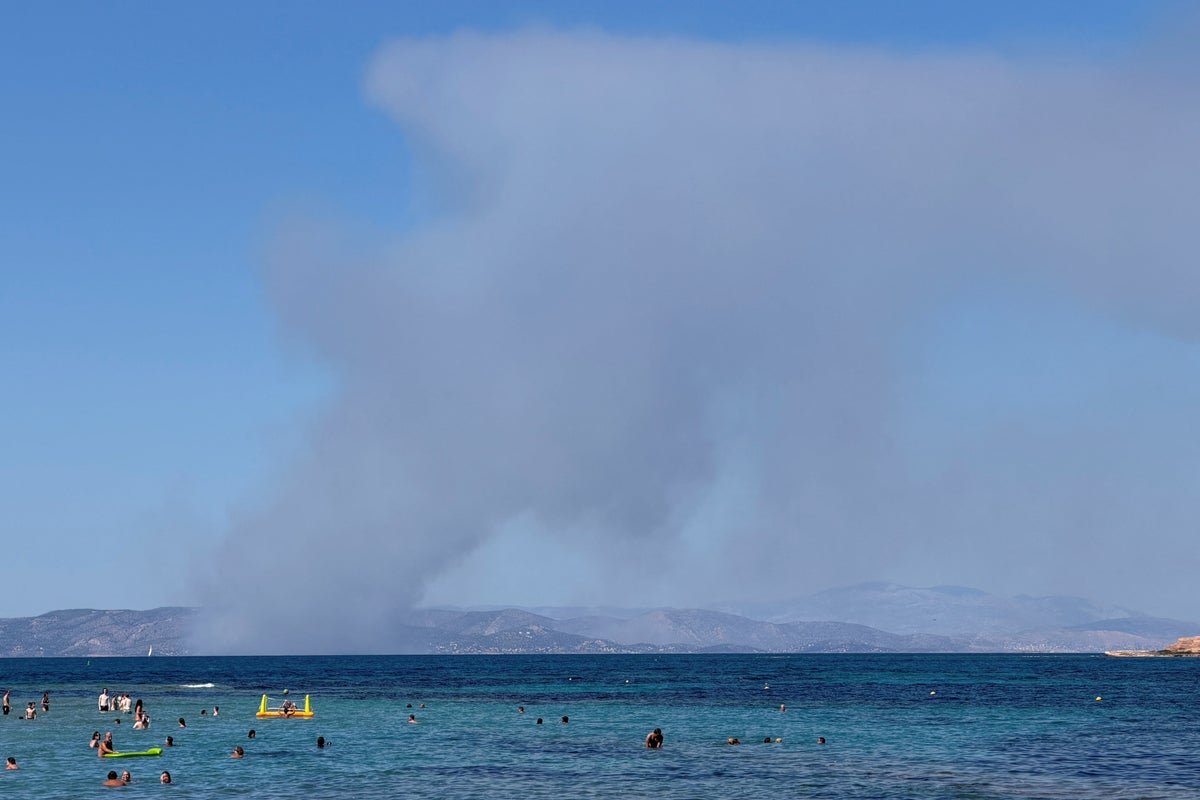
Every single fire season follows the exact same theatrical script. Flames touch a hillside, panic spreads faster than the front, and international headlines scream about tragedy on idyllic shores like Salamina. The standard narrative blames climate anomaly, delayed sirens, or municipal incompetence. Everyone points fingers at local authorities for failing to move tens of thousands of people down narrow coastal roads in a matter of hours.
It is a comfortable lie. It lets everyone ignore the structural reality of Mediterranean geography and archaic urban planning. Learn more on a connected topic: this related article.
I have spent two decades walking the charred perimeter lines of Mediterranean wildfire zones, watching governments repeat logistical impossibilities while expecting different outcomes. The lazy consensus says we just need better early warning systems and more buses. That is nonsense. When you pack a dense residential island with thousands of concrete structures built right up against pine thickets, evacuation is not a rescue operation. It is a traffic bottleneck engineered for disaster.
The Geography of Failure
Look at Salamina. It sits in the Saronic Gulf, packed with summer homes, narrow alleyways, and single-lane coastal arteries choked by decades of unchecked organic development. When an erratic wind shifts a wildfire toward a populated pocket, the instinctual demand is to get everyone on the main road and push them toward the port. Additional reporting by Al Jazeera explores related views on this issue.
This assumes asphalt has infinite bandwidth. It does not.
When you order an entire municipality to evacuate simultaneously, you create a vehicular parking lot trapped between rising heat and the open sea. Cars overheat, drivers panic, and the very escape route transforms into a thermal trap. We saw this exact choreography in Mati, in Maui, and repeatedly across the Greek archipelago. Relying on mass vehicle evacuation in high-density, low-egress island topography is not a safety plan. It is a death sentence packaged as emergency management.
Defending Concrete Against Physics
The popular panic centers on the flames themselves. Yet, homes do not typically burn down because a wall of fire sweeps over them like a cinematic wave. They burn down because thousands of flying embers ignite dry brush, pine needles in gutters, wooden pergolas, and plastic patio furniture hours before the main front arrives.
Urban planners and civil protection agencies keep pouring capital into evacuation fleets while ignoring the building envelope. If a structure is wrapped in flammable materials, surrounded by unmanaged vegetation, and left unmonitored during a power outage, evacuating the occupants solves nothing for the property. Worse, it leaves communities entirely undefended. Once every human clears out, minor spot fires go unchecked, power grids fail, water pumps die from lack of electricity, and neighborhoods burn from the inside out.
Real emergency resilience is not about running away faster. It is about hardening the perimeter where you stand.
"Shelter-in-place strategies sound terrifying until you realize that running into a single-lane traffic jam surrounded by dry fuel is mathematically worse."
The Myth of the Silver Bullet Warning
Governments love buying expensive apps and automated text-alert systems. Brussels funds sophisticated satellite monitoring tools that track thermal anomalies down to the square meter.
Data is useless without actionable agency. Knowing a fire started twenty minutes faster does nothing when the bottleneck on the western ridge cannot process more than two hundred cars per hour. Technology becomes a digital placebo. It creates the illusion of preparedness while basic infrastructure remains fundamentally broken.
Ask any veteran wildfire commander who has actually operated on the ground in Greece. They will tell you that the most dangerous moment of any crisis is the exact second an evacuation order is broadcast to an untrained public with zero crowd-control infrastructure. Panic scales exponentially. Logistics degrade linearly.
Rethinking Island Resilience
If we are going to survive the next decade of extreme summer heat, we must abandon the notion that islands can be cleared out like a suburban parking lot during a hurricane.
First, decentralize water security. Every neighborhood needs standalone, gravity-fed or solar-backed fire suppression points that do not rely on municipal grid power, which always fails the moment a transformer blows.
Second, reintroduce aggressive, targeted fuel reduction—controlled grazing, managed underbrush clearing, and hard mineral firebreaks—right at the urban edge. You cannot stop a Crown fire in a dense forest with a hose. You stop it by removing the fuel load before the dry season begins.
Third, stop treating every resident as a passive victim waiting for a ferry ticket. Train local brigades in micro-suppression. Give communities the tools to defend defensive zones around hardened shelters rather than forcing them onto a suicidal highway dash.
The next time the sirens wail across the Saronic Gulf, the safest place might not be the road out. It might be the stubborn, hardened ground you refuse to abandon.