The marginal utility of a cleaning gadget is not defined by its suction power or sensor array, but by its ability to reduce the total cognitive and physical labor-hours required to maintain a living environment. Most consumer reviews treat domestic automation as a collection of isolated tools. A rigorous analysis requires viewing these devices as components of a specialized maintenance system, evaluated through three metrics: autonomy ratio, maintenance-to-operation time, and spatial versatility.
The Autonomy Ratio in Robotic Floor Care
A cleaning device’s value is inversely proportional to the human intervention it requires. The transition from manual vacuuming to robotic automation introduced a new bottleneck: the human labor needed to prep the environment and maintain the machine. To calculate the true efficiency of a robotic vacuum, one must subtract the time spent untangling brushes, emptying bins, and "rescue operations" from the total runtime.
Navigation and Obstacle Avoidance Hardware
The shift from random-bounce algorithms to LiDAR (Light Detection and Ranging) and vSLAM (Visual Simultaneous Localization and Mapping) represents a move toward deterministic cleaning.
- LiDAR Systems: These sensors emit laser pulses to map a room in 360 degrees. The primary advantage is low-light performance and millimeter-level accuracy in distance measurement.
- Structured Light and RGB Cameras: These identify objects rather than just detecting mass. A LiDAR system might see a power cord as a wall or a floor-level change, whereas an AI-trained camera system recognizes it as a hazard to be bypassed.
The failure point in current high-end models often lies in the software’s inability to differentiate between a temporary obstruction (a shoe) and a permanent architectural feature. This leads to "drift" in the internal map, eventually requiring a full system reset.
The Self-Base Station as a Force Multiplier
The introduction of auto-empty and auto-wash base stations shifted the autonomy ratio significantly. By automating the disposal of debris and the cleaning of mopping pads, these stations reduce human intervention from a daily requirement to a bi-weekly or monthly task. However, this introduces a new risk: biological stagnation. Damp dust in an auto-empty bag or dirty water in a recovery tank creates an environment for microbial growth if not managed by secondary systems like heat-drying or chemical additives.
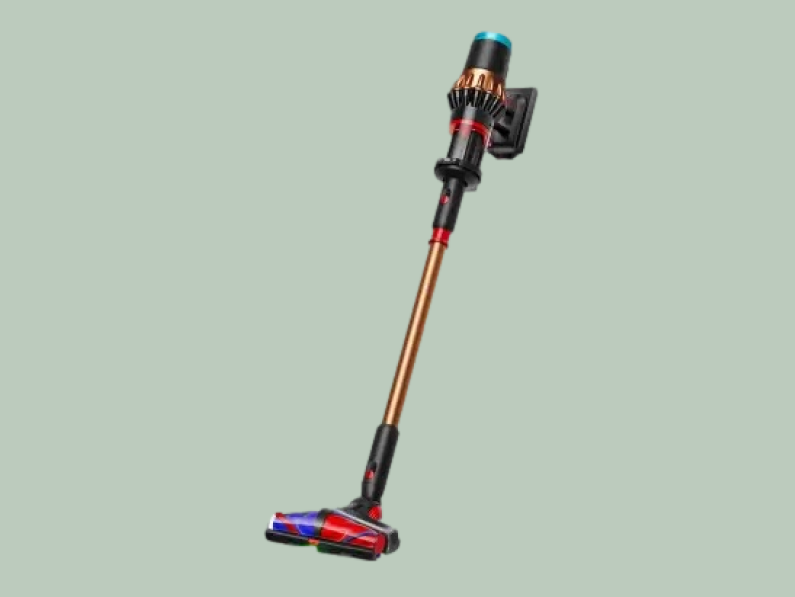
The Cost Function of Cordless Handheld Devices
Handheld stick vacuums are often marketed based on "Air Watts," a metric that combines airflow and suction. While impressive on a spec sheet, Air Watts are secondary to the device’s thermal management and battery chemistry.
Energy Density vs. Sustained Output
Most cordless vacuums rely on lithium-ion cells optimized for high discharge rates. The "Turbo" or "Max" mode on these devices often creates a thermal bottleneck. As the motor generates heat, internal resistance increases, leading to a rapid drop in voltage and a subsequent loss of suction. A machine that boasts 200 Air Watts but can only sustain it for six minutes is functionally inferior to a machine providing a consistent 100 Air Watts for thirty minutes.
Filtration and Particle Containment
Maintenance tools that lack sealed HEPA (High-Efficiency Particulate Air) filtration do not clean; they redistribute. A vacuum without a high-grade seal exhausts fine particulate matter back into the breathing zone. To qualify as an optimization tool, the device must achieve a 99.97% capture rate of particles as small as 0.3 microns. Anything less converts a cleaning task into an air quality hazard.
Mechanical Friction in Hard Floor Maintenance
Hard floor cleaning has moved from passive mopping to active agitation. The mechanics of this change involve the "Scrubbing Frequency" and "Water Flux Control."
Active Agitation Systems
Static mops rely on the user’s physical downward pressure. High-tech alternatives utilize dual-rotating discs or high-frequency sonic vibration. The logic here is simple: increasing the number of contact events per square inch reduces the need for chemical solvents.
- Sonic Agitation: Vibrates the cleaning head up to 3,000 times per minute to break the molecular bond between stains and the floor.
- Rotating Brushes: Utilize torque to lift debris. These are more effective for textured surfaces like tile grout but require more maintenance to prevent hair wrap.
The Problem of Cross-Contamination
The primary flaw in traditional mopping is the reuse of greywater. Advanced floor washers solve this through a dual-tank system that ensures only clean water and solution touch the floor. The success of this system is measured by the "Recovery Percentage"—the amount of water the vacuum motor can pull back into the dirty tank. If the recovery percentage is low, the floor remains damp, leading to slip hazards and potential damage to wood substrates.
Specialized Automation: Beyond the Floor
The expansion of cleaning technology into windows and air purification introduces different sets of physical constraints.
Robotic Window Cleaners
These devices are governed by the physics of vacuum suction or magnetic tethering. Their limitation is not the cleaning itself but the corners. Because most robotic window cleaners are circular or have rounded square edges, they leave a "dead zone" in the frame corners. They are best viewed as maintenance tools for large-span glass rather than a solution for deep-cleaning small, multi-paned windows.
Atmospheric Filtration Systems
Air purifiers are often misunderstood as "cleaning gadgets" when they are actually continuous infrastructure. The metric that matters is CADR (Clean Air Delivery Rate).
- Low-Speed Operation: An air purifier must be effective at its lowest noise setting, as this is how it will run 90% of the time.
- Sensor Accuracy: Cheaper units use infrared PM2.5 sensors that often confuse steam or humidity with dust. Laser-based sensors are required for an accurate trigger of the device’s "Auto" mode.
The Integration Bottleneck: Software and Ecosystems
The "smart" aspect of these gadgets is frequently the weakest link. Matter and Thread protocols are beginning to standardize how these devices communicate, but proprietary apps remain a source of friction. A vacuum that requires a 2.4GHz Wi-Fi band and fails to reconnect after a router reboot represents a net loss in system reliability.
Data Privacy and Spatial Mapping
High-tech cleaning devices are effectively mobile sensor platforms. Robots equipped with cameras and microphones represent a privacy trade-off. Users must evaluate whether the device processes data locally (on-device) or relies on cloud-based computation. Local processing is the superior choice for security, though it often results in a higher initial hardware cost due to the need for more powerful onboard processors.
Strategic Selection Criteria
To optimize a domestic maintenance system, do not purchase based on the "best" individual gadget. Instead, map the specific constraints of the environment.
Identify the Dominant Floor Type
In an environment that is 80% carpet, the priority must be a high-torque brush roll and deep-cleaning suction. Mopping features are a secondary, likely unnecessary, expense. Conversely, in a hard-floor-dominant environment, a vacuum-mop hybrid with a self-cleaning base station provides the highest return on investment.
Assess the Maintenance Threshold
If the user is unwilling to perform weekly maintenance on the machine itself, they should avoid complex hybrids with many moving parts. A high-quality corded canister vacuum, despite the "low-tech" stigma, offers higher reliability and lower long-term costs for those who prioritize simplicity over automation.
Calculate the Replacement Cycle
Battery-powered gadgets have a shelf life dictated by chemical degradation. A cordless vacuum typically loses 20% of its battery capacity every 300-500 charge cycles. When calculating the cost of a high-tech tool, include the price of a replacement battery at the three-year mark. If the battery is non-removable, the device is a depreciating asset with a hard expiration date.
Deploy a stratified cleaning strategy: use high-frequency robotic automation for daily maintenance of high-traffic zones, and supplement with high-power, corded or heavy-duty cordless tools for deep-cleaning intervals. Focus hardware investment on the "Base Station" ecosystem to maximize the autonomy ratio, while ensuring all atmospheric tools utilize laser-based sensing and sealed HEPA filtration to prevent the redistribution of fine-particulate matter.


:quality(85)/x8/fh/7HXvnnMcdomscTiif7/Blonde-porn-star-Shayla-LaVeaux-bends-over-to-get-her-pussy-smashed_015.jpg)