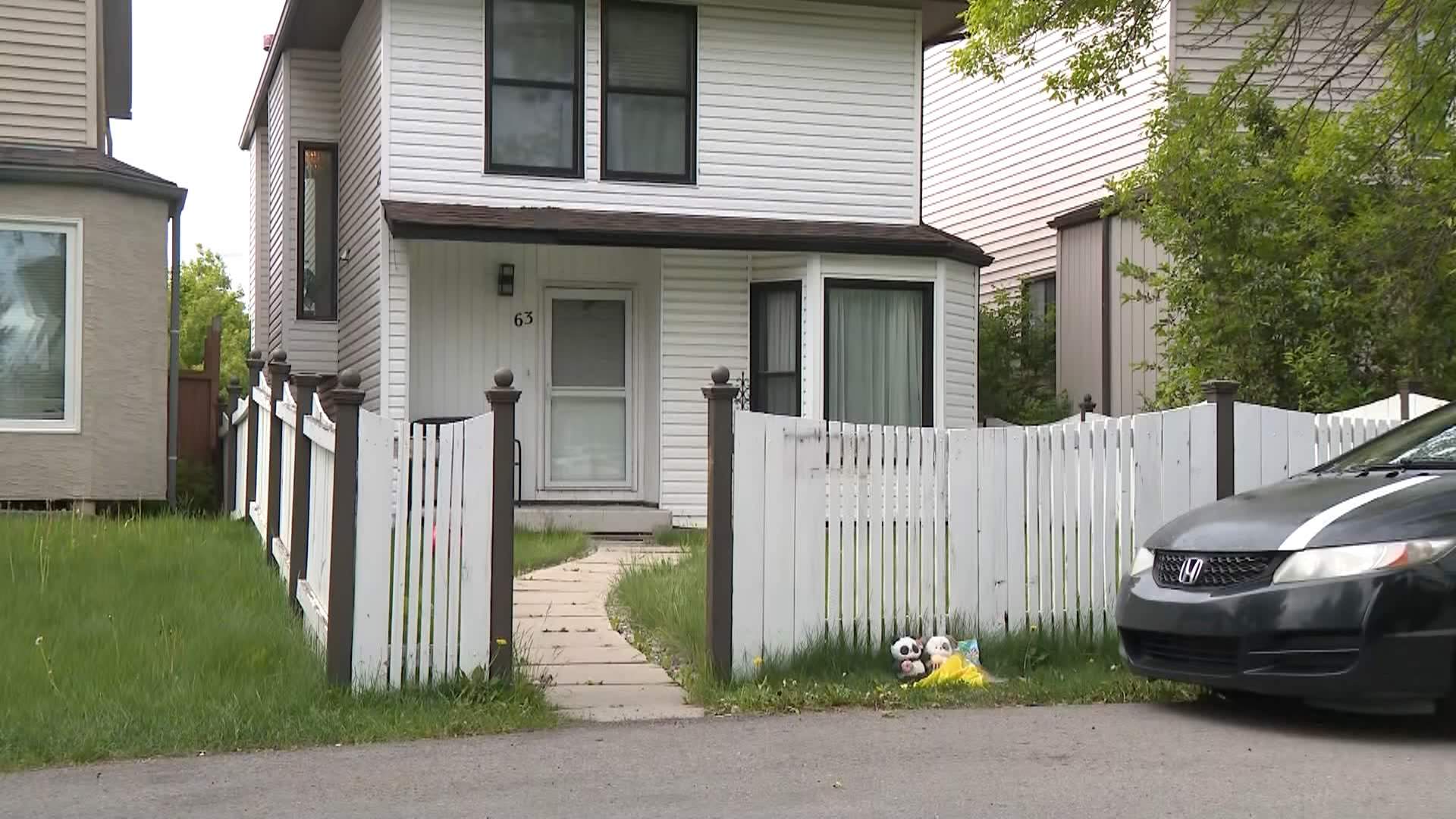
The garage door stays down. The lawn grows a fraction of an inch longer. In a quiet suburban neighborhood like Temple, in the northeast grid of Calgary, these are the only outward signs that the universe has fractured. We measure safety by the predictable rhythms of our neighbors—the morning commute, the scraping of snow shovels, the delivery trucks idling at the curb. We assume that the walls of a standard two-story split-level are thick enough to keep the chaos of the world at bay.
They aren't.
When the Calgary Police Service released their brief, clinical statement regarding the events inside a home on 72nd Street Northeast, it read like an autopsy of a situation rather than the end of two human lives. A woman, dead by suicide. A young boy, her son, dead by homicide. The case was closed before the public even fully understood it had opened. No suspects sought. No ongoing threat to the community. Just a neat, tragic package wrapped in police tape and filed away under domestic file numbers.
But a closed case file is not the same thing as answers. For those who live in the surrounding crescent, and for anyone who has ever looked at a struggling parent and wondered what lay beneath the surface, the silence left behind is deafening. It forces us to confront a terrifying reality about the limits of human endurance and the invisible walls that isolate families long before the flashing blue lights arrive.
Consider what happens when the internal scaffolding of a life collapses entirely out of sight.
The Fiction of the Perfect Suburban Grid
To understand how a tragedy like this matures in the dark, you have to understand the geography of isolation. Suburban developments are designed for privacy. We build fences precisely six feet high. We install blinds that tilt upward so the street cannot see into our living rooms. This architecture of independence is exactly what we work so hard to afford, yet it doubles as a perfect camouflage for despair.
In a hypothetical household struggling with profound mental illness or overwhelming domestic strain—let us call it a composite of the dozens of fragile homes crisis workers visit across Alberta every single week—the descent is rarely loud. It does not look like a movie. There are no dramatic screaming matches audible from the sidewalk.
Instead, the world simply shrinks.
First, the casual social invitations are declined. A text message goes unanswered for two days, then three, masked by the standard modern excuse of being "just so busy." Then, the curtains stay drawn during the daylight hours. The mother, carrying a weight that feels as heavy as wet cement in her chest, looks out at the bright, moving world of Calgary—the distant gleam of the downtown towers, the families heading toward nearby parks—and feels entirely disqualified from participating in it.
To the outside observer, nothing is explicitly wrong. The vehicle is parked in the driveway. The recycling bin is set out on Tuesday night. But inside, the oxygen is running out.
The human mind is a finely tuned instrument, but under sustained, unremitting pressure, its internal logic bends. When deep clinical depression or psychosis takes root, it distorts the most fundamental human instinct: the desire to protect one's child. To a healthy mind, the act of harming a child is incomprehensible, a monstrous departure from nature. But inside the funhouse mirror of severe psychological collapse, the calculus changes entirely. The distorted mind begins to view the world not as a place of opportunity, but as a hostile, painful gauntlet. A desperate, broken logic forms: If I cannot survive this world, how can I leave him behind to face it alone?
It is a mercy twisted into a weapon. It is the ultimate failure of perspective, born from a sickness that convinces the sufferer they are entirely, utterly alone.
The Anatomy of a Cold Report
When the media receives a police press release concerning a murder-suicide, the language used is deliberately sanitized. It is designed to prevent contagion, to respect the privacy of extended family, and to maintain public order.
The police tell us the facts. They tell us the day of the week. They confirm the relationship between the deceased. They state that the dynamic is domestic.
What they cannot tell us is the timeline of the silence.
- They cannot document the exact moment a mother’s internal dialogue shifted from "I need help" to "There is no help."
- They cannot catalog the subtle cries for assistance that might have been dropped into casual conversations months prior—the jokes about being tired that weren't actually jokes, the sudden, intense focus on finality.
- They cannot track the structural failures of a healthcare system where waiting lists for psychiatric intervention are measured in months, while mental crises are measured in minutes.
In Alberta, as in the rest of the country, the demand for intensive community mental health support has consistently outpaced availability. We have built robust systems for physical emergencies. If a chest pains strike on 72nd Street, a specialized vehicle with advanced life-support equipment will arrive within single-digit minutes to crack open the problem.
But if the soul is collapsing? If a parent is sitting on the edge of a bed at three in the morning, looking at their sleeping child through a veil of absolute hopelessness? The pathway to intervention is a labyrinth. It requires phone calls, intake assessments, referrals, and waiting rooms. It requires a level of executive functioning and navigation that the severely depressed individual simply does not possess.
The burden of rescue is shifted onto the person who is currently drowning.
What the Neighborhood Remembers
The aftermath of a domestic tragedy in a quiet community follows a predictable, haunting choreography.
The forensic vans park outside for twenty-four hours, their engines idling against the curb. Technicians in white suits carry out cases of equipment, stepping over the sidewalk chalk drawings left by other children on the block. Neighbors stand at the edges of their driveways, arms crossed against the chill, speaking in hushed, fragmented tones.
"She seemed so nice."
"They kept to themselves."
"I saw them at the grocery store last week."
These statements are not just observations; they are defense mechanisms. We say these things to convince ourselves that we couldn't have known, that the tragedy was a lightning strike from a clear blue sky. If the signs were invisible, then we are not responsible for having missed them. It protects us from the agonizing possibility that a kind word, a knocked door, or a persistent question might have disrupted the trajectory of that final, dark afternoon.
But the real problem lies elsewhere. It lies in our collective agreement that what happens behind a neighbor’s closed door is none of our business until the police tape goes up. We have elevated privacy to the highest virtue, forgetting that absolute privacy is the very environment where desperation breeds unchecked.
The boy who died in that house had a name, a school, a favorite toy, a future that was supposed to stretch out past the boundaries of Calgary, past the prairies, into decades of lived experience. His life was cut short not by a stranger in the dark, but by the very hands that had likely comforted him through night terrors and tied his shoes for school. The horror of that realization is something the community of Temple will carry for years. It stains the asphalt. It lingers in the air of the schoolyard down the street.
The Weight Left Behind
We are left with the uncomfortable task of mourning two people simultaneously, but in entirely different ways. We mourn the child with an uncomplicated, fierce grief—a life stolen before it could even properly begin. We mourn the mother through a prism of confusion, anger, and profound sadness. How do we hold space for the suffering of a woman who committed the ultimate act of violence against her own blood?
The answer is not to excuse, but to try, with immense difficulty, to comprehend.
Despair is a slow-moving, heavy fog. It rolls in over years, settling into the corners of a life until the exits are no longer visible. When we read the dry, clinical headlines detailing another domestic tragedy in our city, we cannot afford to simply shake our heads, turn the page, and thank God it wasn't our block.
The garage door on 72nd Street is a monument to a moment where our collective radar failed. It is a reminder that the most critical infrastructure in any city isn't the light rail transit, the ring road, or the glass towers downtown. It is the invisible web of human attention that connects one house to the next.
Tomorrow, the sun will rise over the Rockies, casting long shadows across the grid of northeast Calgary. The traffic on McKnight Boulevard will swell. The city will move on, because cities are massive, unfeeling machines designed to keep moving. But inside one home in Temple, the clocks have stopped, leaving behind only the cold, unanswerable question of what might have happened if someone had knocked on the door while it was still possible to open it.


