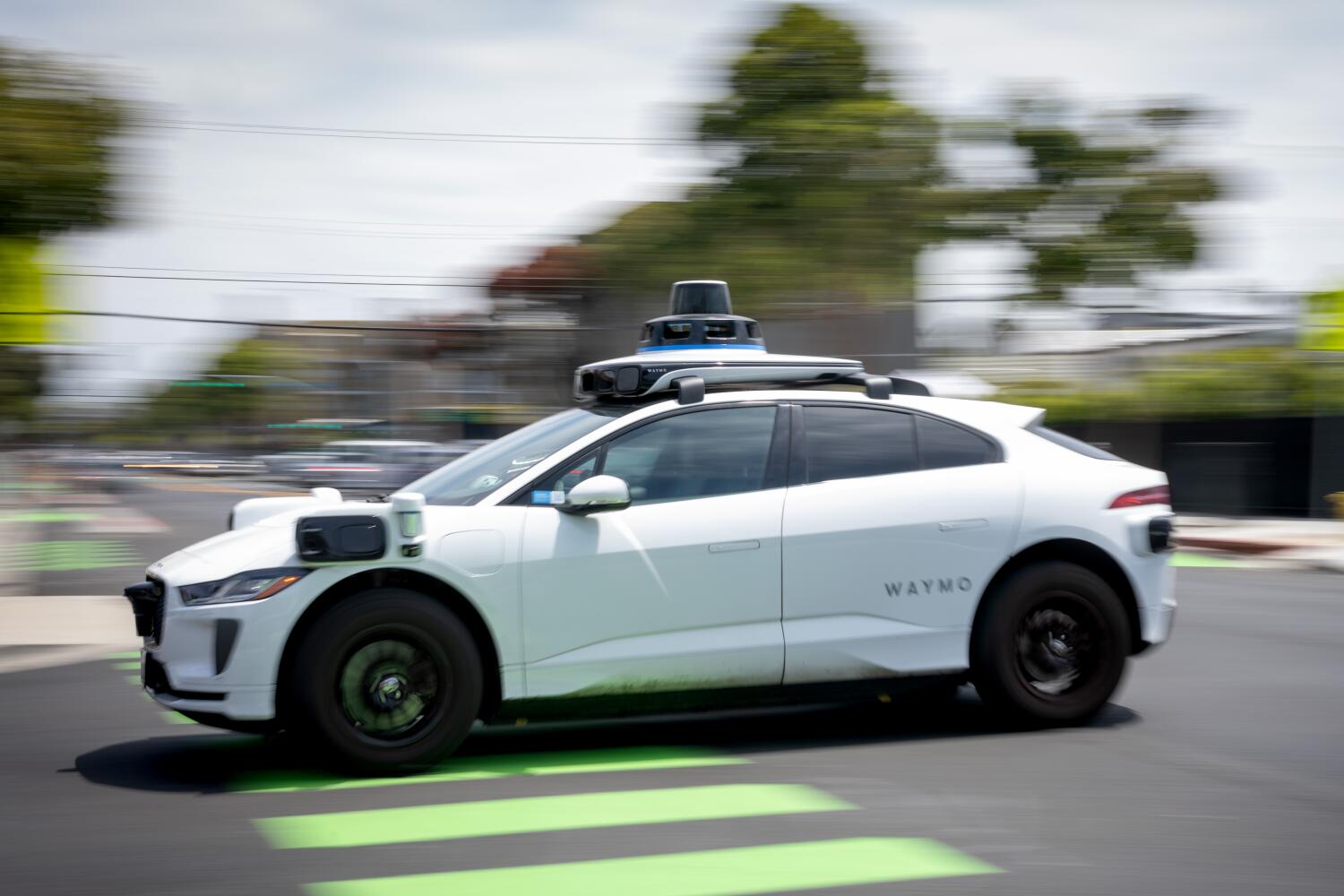
A shirtless man climbs onto the hood of a Jaguar I-PACE in East Hollywood. He smashes the windshield. He rips at the sensor pods. The local news runs it on a loop. The internet outrages. The tech skeptics cheer. The tech evangelists wring their hands and call for harsher penalties against the new wave of Luddites.
Everyone is missing the point.
The media framed the recent vandalism of a Waymo autonomous vehicle as a sign of a failing experiment, a symptom of a city rejecting the future. They looked at a shattered windshield and saw a crisis.
I look at that shattered windshield and see a definitive corporate victory.
The lazy consensus screams that autonomous vehicles are too fragile for the harsh reality of American streets. The reality is exactly the opposite. The East Hollywood incident did not expose Waymo's vulnerability. It exposed the complete vulnerability of human bad actors against an unyielding, omniscient corporate infrastructure. The robotaxi did exactly what it was engineered to do: it took the hit, recorded the crime in high definition, kept its passengers out of harm's way, and ensured the perpetrator went straight to jail without a drop of blood being spilled.
Stop treating robotaxi vandalism like a tech crisis. It is a masterclass in risk mitigation.
The Human Cost That Did Not Happen
Consider what happens when a shirtless, agitated individual attacks a traditional human-driven vehicle in metropolitan traffic.
The driver panics. They step on the gas. They hit the attacker, or they veer into a crowd of pedestrians. Alternatively, the driver steps out of the vehicle with a weapon. A property crime escalates into an assault, a shooting, or a vehicular homicide within ninety seconds.
The math of urban violence changes completely when you remove the human ego from the driver's seat.
A Waymo vehicle possesses no adrenaline. It has no fight-or-flight response. When attacked, the vehicle halts. It locks its doors. It alerts remote operations. It deploys its array of cameras to log every angle of the assailant's face, tattoos, and physical mechanics in real-time.
In East Hollywood, the vehicle became a passive sponge for violence. It absorbed the energy of a volatile situation. Property damage occurred, yes. A windshield costs a few hundred dollars to replace. A camera sensor costs a few thousand. But compare that to the millions of dollars in liability, legal fees, medical bills, and human tragedy associated with a standard road rage escalation.
From a fleet management perspective, sacrificing a piece of glass to neutralize a violent public incident is an incredibly cheap cost of doing business.
The Myth of the Vulnerable Robot
Critics love to point out that these vehicles can be stopped by a traffic cone on the hood or a hand over a camera. They argue that this inherent passivity makes them unsuitable for the real world.
This argument confuses tactical passivity with strategic weakness.
Autonomous fleets operate on a macroeconomic scale. A single vehicle is not a precious, irreplaceable asset; it is a node in a massive network. If you vandalize a personal car, you ruin an individual's livelihood. If you vandalize a Waymo, you trigger an automated maintenance ticket. A flatbed arrives, the vehicle is swapped out, and the fleet capacity dips by a fraction of a percent for a few hours.
Imagine a scenario where a retail store experiences shoplifting. Does the store close down? No. Shrinkage is factored directly into the operational budget. Waymo and its competitors have already mapped out the expected rate of urban friction. They know that a certain percentage of the population will throw rocks, yell at the sensors, or try to ride the hood.
The vehicles are deliberately programmed not to fight back or aggressively evade because the legal and public relations cost of an autonomous vehicle hitting a human pedestrian—even an aggressive one—is infinitely higher than the cost of a broken bumper. The machine plays the long game. It lets the human throw their tantrum, collects the data, and hands the bill to the local police department.
Dismantling the Flawed Questions Surrounding Autonomous Safety
When these incidents hit the headlines, the public discourse immediately shifts to a set of deeply flawed questions. Look at any forum or comment section and you see variations of the same inquiries, all built on false premises.
Are robotaxis safe if anyone can just jump on them?
This question assumes that safety means "invulnerability to property damage." That is a fundamental misunderstanding of automotive engineering. Cars are designed to crush during accidents to protect the occupants. Robotaxis are designed to cease movement and record data to protect the public and the passengers. The vehicle in East Hollywood protected everyone involved. The passenger inside was unharmed, bystanders were untouched, and the attacker was detained without the use of lethal force. That is the literal definition of operational safety.
How can cities allow vehicles that invite public disruption?
The vehicle did not invite the disruption; the disruption existed independently. Cities are full of unpredictable, volatile elements. Human drivers interact with these elements every single day, often with catastrophic results. Blaming a robotaxi for being vandalized is like blaming a parked car for getting hit by a drunk driver. The autonomous vehicle merely acts as an objective mirror to the environment it navigates. If a neighborhood has an issue with street violence, the robotaxi highlights the problem—it does not create it.
What happens when people realize they can trap these cars easily?
They get arrested. That is the piece of advice the anti-AV crowd fails to mention. These vehicles are rolling panopticons. Every square inch of the surrounding environment is captured by state-of-the-art lidar, radar, and camera systems. The data is uploaded instantly to cloud servers. You cannot "trap" a car secretly. You trap a car while broadcasting your identity, location, and actions directly to a corporate security center with a direct line to law enforcement. The deterrent isn't physical force; it's the absolute certainty of documentation.
The Financial Reality of the Scratched Paint
I have analyzed corporate logistics and asset management structures for years. Let us look at the actual balance sheet behind an incident like the one in East Hollywood.
A traditional car rental company or ride-hail driver views a damaged vehicle as a catastrophic loss of immediate income. For an alphabet-backed giant like Waymo, a damaged vehicle is a goldmine of edge-case data.
Every time a human interacts abnormally with a vehicle—whether it is a person dancing in front of the bumper, a worker placing a cone on the hood, or an individual smashing the glass—the machine learns. The engineering team receives a pristine dataset detailing how the sensors reacted, how the remote assistance team handled the communication, and how the physical body endured the stress.
You are not slowing down the deployment of autonomous vehicles by attacking them. You are actively training them. You are providing the exact chaotic, real-world testing data that engineers cannot ethically replicate in a closed lab environment. The man on the hood in East Hollywood was, ironically, working as an unpaid quality assurance tester for Alphabet's hardware division.
The hardware is modular. The sensors are designed to be swapped out quickly. The downtime is minimized by predictive maintenance algorithms. The cost of these repairs is a rounding error in the multi-billion-dollar race to dominate urban transport.
The Pivot from Driver Liability to Fleet Sovereignty
The ultimate transition happening right now is the shift of liability.
In a world driven by humans, insurance companies spend billions litigating who was at fault, who blinked, who swerved, and who was intoxicated. The legal system is clogged with claims based on faulty human memory and biased testimonies.
The autonomous fleet eliminates this ambiguity entirely. When an incident occurs, there is no debate. The vehicle presents a complete, objective reconstruction of the event. This level of certainty is a massive advantage for city infrastructure, law enforcement, and corporate risk officers.
The public will eventually tire of the novelty of attacking these cars. The shock value will erode. The shirtless men climbing onto hoods will stop making the evening news and start being treated exactly like what they are: routine, minor instances of urban property damage, handled swiftly by local courts.
The tech isn't hiding from the chaos of the city. It is absorbing it, calculating the cost, and moving forward anyway.
If your strategy to stop the autonomous future relies on humans outsmarting a network of interconnected supercomputers by swinging a fist at a reinforced windshield, you have already lost the war. The machine does not get angry. It just files a report and sends the next car.