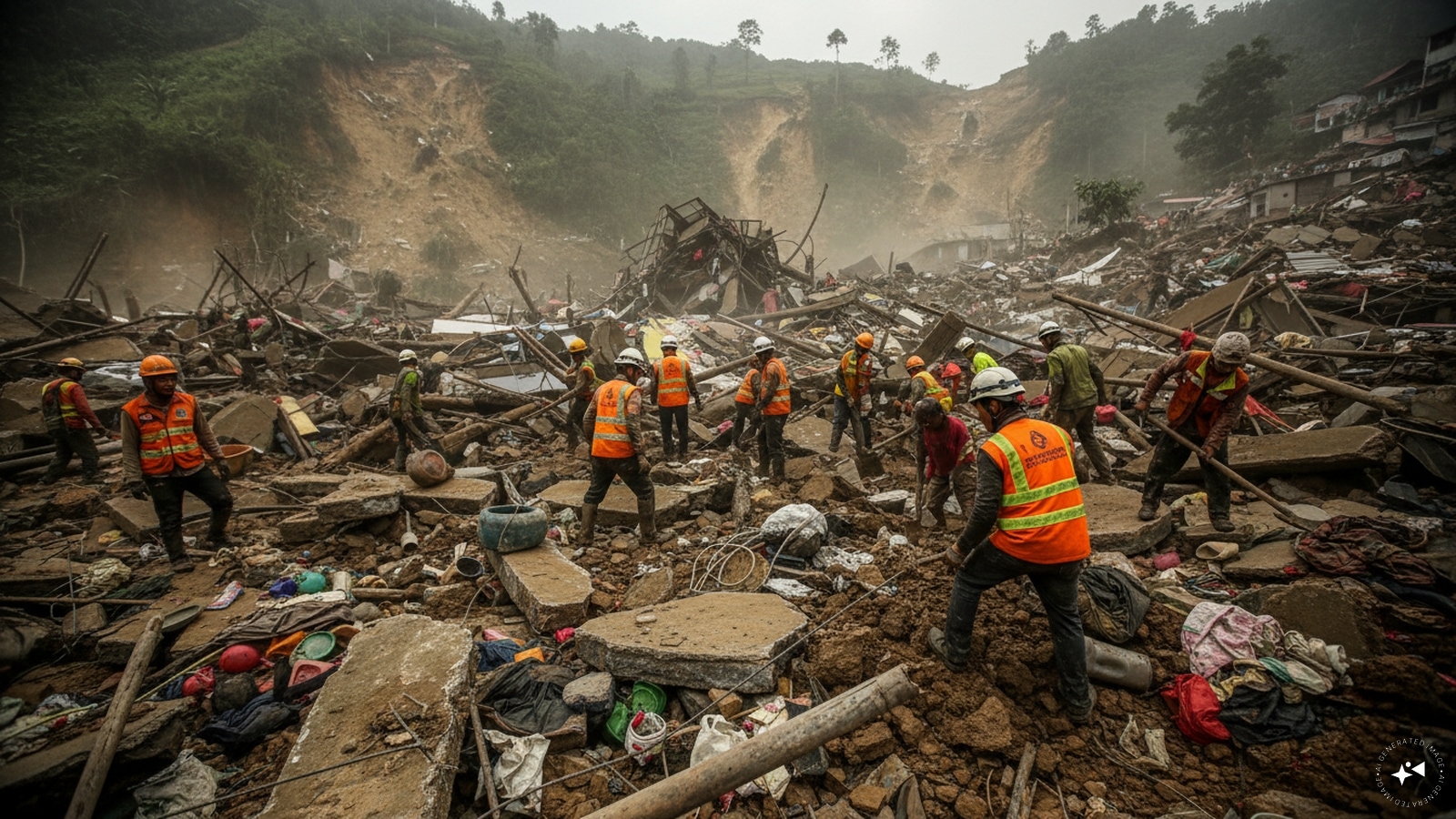
The ground does not warn you. It simply tears apart. In the early hours of disaster, numbers emerge as cold proxies for human catastrophe: forty-seven dead, hundreds injured, thousands displaced by an Indonesian earthquake. Yet numbers obscure the machinery of tragedy. They flatten the reality of structural vulnerability, seismic physics, and institutional response into digestible news bites. Behind every casualty tally lies a complex web of geography, construction economics, and emergency logistics that determines whether a tremor becomes an inconvenience or an annihilation.
Indonesia sits atop one of the most volatile tectonic intersections on the planet. The collision of the Indo-Australian, Pacific, and Eurasian plates creates a relentless engine of geological stress. Every year, this archipelago experiences thousands of earthquakes, ranging from imperceptible rumblings to catastrophic ruptures. Constant shaking creates a unique form of psychological and physical exhaustion. Communities rebuild, only to watch their work crumble into dust a few years later.
The Anatomy of Vulnerability
Why do moderate earthquakes cause disproportionate devastation in certain regions while identical magnitudes pass elsewhere with minimal damage? The answer is rarely just the magnitude printed on the Richter scale. It is about seismic vulnerability.
Construction materials dictate survival rates far more than tectonic force. In many rural and semi-urban Indonesian districts, non-engineered masonry and unreinforced concrete dominate residential building practices. Families build homes piece by piece, block by block, often without access to professional structural engineering or high-grade reinforcing steel. When lateral seismic waves hit, unreinforced brick walls shear instantly. Roofs collapse inward like houses of cards, crushing occupants before they can take a single step toward safety.
Economics forces difficult compromises. Concrete blocks and steel rebar cost money that subsistence farmers and small-scale traders simply do not possess. Wood and bamboo, traditionally used in earthquake-prone vernacular architecture because of their flexibility, have been stigmatized as symbols of poverty in favor of heavy masonry. Ironically, traditional flexible designs often outperformed modern, rigid, poorly built concrete structures during high-impact tremors. Modernization, divorced from proper seismic building codes, has frequently increased local risk profiles.
The Logistics of Rescue
When the earth stops shaking, the clock starts ticking. The first seventy-two hours define the boundary between survival and preventable mortality from crush syndrome, dehydration, and untreated trauma. In an island nation like Indonesia, reaching ground zero presents immense logistical hurdles.
Bridges fracture. Mountainous roads disappear beneath massive landslides. Communication lines snap instantly, leaving emergency coordinators blind to where help is needed most.
Heavy machinery cannot teleport. Transporting excavators and bulldozers to remote, mountainous epicenters requires traversing compromised infrastructure where every aftershock threatens to trigger fresh debris flows. First responders often rely on hand tools, shovels, and bare hands during those critical initial hours. Neighbors dig out neighbors. Community resilience acts as the primary rescue service long before state or military assets arrive on the scene.
Beyond the Immediate Aftermath
Media attention follows a predictable arc. Cameras arrive with the first relief flights, broadcast the harrowing images of grieving families, and document temporary tent cities. Within two weeks, the news cycle shifts elsewhere.
For the survivors, the hardest phase begins the moment the reporters leave.
Displaced communities face months, sometimes years, living under tarpaulins as monsoon rains lash the rubble of their former lives. The psychological toll settles in as chronic anxiety. Every subsequent tremor, no matter how minor, triggers panic attacks among children and adults alike. Economic recovery stalls. Agricultural plots buried under mudslides require massive restoration efforts before they can yield crops again. Small businesses lose their inventory and customer base overnight, pushing households into cycles of debt from which escape is nearly impossible.
Mitigation remains the ultimate test of governance. Retrofitting vulnerable public infrastructure, enforcing building codes rigorously, and integrating indigenous seismic knowledge with modern engineering are not cheap endeavors. Yet every rupiah spent on proactive reinforcement saves millions in post-disaster recovery and, more importantly, preserves human lives.
The earth will continue to shift beneath the archipelago. Tectonic plates do not negotiate, and fault lines do not rest. The true measure of society is not how loudly it mourns the dead after the dust settles, but how relentlessly it prepares the ground before the next rupture begins.