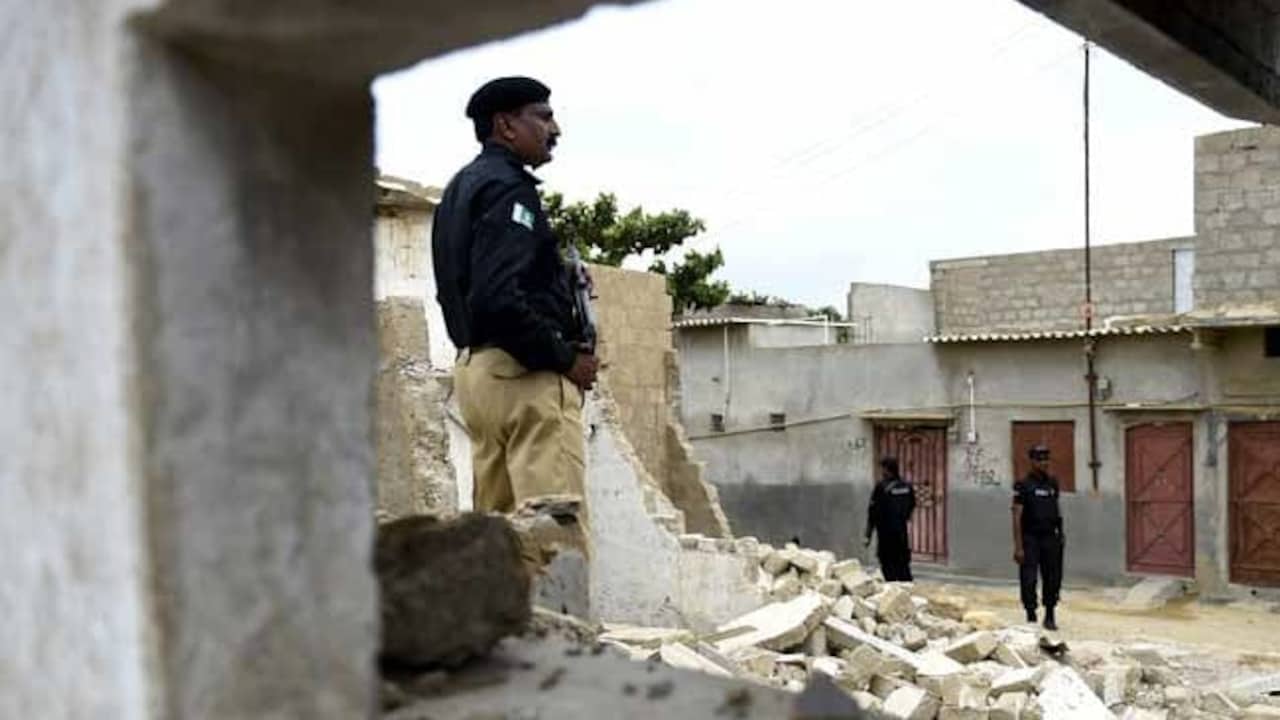
The sun in Balochistan does not just shine; it presses down like a physical weight. In the remote stretches where infrastructure projects try to claw their way into existence, the earth is a pale, blinding clay. Water here is more than a resource. It is the dividing line between survival and erasure.
When a nation decides to build a dam in a desert, it is not just pouring concrete. It is making a political statement about the future. But on the ground, miles away from the capital city’s air-conditioned planning rooms, that grand vision translates into a handful of men sitting in a small, concrete checkpost, swatting flies and watching the horizon vibrate with heat waves.
Nine men woke up on a Tuesday morning with the simple objective of guarding a construction site. By nightfall, they were statistics.
To understand what happened at the dam project checkpost, one must look past the standard headlines that flicker across television screens for twenty seconds before fading into commercials. The dry facts tell us that unidentified gunmen opened fire, killing nine police officers assigned to protect the critical infrastructure. The cold geo-political analysis talks about regional instability, insurgent factions, and the high cost of securing development projects.
But numbers do not bleed. Factions do not leave behind half-eaten lunches, unwashed uniforms, and families waiting for a phone call that will shatter their lives forever.
The Anatomy of an Outpost
Imagine a structure built under the sky, surrounded by nothing but shale and scrub. Let us call one of the men stationed there Tariq. He is not a real individual whose medical records we can access, but he represents the exact reality of the young men who take these positions. He joined the police force because the fields back home could no longer support his brothers. His uniform is a little too large, the fabric stiff with sweat and dried salt lines.
His day does not begin with strategic briefings. It begins with the smell of kerosene and tea.
The dam project he was assigned to protect is designed to catch the seasonal torrents, storing water that could transform the arid valleys into arable land. In theory, it is a promise of prosperity. In practice, for the people living in the surrounding hills, it is often viewed through a lens of deep suspicion—a symbol of an outside authority asserting control over land that has belonged to tribes for centuries.
This is the invisible friction that fills the air long before any shots are fired. The guards are caught in the middle. They are local sons wearing government brass, viewed as outsiders by their own neighbors and as replaceable cogs by the state they serve.
The silence in these remote valleys is absolute. It stretches out for miles, broken only by the occasional rattle of a passing construction truck or the wind scraping against the rocks. That kind of quiet does not calm the nerves; it sharpens them. Every shadow looks like a movement. Every bird taking flight causes a hand to drift toward a rifle holster.
Then, the silence broke.
The Suddenness of Ambush
An attack in the desert does not announce itself with the dramatic crescendo of a film score. It happens with a terrifying, chaotic speed.
Reports indicate the gunmen arrived on motorcycles, navigating the broken terrain with the ease of men who know every ravine and dry riverbed. They did not hesitate. The checkpost, meant to offer protection, became a trap. Within minutes, the air was filled with the acrid stench of cordite and the deafening roar of automatic weapons fire.
The defense of such a post is nearly impossible when outnumbered and caught by surprise. The concrete walls chip under heavy caliber rounds, showering the occupants with blinding dust and sharp fragments. There is no retreat. Behind them is the unfinished concrete wall of the dam; ahead of them is open ground controlled by rifles.
Nine lives ended in that dust.
When the reinforcement units arrived hours later, guided by the smoke rising into the clear blue sky, the attackers were already gone, dissolved back into the vast, tracking-resistant hills. Left behind was the grim reality of a conflict that shows no signs of slowing down. Nine bodies. Nine families plunged into immediate poverty and grief. One unfinished dam, its concrete mixers sitting idle in the sun.
The Price of Development
Why does a water project require a garrison of armed guards? The answer lies in the complex, often tragic history of Balochistan. The province is the largest in Pakistan by landmass, yet it remains the least populated and most economically marginalized. It is rich in minerals, gas, and potential, yet its people often lack clean drinking water and basic electricity.
When major infrastructure projects are introduced, they often arrive with heavy security forces. To the local population, this does not look like development; it looks like an occupation. Militant groups exploit this narrative, targeting the symbols of state authority to signal that no project can proceed without their consent.
Consider what happens next in the wake of such violence.
The immediate reaction from the government is always a vow of retaliation. Press releases are drafted. Security measures are reviewed. More personnel will be sent to the region, more checkpoints built, and more funds allocated to the defense budget.
But the real problem lies elsewhere, untouched by military maneuvers. The core issue is a profound disconnect between the state’s ambitions and the local population’s trust. Until that gap is bridged, every brick laid on a dam or a highway will have to be bought with the lives of young men who simply needed a paycheck to feed their families.
The tragedy of the nine police officers is not an isolated incident; it is a recurring pattern. The names change, the specific valleys change, but the script remains identical. The state builds, the insurgents strike, and the poorest members of society pay the ultimate price.
The Echoes in the Valley
The news cycle has already moved on. The deaths of these men will be cataloged in a database of regional conflict statistics, a single line item in an annual report on internal security.
But in a small village hours away from the dam site, an elderly man sits on a woven cot, staring at a mobile phone that will never ring again. The money his son sent home every month, a meager sum that kept the household running, is gone. The pride the family felt when their boy put on the uniform has turned into a heavy, suffocating grief.
The dam will eventually be completed. Engineers will return under heavier guard, the concrete will be poured, and water will eventually fill the reservoir. People in distant cities will celebrate the project as a triumph of modernization and a testament to national resilience.
The water will run clear, reflecting the sky. But for those who know the cost of the ground beneath it, the reservoir will always hold the memory of a Tuesday morning when nine men died guarding a dream that did not belong to them.