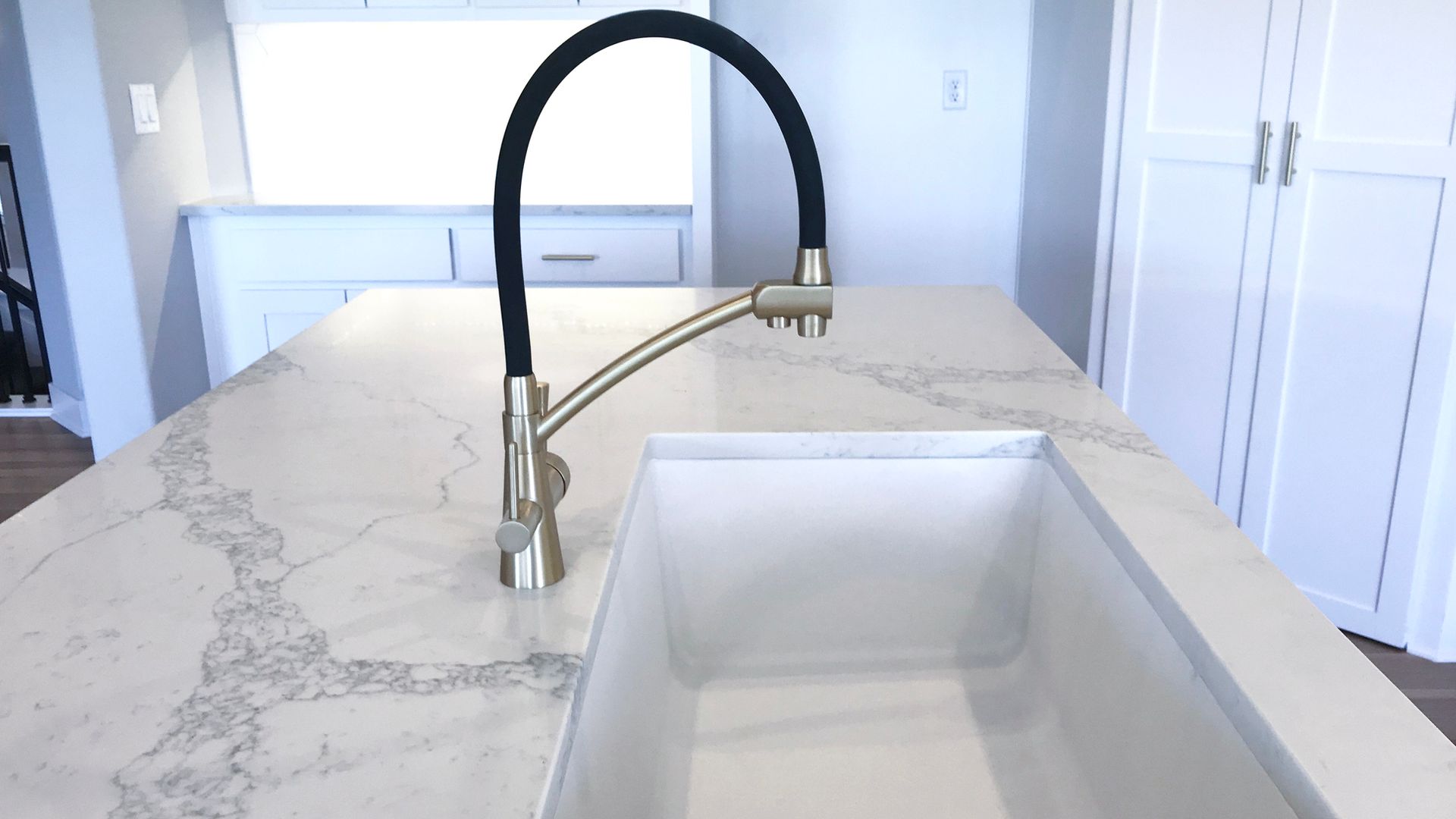
That pristine, marble-veined quartz countertop in your kitchen remodel might look like the epitome of modern luxury, but it hides a dark secret. Underneath the glossy exterior lies a material so hazardous to the people who shape it that medical experts are drawing terrifying parallels to the asbestos epidemic.
The global stone industry is facing a massive reckoning. While homeowners see a durable, stain-resistant surface, workers cutting and polishing these slabs see their lungs systematically destroyed. It's called silicosis, an incurable, progressive lung disease caused by inhaling microscopic dust.
The crisis has escalated to the point where major trade unions and health advocates are demanding total bans on engineered stone. Australia already completely outlawed the manufacture, supply, and installation of the material. Now, the pressure is mounting heavily on the UK and parts of the US to do the exact same thing.
If you think this is just standard regulatory overreaction, you're mistaken. The reality on the shop floor is genuinely frightening, and it's time to understand exactly why this material is killing the young workers who handle it.
The Toxic Truth Behind Quartz and Engineered Stone
To understand why quartz is so dangerous, you have to understand what it actually is. Despite the marketing, your "quartz" worktop isn't a solid block of natural stone dug out of a quarry. It's an engineered, factory-made product.
Manufacturers take crushed natural stone—mostly quartz—and bind it together using polymers, resins, and pigments. This formulation gives it that uniform, indestructible quality that makes it so popular for kitchens. But that same formulation makes it a biological time bomb for fabricators.
The danger boils down to a single ingredient: crystalline silica.
When you cut into any stone, you release respirable crystalline silica (RCS) dust. These particles are microscopic, over 100 times smaller than a grain of sand. You can't see them, but when inhaled, they slice into the deep lung tissue, causing permanent scarring and irreversible damage. While natural materials like marble contain less than 10% silica and granite hovers around 30%, engineered quartz is an absolute powerhouse of the stuff. It typically contains upwards of 90% crystalline silica.
When a tradesman cuts a quartz slab, they aren't just creating a mess. They are creating a toxic cloud of highly concentrated, ultra-fine dust that bypasses the body's natural defense mechanisms.
Who is Breathing in the Danger
If you have a quartz countertop sitting in your kitchen right now, you don't need to panic. The finished product resting on your cabinets is completely inert. It won't emit dust, and it won't make your family sick.
The people in the crosshairs are the fabricators, installers, and stonemasons.
Historically, silicosis was a disease of old age, affecting miners or quarry workers after 30 or 40 years of labor. The quartz crisis has flipped that completely on its head. Doctors are now diagnosing a severe, accelerated form of acute silicosis in workers in their 20s, 30s, and 40s. Some develop terminal lung damage after just a few years on the job.
Consider a recent, tragic case investigated by a UK coroner involving a stoneworker named Wessam. He began working with engineered stone in 2016. By 2021—a mere five years later—he was diagnosed with advanced silicosis. He eventually died from the disease, prompting the coroner to issue an urgent prevention of future deaths report because small fabrication shops simply aren't protecting their staff.
In California, the epicenter of the US crisis, public health officials have tracked over 430 cases of silicosis among engineered stone workers since 2019. At least 25 have died, and dozens more have required full lung transplants just to survive. The vast majority of these victims are young, immigrant men working in small, under-regulated fabrication shops. They are literally trading their lives for luxury kitchen renovations.
Why Current Safety Measures Aren't Working
The stone industry frequently argues that the material isn't the problem; the problem is bad workplace practices. They claim that if shops simply use "wet cutting" methods—flooding the stone with water to suppress dust—and force workers to wear heavy-duty respirators, everyone stays safe.
It sounds good in theory. In practice, it's failing miserably.
First, the stone fabrication industry is deeply fragmented. For every massive, state-of-the-art facility, there are dozens of tiny, informal backyard operations. These small shops often operate on razor-thin margins. High-tech ventilation systems and sophisticated water-fed tools are incredibly expensive to buy and maintain.
Second, data shows that even when shops try to comply, the dust is too resilient. An investigation by Cal/OSHA revealed that a staggering 94% of stone worksites inspected had violations of silica regulations.
Even with water suppression, the fine mist created still carries microscopic silica particles. When that water dries on a worker's clothes, boots, or shop floors, it turns back into a highly toxic, easily disturbed powder. The particles are so small they can easily penetrate standard filter masks. Expecting low-wage workers in a hot, dusty workshop to perfectly maintain specialized respirators every second of every shift is a dangerous delusion.
The Push for Total Bans
Because regulations are failing to stop the body count, health authorities and unions are shifting their strategy from regulation to elimination.
The UK's largest lead union, Unite, recently came out swinging against the Health and Safety Executive's (HSE) updated safety guidelines. Unite openly declared the current guidance inadequate and completely unachievable for real-world scenarios, particularly when installers are forced to do localized fitting, cutting, and finishing right inside people's homes. They are demanding that the UK government follow Australia's historic lead and ban the material entirely.
Australia didn't make its decision lightly. Safe Work Australia conducted extensive research and concluded that there is no evidence a "safe" level of silica content exists for engineered stone, nor is there evidence that workplace controls can fully eliminate the risk. Their sweeping ban took effect nationally, entirely eliminating the manufacture and importation of these slabs.
California is currently moving down a similar path, tightening emergency standards while lawmakers openly discuss a full state-wide ban. The momentum is shifting. The consensus among respiratory physicians is becoming clear: you can't manage this risk away.
Better Alternatives for Your Next Kitchen Remodel
If you are planning a renovation, you don't have to support an industry that puts workers at risk. You can get a stunning, high-end kitchen using materials that don't carry a deadly silica footprint.
Porcelain and Sintered Stone
Porcelain slab and sintered stone countertops are rapidly replacing quartz at the top of the market. Made from natural clays and minerals fired at extreme temperatures, these materials look exactly like marble or industrial concrete. Most importantly, they contain virtually no resin and dramatically less silica, making them far safer for fabricators to cut.
Solid Surface Materials
Products made from acrylic and polyester resins combined with natural minerals offer a completely seamless look. They are entirely non-porous, highly repairable, and release zero crystalline silica when fabricated.
Natural Stone
If you want real stone, stick to the classics. While natural granite and quartzite do contain silica, the levels are significantly lower than engineered quartz, and the structure of the stone behaves differently when cut. Marble, soapstone, and honed limestone have incredibly low silica profiles and offer a timeless aesthetic that engineered stone can never truly replicate.
The era of ignoring the human cost of home design trends is coming to an end. If you are hiring a contractor to install a kitchen worktop, ask hard questions. Find out exactly where the stone is being fabricated, verify that the shop uses strict wet-processing methods, or better yet, skip the engineered quartz entirely and choose a safer material. Your kitchen doesn't need to cost someone their lungs.