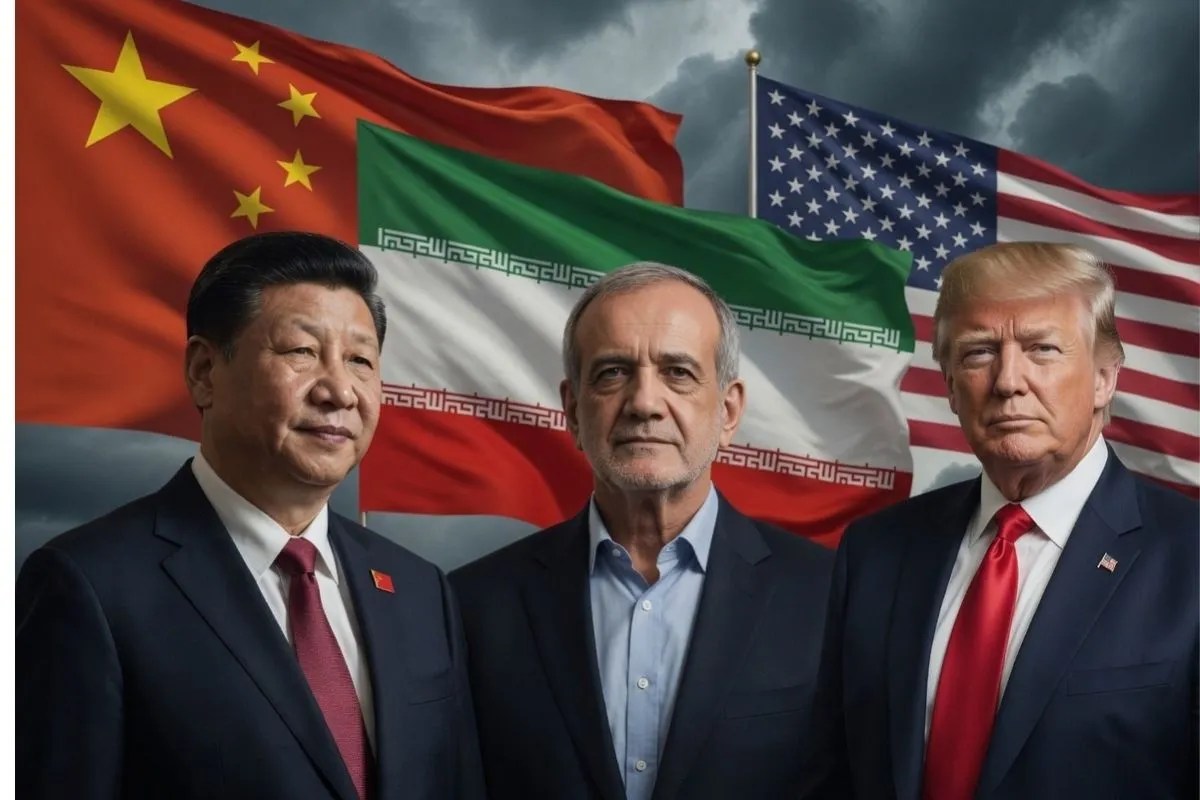
The mainstream media is obsessed with the caricature. They paint a picture of a "Bad Man" swinging a wrecking ball at the global order, specifically targeting Iran and China with a reckless thirst for economic destruction. It makes for great headlines. It sells clicks to terrified bureaucrats. It is also fundamentally wrong.
If you think the current escalation against Tehran and Beijing is merely a performance of geopolitical theater or a personal vendetta, you are missing the tectonic shifts occurring in global capital. This isn't about being a villain. This is about the brutal, necessary recalibration of a global trade system that has been broken for thirty years.
The False Narrative of Chaos
Most analysts view tariffs and sanctions as "disruptions" to a natural state of harmony. They treat the global supply chain like a delicate ecosystem that Trump is trampling. I have watched analysts at major firms wring their hands over "trade wars" as if the previous era of "free trade" was actually free. It wasn't. It was a subsidized transfer of Western intellectual property and industrial capacity to state-capitalist regimes.
What the "Bad Man" narrative ignores is that the status quo was the actual catastrophe. When you allow a country like China to manipulate its currency and dump subsidized steel into your markets, you aren't participating in "globalization." You are participating in a controlled demolition of your own middle class. The "operation to cause economic damage" isn't an attack; it is an audit. A forced, painful, and long-overdue audit of where value actually resides.
Iran and the End of Strategic Patience
The screams for "diplomacy" regarding Iran usually come from people who have never had to manage the risk of a nuclear-threshold state controlling the world's most vital energy arteries. The competitor's view suggests that aggressive sanctions are a "bad man" tactic designed to cause suffering.
Let's get real. Strategic patience was a failure. It allowed a regime to export instability while reaping the benefits of the global financial system. The current "operation" isn't about cruelty; it is about leverage. In private equity, if an asset is underperforming and draining the portfolio, you don't keep "engaging" with it. You cut off the capital. You force a restructuring.
Sanctions are the ultimate restructuring tool. By isolating the Iranian central bank and targeting their oil exports, the goal is to create a binary choice: join the modern world or become a historical footnote. Is it harsh? Yes. Is it "bad"? Only if you prefer the slow-motion car crash of a nuclear-armed Middle East.
The China Decoupling is a Business Necessity
The most laughable take in the current discourse is that trade tension with China is "bad for business."
Which business?
If your business relies on a single point of failure located in a country that views trade as a weapon, your business model is a ticking time bomb. I’ve seen boards of directors realize, too late, that their "efficient" Chinese supply chain was actually a liability that gave a foreign government veto power over their operations.
The aggressive stance against Beijing—the tariffs, the tech bans, the investment restrictions—is the first time a Western leader has treated China like the competitor it is, rather than the "developing nation" it pretends to be.
- Intellectual Property Theft: This isn't a minor cost of doing business. It is a multi-trillion dollar heist.
- Market Access: Reciprocity is the only metric that matters. If they can buy our companies, we must be able to buy theirs. Period.
- Dependency: Dependence on a hostile actor for essential goods (pharmaceuticals, rare earths) is strategic suicide.
The "Bad Man" isn't destroying the global economy. He is forcing it to grow a spine.
Why the Market Loves the Volatility
Contrarian truth: Markets don't actually hate volatility; they hate uncertainty.
The previous era of "vague engagement" was the height of uncertainty. Nobody knew where the line was. Now, the line is drawn in bright red ink. For the first time in decades, American CEOs have a clear directive: diversify or die. This is sparking an American industrial renaissance that "free trade" advocates said was impossible.
We are seeing a massive inflow of capital back into domestic manufacturing. This isn't "economic damage." This is the repatriation of the future. The "damage" is being felt by those who bet against the West and those who built their fortunes on the backs of exploited labor and stolen ideas.
The Risk of the Middle Path
The biggest danger right now isn't Trump’s aggression. It is the temptation to return to the "middle path."
If a future administration decides to "normalize" relations without fundamental structural changes in how China and Iran operate, the last decade of progress will be erased. You cannot fix a predatory relationship with a polite conversation. You fix it by making the cost of predation higher than the cost of cooperation.
The Brutal Reality of Power
International relations is not a book club. It is a struggle for dominance over resources, technology, and standards. The "Bad Man" persona is a psychological tool. It signals to adversaries that the old rules—where they cheat and we complain—are dead.
When you see headlines about "economic damage," ask yourself: who is losing?
If the losers are the IRGC’s shadow banking networks or the CCP’s state-owned enterprises, then the operation is a success.
The status quo was a house of cards built on the hope that our enemies would eventually want to be like us. They don't. They want to replace us. Recognizing that isn't "bad." It is the only way to survive.
Stop mourning the "stability" of the past. It was a lie. Start preparing for a world where economic power is used as a hard-edged tool of national interest. The era of the "Bad Man" is simply the era of the realist.
Get used to it. The wrecking ball is just getting started, and the building it's hitting was already condemned.