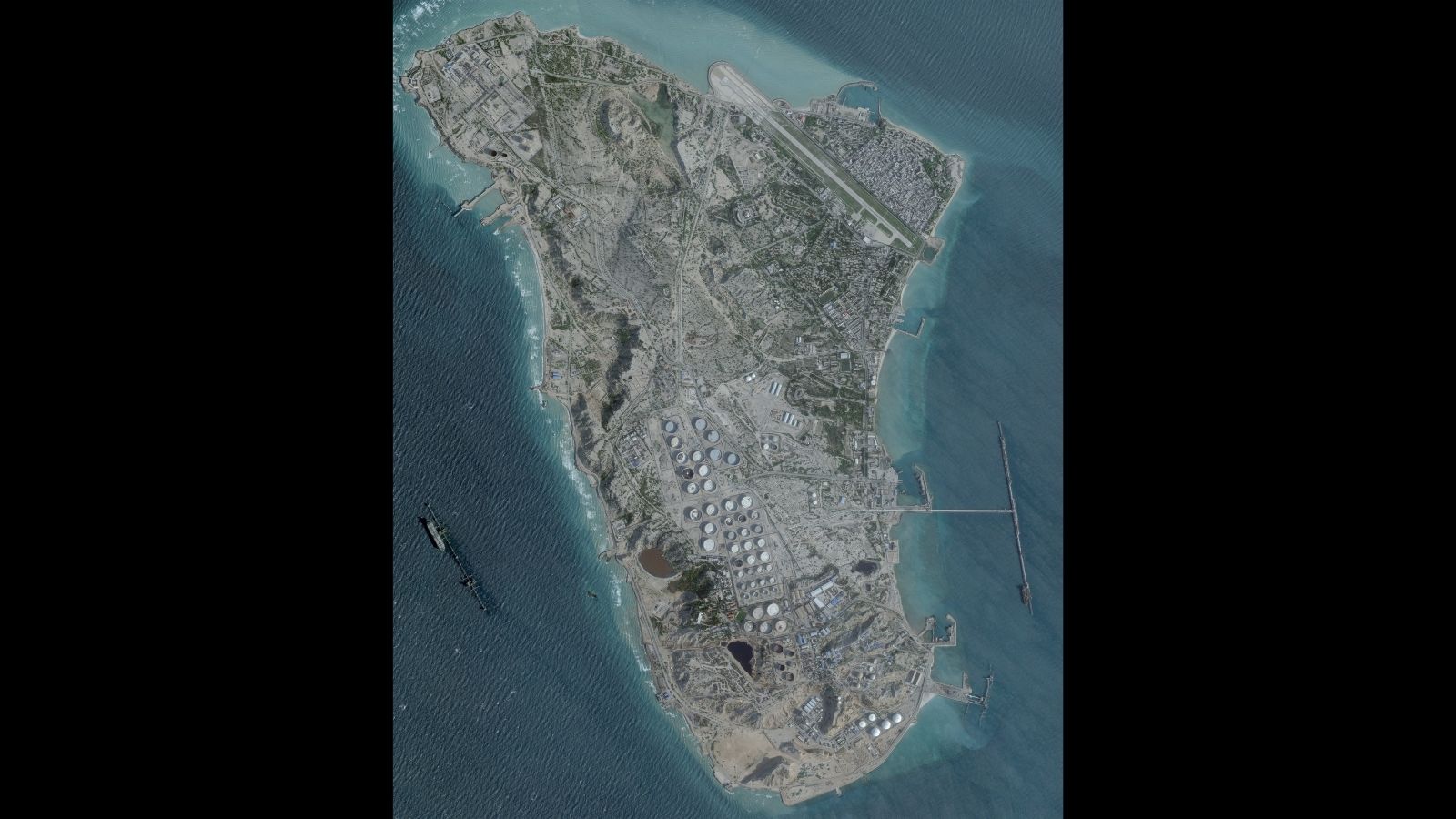
The internet lost its collective mind when a digital clip surfaced showing Kharg Island reduced to a smoking crater. Pundits rushed to microphones to hyperventilate about saber-rattling, diplomatic fallout, and the degradation of political discourse into cheap CGI. They called it reckless. They called it a dangerous escalation of digital posturing.
They are missing the entire point.
Focusing on the pixels, the platform, or the crude animation technique is a masterclass in missing the forest for the burning tree. The controversy isn't that a former president shared a low-grade simulation of an oil terminal vanishing into the ether. The real story—the one nobody in the mainstream commentariat has the stomach to touch—is that Kharg Island handles roughly ninety percent of Iran's crude oil exports, and global markets shrugged off its potential annihilation in less than six trading hours.
I have watched traders panic over rumors of a pipeline leak in Oklahoma that wouldn't fill a backyard swimming pool, yet a simulated conflagration of the primary artery feeding the Persian Gulf barely caused Brent crude to twitch. That disconnect tells you everything you need to know about the terminal irrelevance of traditional political theater in an age of algorithmic indifference.
The Lazy Consensus of Outrage
The standard narrative goes like this: politicians posting AI-generated war porn lower the bar of international relations, signal intent to hostile actors, and inflame tensions in an already volatile region.
It sounds sophisticated. It sounds like the kind of high-minded critique you would read in a foreign policy quarterly. It is also dead wrong.
Leaders do not signal strategic intent through social media loops. Military planners do not derive operational doctrine from internet memes. The clip wasn't a blueprint for an upcoming strike. It was a weather balloon made of silicon and pixels, launched to test the reaction function of both domestic voters and foreign adversaries.
When you treat a cartoon as a casus belli, you reveal your own lack of proportion. Real geopolitical leverage isn't measured by what gets rendered in a prompt-based video generator; it is measured by supply chain resilience, refining capacity, and strategic reserves. Kharg Island matters because of concrete logistics, not because it looks dramatic when vaporized by software.
The Mechanics of Modern Energy Vulnerability
Let us look at the actual asset in question. Kharg Island is an offshore terminal in the northeastern Persian Gulf. For decades, it has served as the single point of failure for the Iranian economy. If you stop the flow at Kharg, the regime in Tehran faces an immediate liquidity crisis that no amount of sanction-evading ghost tanker fleets can mask.
Yet, the conventional security apparatus treats the island like a fragile porcelain vase that must never be touched, lest the global economy shatter. This is a ghost story invented by analysts who still view energy markets through the lens of the 1973 OPEC embargo.
The global energy grid has evolved past its old chokepoints. North American shale production transformed the structural dynamics of supply, while Asian buyers diversified their procurement portfolios with algorithmic precision. When a simulation targets Kharg Island, it targets a nineteenth-century vulnerability in a twenty-first-century trading ecosystem.
Why the Visual Medium Matters
We are living through a fundamental shift in how political communication bypasses traditional gatekeepers. For generations, politicians relied on a press corps to sanitize, contextualize, and frame their threats. A speechwriter would craft a veiled warning about "grave consequences," and an ambassador would deliver it with a diplomatic smirk.
AI generation short-circuits that entire bureaucratic layer.
Why use ten paragraphs of State Department prose when a thirty-second video of an installation blowing up communicates the exact same negotiating posture directly to a smartphone screen? It is crude, yes. It violates every norm of polite diplomatic intercourse. But politeness in statecraft is often just a mask for paralysis.
Critics argue this diminishes the gravity of war. They claim that turning military destruction into visual entertainment desensitizes the public. But war has always been mediated through imagery, from Mathew Brady's Civil War photographs to twenty-four-hour cable news coverage of night-vision airstrikes in Baghdad. The only difference now is that the imagery doesn't require an actual body count to make its rhetorical point.
The Counter-Intuitively Boring Truth
Here is the uncomfortable reality that neither the video's creator nor its loudest critics want to admit: digital posturing is a substitute for actual action, not a prelude to it.
When a state intends to destroy a strategic asset like Kharg Island, it does not announce it with a TikTok-style rendering. It happens quietly, through cyber sabotage, clandestine special operations, or precise cruise missile salvos that hit before the target's radar operators even finish their morning coffee. The noise is inversely proportional to the capability.
The outrage over the video is a displacement activity. Pundits focus on the digital artifact because analyzing actual structural risks—such as the fragility of maritime insurance markets, the decay of domestic refining capacity, or the weaponization of trade routes—requires actual expertise and hard work. Getting mad at a clip on X requires only an internet connection and a moral compass tuned to high indignation.
Stop treating bad digital art as a strategic doctrine. Start paying attention to the quiet movements of capital and logistics that actually dictate who wins and who loses the next energy shock.


