The plastic tube was no bigger than a finger. It arrived in a cheerful, brightly colored box, promising answers to questions people didn’t even know they had. Inside was a simple instruction: spit until you hit the line. Cap it, ship it, wait a few weeks, and unlock the secrets of your bloodline. For millions of people, it felt like a harmless Sunday afternoon activity, a fun conversation starter for the holiday dinner table.
It felt like a gift. Learn more on a related issue: this related article.
Then the email arrived.
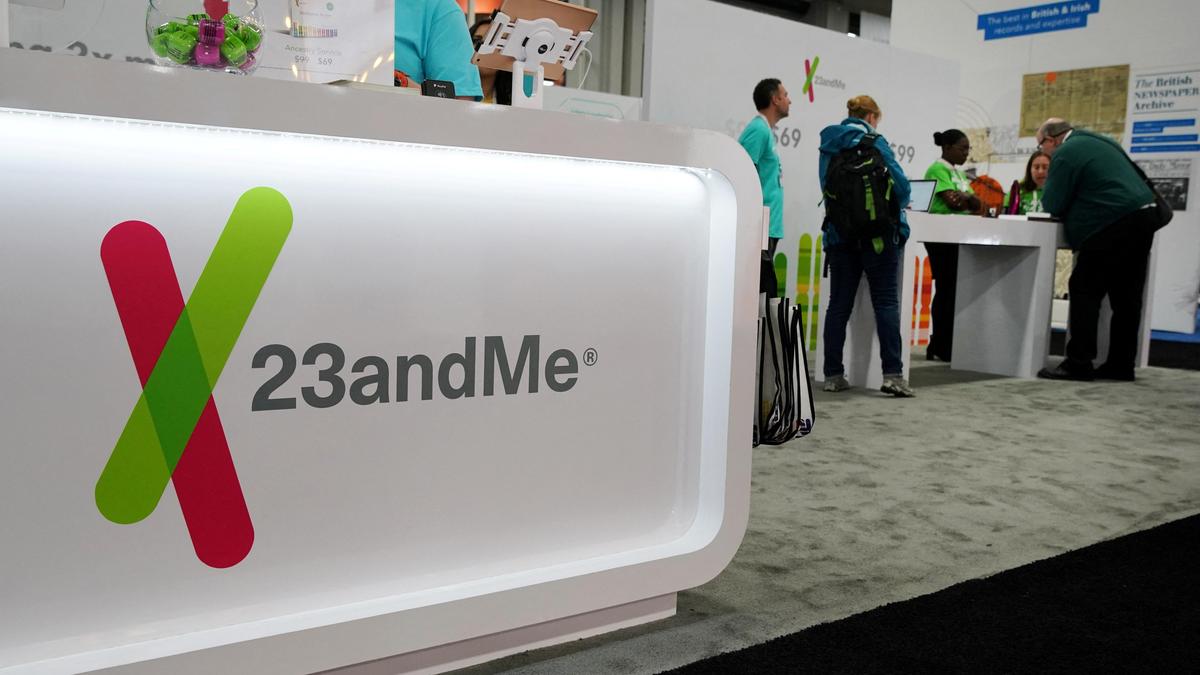
For nearly seven million people, that email wasn't a notification about a new second cousin in Ohio. It was an admission. In late 2023, cybercriminals breached the databases of 23andMe, the pioneer of direct-to-consumer genetic testing. They didn't just steal email addresses and passwords. They took the digital blueprints of human beings. Additional reporting by Mashable delves into similar views on the subject.
Now, California’s Attorney General has stepped into the fray, filing a massive lawsuit against the company. The legal complaint claims 23andMe failed to protect its users, ignoring warning signs and leaving the digital back door unlocked. But the legal documents, filled with dry statutory language and stiff regulatory jargon, miss the true gravity of what happened. This isn't a standard corporate mishap. This is a story about the ultimate, irreversible compromise of human identity.
The Day Your Ancestry Became an Asset
Imagine a hypothetical user. Let's call her Sarah. Sarah bought a kit in 2018 because she wanted to know if her grandmother’s stories about a Cherokee ancestor were true. She spat into the tube, mailed it off, and eventually forgot about it. She got her pie charts, learned she was mostly Irish and German, and moved on with her life.
To Sarah, that spit was a one-time transaction. To the digital economy, it was a permanent, appreciating asset.
When hackers breached 23andMe, they didn't have to crack a complex, military-grade firewall to access Sarah's world. They used a technique called credential stuffing. It is a deceptively simple method. Hackers take millions of usernames and passwords leaked from older, unrelated data breaches across the internet and plug them into 23andMe's login page using automated scripts. They bet on human laziness. They bet that someone used the same password for their old Tumblr account as they did for the repository of their genetic code.
They won that bet.
Once inside those compromised accounts, the attackers didn't stop at the individual profiles. They exploited a feature called "DNA Relatives." This opt-in tool allows users to find and connect with distant family members. By breaking into one account, hackers gained a window into an entire web of connected relatives.
Sarah’s password was unique. She was careful. But her third cousin twice removed was not. Through that single connection, Sarah’s genetic data, her heritage, and her family tree were laid bare on the dark web.
The stolen data was specific, deliberate, and deeply unsettling. Hackers curated lists. They didn't just dump raw data; they organized it by ethnicity. One specific file leaked online contained the profiling information of one million users of Ashkenazi Jewish descent. Another targeted users of Chinese ancestry.
Think about that. In the digital underground, human heritage was categorized, bundled, and priced.
The Fiction of the Corporate Shield
The tech industry has spent the last two decades training us to accept a certain level of vulnerability. Your credit card gets stolen? The bank replaces the funds, issues a new piece of plastic, and life moves on. Your email gets hacked? You change the password, enable two-factor authentication, and suffer a few days of annoying spam.
We have been conditioned to view data breaches as temporary inconveniences.
But you cannot change your DNA.
Your genetic code is the only truly unalterable data you possess. It is the ultimate identifier. It dictates your health risks, your physical traits, your past, and your future children's medical probabilities. When a company loses that, they have lost something that cannot be refunded or reissued.
The California lawsuit alleges that 23andMe knew the risks but chose a path of complacency. According to the state's prosecutors, the company failed to implement basic, industry-standard security measures, like mandatory multi-factor authentication, until after the disaster occurred. They watched the digital perimeter crumble and, for months, failed to notify the public of the full scale of the intrusion.
The defense from Silicon Valley often boils down to a subtle form of victim-blaming. The company argued that users should have used better passwords. They pointed to the terms of service, those endless scrolls of legal text that everyone clicks "agree" to without reading.
But this argument collapses under the weight of common sense. A consumer buys a genetic test because they trust the company possesses an extraordinary level of expertise. They assume that a firm dealing in medical-grade personal data operates with the security posture of a Swiss bank, not a retail clothing chain. The average person cannot be expected to outsmart international cyber-syndicates. They rely on the gatekeepers.
The gatekeepers failed.
The Ripple Effect in the Bloodline
The true horror of a genetic data leak isn't immediate. It doesn't arrive with a sudden withdrawal from your checking account. It lingers, quiet and invisible, waiting for technology and society to catch up to the data.
Consider the landscape of health insurance and employment. While laws like the Genetic Information Nondiscrimination Act (GINA) exist to protect individuals from being denied health coverage or jobs based on their DNA, those protections are not absolute. They do not cover life insurance, long-term care insurance, or disability insurance.
Let's look at what happens next for someone whose data is now floating in the dark corners of the web. A 30-year-old father applies for a life insurance policy to protect his family. Unknown to him, an automated underwriting algorithm scrapes data repositories that include pieces of the 23andMe leak. The algorithm flags a genetic predisposition to early-onset Alzheimer’s or a rare cardiac condition.
The premium skyrockets. Or the application is denied outright.
There is no explanation given. Just a polite, automated rejection letter. The applicant is left wondering what went wrong, completely unaware that a decision he made a decade ago in pursuit of a fun genealogy hobby just compromised his family's financial safety net.
This isn't dystopian fiction. It is the logical progression of big data. Information never dies; it only becomes easier to analyze, cross-reference, and weaponize.
The psychological toll is equally heavy. Millions of people now live with a low-grade, perpetual anxiety. They are forced to contemplate the reality that their biological vulnerabilities are known to anonymous entities who can sell that information to the highest bidder. It turns our own bodies into a liability.
Redefining the Value of Ourselves
The lawsuit filed by California is a necessary reckoning, but it is also a post-mortem. It attempts to punish a failure that has already occurred, using financial penalties to cure a wound that cannot be closed with money. A fine paid to a state treasury does not scrub a genetic profile off a hacker's hard drive.
This moment demands a fundamental shift in how we view our digital presence. We have treated our most intimate data as currency, trading it away for nominal insights, entertainment, and convenience. We trusted that the institutions collecting this information viewed us as people to be protected, rather than aggregates of data to be monetized.
The 23andMe breach shattered that illusion. It revealed that when we spit into the tube, we aren't just looking into the past. We are signing away a piece of our future, leaving a trail of biological breadcrumbs that can never be swept up.
The plastic tubes are still being shipped. The advertisements still promise discovery and connection. But the silence in the wake of the breach speaks louder than any marketing campaign, a stark reminder of the permanent digital footprint we leave behind in the most vulnerable places imaginable.