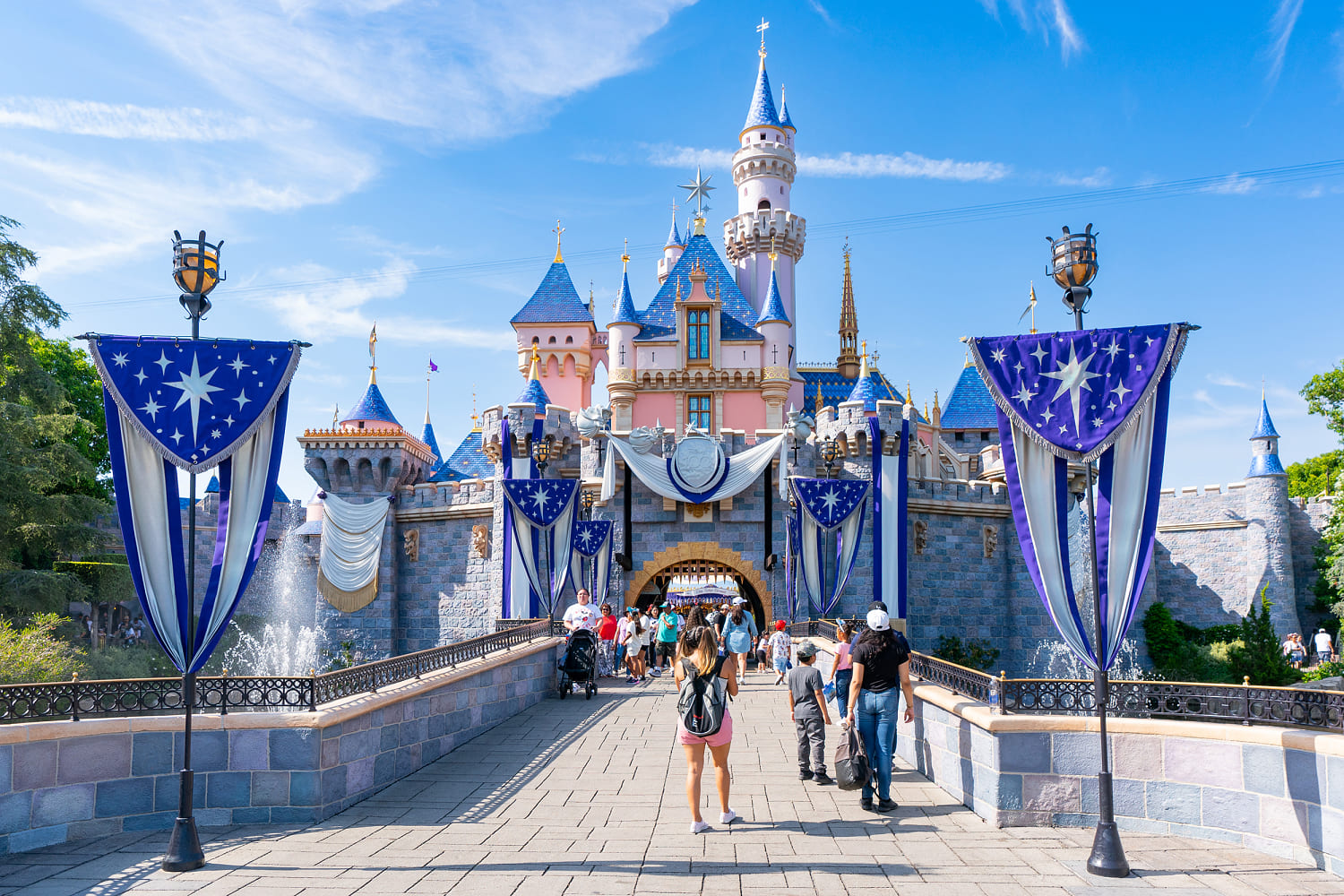
The tech blogs are running the same predictable headline this week. Disney is facing a class-action lawsuit over its use of facial recognition software at its California theme parks. The narrative is already written in stone by mainstream commentators: an evil, corporate behemoth is stealing the biometric data of innocent families to build a dystopian surveillance empire. Activists are outraged. Lawyers are licking their chops.
It is a beautiful, comforting story. It is also entirely wrong.
The lazy consensus surrounding this lawsuit ignores a blatant truth about modern consumer behavior. People do not hate biometric surveillance. They love it. They crave it. They willingly trade their most intimate biological data every single second of the day for the slightest whiff of convenience.
This lawsuit is not a heroic stand for civil liberties. It is a cynical legal shakeout targeting a company with deep pockets, filed on behalf of a public that will happily hand over their retinas if it means waiting five fewer minutes for Space Mountain.
The Hypocrisy of the Biometric Outrage
Let's look at the legal premise. The lawsuit claims Disney violated privacy statutes by scanning visitors' faces to streamline park entry and photo matching without explicit, granular consent. The internet's collective response has been a wave of performative shock.
Give me a break.
The average consumer screaming about Disney’s cameras unlocked their iPhone this morning using Face ID. They passed through a Clear kiosk at the airport using an iris scan. They used a filter on TikTok that mapped the geometry of their skull in real time to make them look like a cartoon character.
I have spent fifteen years analyzing corporate data infrastructures and advising enterprise boards on risk. I have seen companies spend millions trying to implement strict, multi-layered opt-in privacy frameworks, only for users to furiously click "Accept All" without reading a single syllable. The marketplace has already voted. Friction is a greater enemy to the modern consumer than surveillance will ever be.
To understand why this legal panic is manufactured, we have to look at the mechanics of what Disney is actually doing. They are not selling biometric profiles to foreign intelligence agencies. They are matching a localized mathematical hash of a face to a ticket database to prevent fraud and eliminate the catastrophic bottleneck of physical turnstiles.
The Myth of the Anonymous Theme Park
The core flaw in the anti-Disney argument is the delusion that a theme park is a public square where you have a reasonable expectation of anonymity. It isn't. It is a highly curated, private aviation environment without the wings.
When you purchase a ticket to a major resort, you enter a private ecosystem that requires massive logistical orchestration to keep tens of thousands of moving bodies safe and alive. Biometric integration is the natural evolution of crowd control.
Consider the math of park operations. If a gate agent takes eight seconds to manually verify a physical ticket and a photo ID for a family of four, a crowd of 40,000 people creates a logistical bottleneck that ripples across the entire infrastructure. It causes massive, idling crowds outside the gates, creating a soft target for security threats and driving customer satisfaction scores into the dirt.
By replacing that manual verification with a high-throughput facial geometry match, processing time drops to less than two seconds per group.
- Manual Verification: 8-10 seconds per transaction. High error rate.
- Biometric Verification: 1.5 seconds per transaction. Near-zero fraud rate.
The plaintiffs in these lawsuits claim they want privacy, but if Disney actually reverted to legacy, analog verification systems, the resulting three-hour lines under the Anaheim sun would cause a consumer revolt that would make this legal filing look like a polite suggestion.
The Flawed Premise of "Damages"
What are the actual damages being alleged here? Has anyone's identity been stolen because Disney scanned their face at a turnstile? No. Has anyone suffered financial ruin? No.
The legal strategy relies entirely on statutory technicalities found in laws like Illinois' Biometric Information Privacy Act (BIPA) or California's Consumer Privacy Act (CCPA). These laws were drafted by regulators who do not understand how modern data pipelines work. They treat a mathematical vector—a string of numbers generated by an algorithm looking at a face—as if it were a physical copy of your driver's license sitting in an unlocked filing cabinet.
Let's demystify the tech. Disney's systems do not store a high-resolution photograph of your face on a central server waiting to be hacked by cybercriminals. They capture an image, convert specific nodal points into an encrypted algorithmic string, and discard the raw image file. If a hacker breaches that database, they do not get a gallery of faces. They get a massive list of useless hexadecimal code that cannot be reverse-engineered back into a human visage.
To argue that this constitutes a catastrophic privacy violation is a fundamental misunderstanding of data architecture. It is an argument rooted in emotional squeamishness rather than technical reality.
The Real Risk Nobody Is Talking About
Since I am committed to intellectual honesty, let's look at the genuine downside of this corporate shift. The danger of Disney's facial recognition infrastructure is not that it fails or that it leaks data. The danger is that it works perfectly.
When a single corporation masters the art of frictionless, omnipresent tracking within its borders, it creates an ecosystem of absolute corporate paternalism. If Disney knows exactly where you are, who you are with, what rides you ride, and what snacks you buy based purely on your facial geometry, they can manipulate the physical environment around you in real time.
They can dynamic-price the lightsaber your kid is looking at based on your spending history. They can route crowd flows away from congested areas by changing digital signage on the fly, effectively manipulating human cattle through algorithms.
That is the actual corporate overreach. But notice that the current class-action lawsuit does not touch that. The lawyers are not suing over algorithmic behavioral manipulation. They are suing over the lack of a disclosure checkbox at the bottom of a web page. They are fighting over the bureaucratic paperwork of privacy, completely missing the structural shift in consumer autonomy.
Stop Asking for Anonymity; Ask for Utility
If you are a business leader or an operator watching this lawsuit with anxiety, thinking you need to scrub every piece of advanced data tracking from your roadmap, stop. You are learning the wrong lesson from this noise.
The market does not penalize companies for using biometrics. It penalizes companies for being clunky about it.
Look at the airline industry. Delta and United have aggressively rolled out biometric boarding gates across major hubs. The pushback has been negligible because the value proposition is immediate and undeniable: you walk onto the plane faster.
The rule for deploying this technology is simple: the utility must vastly outweigh the friction of enrollment. If you ask customers to scan their face just so you can send them spam emails, they will crucify you. If you scan their face to eliminate a frustrating barrier in their day, they will hand over their data without a second thought.
The Irreversible Shift
The era of opting out of the machine is dead. The infrastructure required to manage dense, high-velocity consumer experiences requires automation, and automation requires data.
Disney knows this. The lawyers filing these suits know this. Even the plaintiffs standing in the park, clutching their iPhones while complaining about the cameras above the turnstiles, know this.
This lawsuit will not stop the proliferation of biometric gates. It will merely result in a revised terms-and-conditions page that 99% of users will scroll past without reading so they can get to the coaster faster.
The public has made its choice. We traded privacy for convenience a long time ago, and no amount of performative litigation is going to reverse the transaction. Get used to the cameras. They are the price of admission for the modern world.