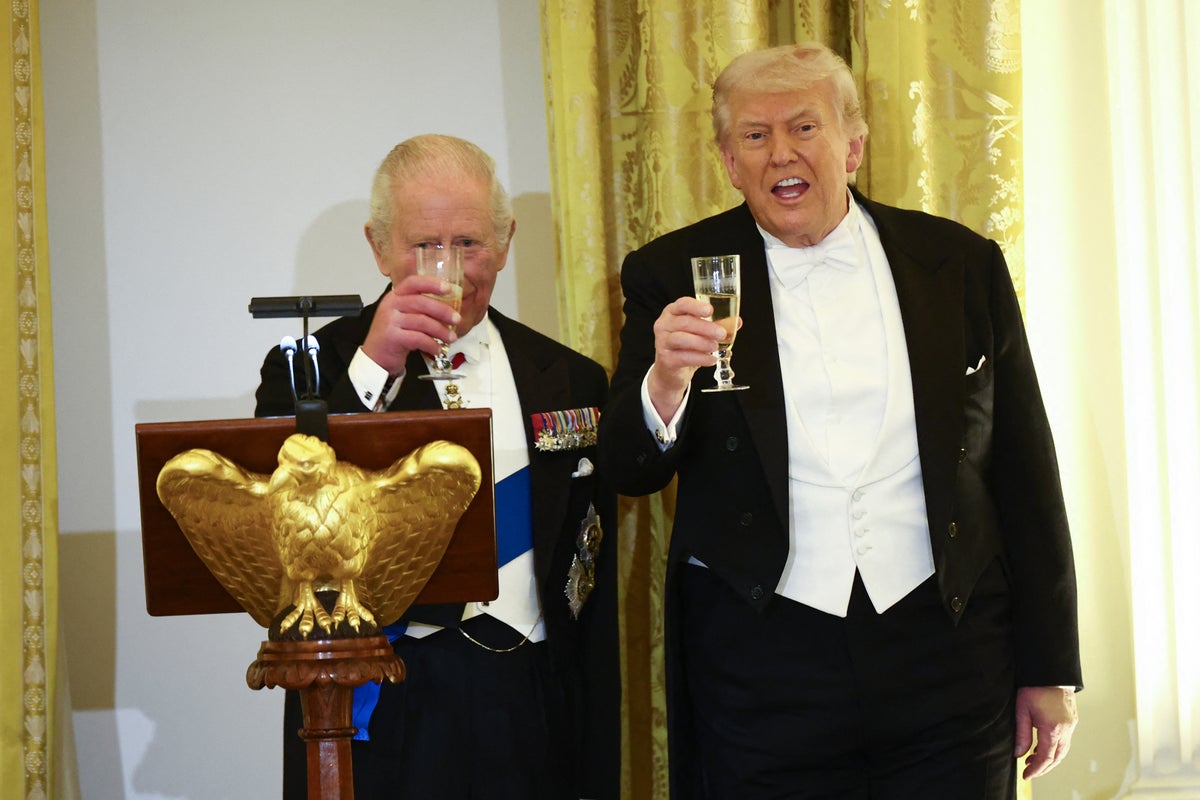
King Charles III has touched down in New York City for the most emotionally charged leg of his four-day United States tour, a visit intended to bridge the gap between historical tradition and the harsh realities of modern geopolitics. While the tabloid headlines focus on the visual pageantry of the royals at the September 11 Memorial, the underlying mission is far more calculated. This trip, occurring during the lead-up to the 250th anniversary of American independence, is a deliberate exercise in "soft power" meant to solidify the "Special Relationship" during a period of significant global instability.
By meeting with 9/11 survivors and first responders today, the King is doing more than paying respects; he is invoking a shared history of resilience that transcends the immediate political friction between London and Washington.
The Strategy of Sympathy at Ground Zero
The visit to the September 11 Memorial and Museum is the anchor of the King’s New York itinerary. It is a carefully managed event designed to project the British monarchy as a steadying force. Standing alongside New York City Mayor Zohran Mamdani, the King and Queen Camilla are scheduled to meet with families of victims and first responders who are already preparing for the 25th anniversary of the attacks.
This isn’t just a photo opportunity. For the King, who has spent decades cultivating a persona of the "global statesman," this moment is about continuity. When he speaks with survivors today, he isn't just Charles; he is the representative of a nation that suffered its own losses on that day. The palace has signaled that these conversations will be private, away from the prying microphones of the press corps, a move intended to lend an air of authentic gravity to a trip that has, at times, felt like a whirlwind of scripted diplomacy.
Camilla’s Parallel Diplomacy
While the King navigates the heavy atmosphere of Ground Zero and later heads to Harlem to discuss food insecurity with local youth organizations, Queen Camilla is operating on a different track. Her schedule focuses on the "cultural glue" that binds the two nations.
The Winnie-the-Pooh Centenary
The Queen’s visit to the New York Public Library is ostensibly a celebration of literature, marking the 100th anniversary of A.A. Milne’s Winnie-the-Pooh. She will present a specially crafted toy of "Roo" to the library’s permanent collection, completing the set of original characters held there. It is a light, accessible narrative that balances the somber tone of the 9/11 visit.
Advocacy and Its Limits
Camilla’s itinerary also includes meetings with advocacy groups focused on literacy and domestic violence, continuing her long-term commitment to these causes. However, the diplomatic bubble remains tight. Earlier in the week, Buckingham Palace officials reportedly swerved requests for the Queen to meet with survivors of the Jeffrey Epstein scandal—a shadow that continues to loom over the House of Windsor despite the King's efforts to distance the crown from Prince Andrew. This omission underscores the reality of royal tours: they are as much about what is avoided as what is embraced.
The Health Factor and the Shortened Circuit
There is a weariness in the King’s gait that the palace handlers are working hard to manage. Despite the official line that his cancer treatments have been "curtailed" to allow for this travel, the schedule is noticeably leaner than royal tours of the past. The trip has been condensed to four days, primarily focused on Washington, New York, and a brief stop in Virginia.
The King’s address to a joint meeting of Congress on Tuesday—the first by a British monarch since 1991—was a grueling high-water mark for his stamina. He received twelve standing ovations, but insiders noted the grueling nature of the logistics behind the scenes. The "shorter duration" is a direct concession to his health. By focusing on New York’s high-impact symbols like the 9/11 Memorial and the King’s Trust reception at Rockefeller Center, the monarchy is choosing quality over quantity, ensuring the King is seen in the right places without risking a physical collapse on the world stage.
The 250th Anniversary and the Trump Factor
The timing of this visit is no accident. With the United States Semiquincentennial approaching, the British government is keen to ensure that the "rebellion" of 1776 is framed not as a permanent divorce, but as the birth of a partnership that remains the bedrock of Western security.
The King’s interactions with President Donald Trump have been characterized by a surprising degree of "beehive diplomacy." The tour of the expanded White House beehive and the gifting of honey served as a rare, soft-focus moment in an otherwise tense geopolitical climate. For the King, the goal is to remain above the fray of American partisan politics while ensuring that the British interest remains protected regardless of who occupies the Oval Office.
The reception at Rockefeller Center later tonight for the King’s Trust will serve as the final New York flourish. It is here, among the titans of American industry and philanthropy, that the King will make his pitch for the future: a monarch who is aging, yes, but one who remains an indispensable link in the chain of Western alliance.
Tomorrow, the couple moves to Virginia to witness Appalachian cultural performances and visit a local farm, shifting from the intensity of Manhattan to the rolling hills of the South. But today is about the weight of history in lower Manhattan, and whether a King can still command the room in a city that never stops moving.
The barricades on Fifth Avenue and the heavy Secret Service presence around the New York Public Library are physical reminders that this is not a vacation. It is a high-stakes performance of relevance. In an era where the monarchy’s future is often questioned back home, Charles is betting that the American public still has an appetite for the crown—provided it comes with a dose of shared grief and a Roo doll for the children.
The royal motorcade will eventually clear the streets, and the "nightmare" for the NYPD will end. What remains will be the images: a King at the edge of the reflecting pools, a Queen with a storybook character, and the quiet, persistent hope that the old ties still hold.
The royal couple departs for Virginia at dawn.