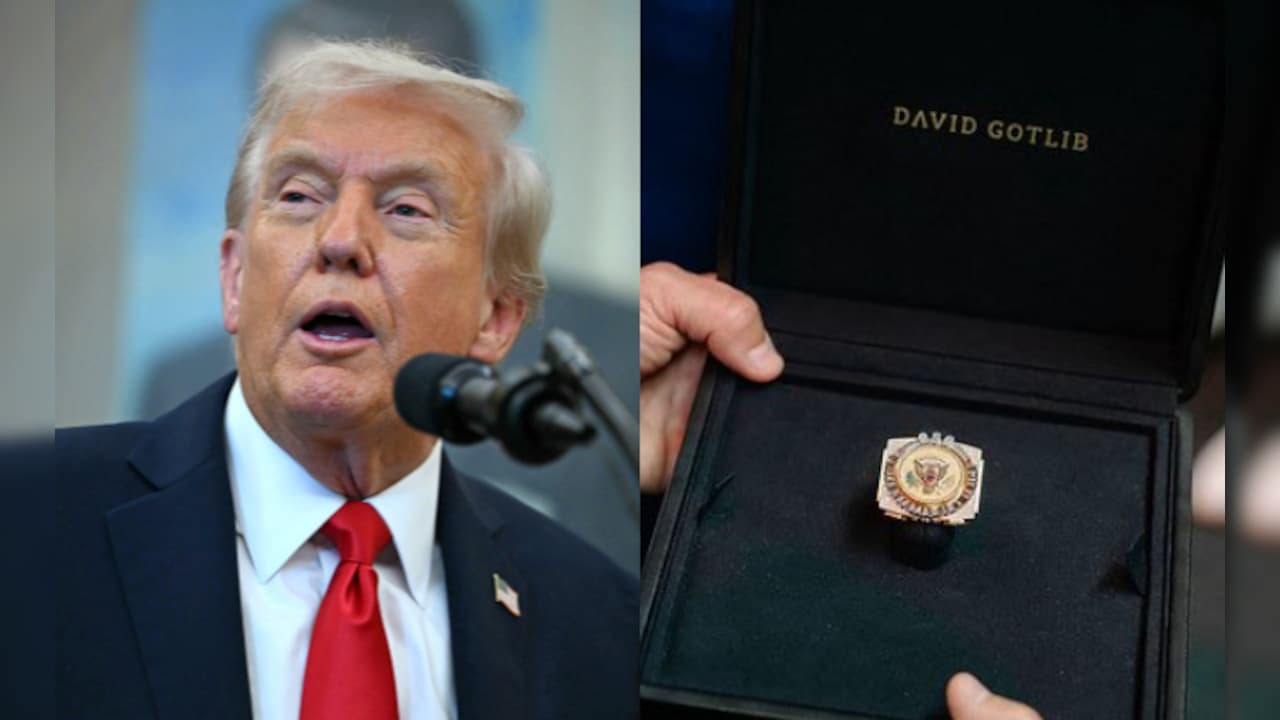
A Belgian diamond firm hands a custom-crafted ring encrusted with 321 diamonds and six rubies to a sitting American president right after securing tariff relief. The media immediately runs with the obvious narrative: it looks like access buying, a flashy thank-you note, or a textbook case of transactional lobbying.
The lazy consensus completely misses how global trade influence actually operates.
Spectacular, headline-grabbing gifts are not brilliant geopolitical chess moves. They are desperate, low-yield marketing stunts disguised as diplomacy. In the modern compliance arena, dropping hundreds of thousands of dollars on a piece of high-jewelry for a public official is the fastest way to achieve absolutely nothing—except perhaps triggering an ethics investigation or a compliance audit.
Having analyzed corporate influence strategies and cross-border trade mechanics for nearly two decades, I have seen organizations blow millions on high-profile gestures that yield zero long-term enterprise value. If your strategy relies on gifting gemstones to secure trade policy, you have already lost the game.
The Illusion of the Transactional Gift
The public loves a simple story. A company wants an exemption from a heavy import tax. The administration grants the tariff relief. The company responds with a ring dripping in ice. The immediate assumption is a direct quid pro quo.
This view misunderstands the structural reality of modern trade policy. Tariff exclusions are heavily institutionalized processes managed by bureaucratic agencies—such as the Department of Commerce or the Office of the United States Trade Representative—operating under strict statutory frameworks. A piece of jewelry delivered after the fact changes exactly zero structural economic variables.
What these grandiose gestures actually represent is institutional anxiety. When a foreign entity relies on flash rather than systemic alignment, it signals that their position is fundamentally fragile.
The Math Behind the Bad Math
Let us break down the actual utility of a hyper-luxury diplomatic gift.
Under the Foreign Gifts and Decorations Act, U.S. federal officials cannot simply pocket high-value items from foreign nationals or corporations. Gifts above a minimal value threshold must be turned over to the National Archives or purchased by the recipient at full market value for personal retention.
Imagine a scenario where a firm invests $150,000 in raw materials and artisan labor to manufacture a bespoke political tribute.
- Scenario A: The recipient hands the item directly to a government vault. The asset vanishes from circulation, generating no ongoing goodwill and zero operational access.
- Scenario B: The recipient buys the item out of pocket to keep it. The transaction becomes an active financial liability for the official, creating political vulnerability for both parties.
- Scenario C: The media catches wind, creating a public relations firestorm that forces regulators to double down on scrutiny to prove they are not bought.
Every single outcome fails to deliver a measurable return on investment. The capital deployed on physical assets would yield orders of magnitude more leverage if redirected into systemic economic integration, domestic job creation data, or structural supply chain realignments that politicians can actually use as policy wins.
The Flawed Premise of Access Buying
People frequently ask: "How much does it cost to buy political influence?"
The question itself is completely flawed. You do not buy influence with objects; you negotiate alignment based on mutual economic self-interest.
When a luxury cartel or an industrial collective seeks protectionist relief, the leverage does not come from the jewelry boxes they bring to the capital. The leverage comes from their control over critical supply chains, local employment metrics in key swing districts, and their ability to absorb or shift capital across borders.
- Systemic Leverage: Providing the raw data that proves a specific tariff hurts domestic manufacturers more than foreign competitors.
- Superficial Leverage: Commissioning 300 diamonds to be set into a gold band.
The former creates a bulletproof policy position that survives administration changes. The latter creates a great photo opportunity for a competitor's attack ad.
I have watched mid-sized manufacturers quietly secure multi-million-dollar tax exemptions simply by presenting impeccable economic impact assessments to sub-committee staff. Meanwhile, flashy conglomerates get dragged through oversight hearings because their high-profile glad-handing rubbed the regulatory apparatus the wrong way.
Structural Compliance is the Real Moat
The true drivers of international trade advantage do not operate in the realm of high-end retail. They operate in the dull, unglamorous machinery of regulatory compliance and corporate structure.
| Strategy Type | Mechanism | Long-Term Viability | Regulatory Risk |
|---|---|---|---|
| Transactional Gifting | Bespoke luxury items, public presentations | Exceptionally Low | High (Ethics audits, public backlash) |
| Systemic Realignment | Supply chain localization, joint ventures | High | Low (Built on codified legal frameworks) |
| Information Arbitrage | Data-driven policy education for regulators | Medium-High | Minimal (Transparent public record) |
If a business requires exceptional, one-off political interventions to survive, its fundamental operational model is broken. The most defensible moat a company can build involves aligning its core operational footprint with the domestic priorities of the market it wishes to penetrate.
If you want tariff relief, do not send diamonds. Build a processing plant. Hire local engineers. Become too structurally integrated into the domestic economy to be taxed out of existence.
Stop treating international trade like a Renaissance court where the merchant with the finest silk wins the king’s favor. The modern regulatory apparatus is a massive, data-driven machine. Feed it numbers, economic metrics, and employment guarantees. Leave the rubies in the vault.