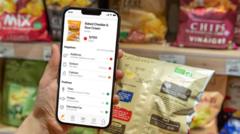
Sarah stared at her phone screen in the middle of aisle four, a bag of organic spinach in one hand and a box of neon-orange cheese crackers in the other. Her grocery app had just sent a push notification. It was a summary of her monthly purchases, neatly categorized.
According to the data, Sarah’s household was 64% processed foods, 12% fresh produce, and 24% "unusable pantry clutter."
The app did not just list her purchases. It held up a mirror. And Sarah did not particularly like who was looking back.
Every week, millions of us swipe our loyalty cards, scan our phone screens at self-checkout, and watch our digital receipts populate in real-time. We treat these transactions as mere administrative proof of purchase. But underneath the barcode lies a massive, largely untapped reservoir of behavioral truth. Tracking our food purchases is not just about keeping a budget or counting pennies. It is a psychological biopsy of our daily lives.
The Grocery Cart is a Confessional
We lie to ourselves about what we eat.
It is a well-documented psychological phenomenon. Ask anyone in a doctor’s office how many servings of vegetables they had this week, and their brain will automatically edit out the late-night handfuls of chocolate chips and inflate the single salad they ate on Tuesday. We remember our dietary triumphs and conveniently block out our nutritional defeats.
But your credit card statement does not have an ego to protect.
When researchers look at grocery transaction data, they see the unvarnished reality of human behavior. A study analyzing loyalty card data from thousands of households revealed a stark gap between what people believe they buy and what actually lands in their pantry. We buy food for the person we wish we were—the one who prepares complex Mediterranean meals from scratch—and then we eat the food that fits the tired, stressed person we actually are on a Thursday night.
Imagine a hypothetical shopper named Marcus.
Marcus decided to lower his cholesterol. For three weeks, he filled his mental journal with victories. He ordered the fish at lunch. He skipped the donuts in the breakroom. Yet, his cholesterol numbers barely budged.
When Marcus finally downloaded a year’s worth of grocery data and plugged it into a simple spreadsheet, the culprit was not his dinners. It was his morning routine. The data revealed he was buying three boxes of ultra-processed breakfast pastries every single week. He had completely blocked these quick, pre-coffee purchases from his mental tally. They were invisible calories, masked by his conscious focus on "eating healthy dinners."
Tracking what we buy strips away the narrative we construct to protect our comfort. It provides an objective baseline. You cannot fix a problem you refuse to see.
The Hidden Architecture of the Modern Supermarket
To understand why tracking matters, we have to look at how we got here.
The modern grocery store is not a neutral warehouse of sustenance. It is a highly engineered maze designed by consumer psychologists to bypass our rational minds.
The sensory onslaught begins the moment you walk through the automatic doors. The smell of rotisserie chicken stimulates salivary glands, triggering hunger. The bright colors of the floral department signal freshness, putting our brains in a receptive state. The most expensive, high-margin, ultra-processed items sit exactly at eye level.
Every endcap display, every "buy-one-get-one" offer, and every candy bar squeezed into the narrow checkout lane is a calculated assault on our willpower.
By the time we reach the register, decision fatigue has set in. Our prefrontal cortex—the part of the brain responsible for long-term planning and self-control—is exhausted from making hundreds of micro-decisions. We succumb to the impulse buy.
When we track our purchases over time, we begin to map the supermarket’s influence on our unique vulnerabilities.
You might notice that every time you shop on a empty stomach after 6:00 PM, your basket is 40% heavier with high-sodium snacks. Or perhaps you see a pattern where "bulk savings" on soda actually leads to an immediate spike in your family's overall sugar consumption, wiping out any financial benefit.
Using data to fight back is like bringing a map to a labyrinth. It levels the playing field between your long-term health goals and the multi-billion-dollar grocery marketing apparatus.
The Digital Divide in Our Cupboards
There is a quiet revolution happening in public health research, and it centers on this exact transactional data.
For decades, health researchers relied on self-reported dietary recalls. Participants were asked to remember every single thing they ate over the past 24 or 48 hours. The data was notoriously flawed. People forgot. They lied out of shame. They guessed at portion sizes.
Now, scientists are partnering with major grocery chains to analyze anonymized purchasing data. The results are incredibly precise. Researchers can now predict localized spikes in cardiovascular issues or diabetes based on the ratio of refined sugars to dietary fiber sold in specific zip codes.
But on an individual level, the transition from paper receipts to digital tracking tools poses a deeper question: does monitoring our purchases actually lead to healthier bodies?
The answer is nuanced, and honestly, a little intimidating.
For some, tracking acts as a powerful cognitive behavioral tool. It creates a pause between impulse and action. When you know that a box of sugary cereal will be logged and categorized in your weekly health report, the psychological cost of buying it rises. You think twice.
For others, however, tracking can morph into a source of intense anxiety.
Consider what happens next when tracking goes too far. A tool meant to empower can easily become a digital warden. The moment we begin to associate a digital transaction with moral failure, the system breaks. A pint of ice cream is not a sin; it is a purchase. If the data feeds a cycle of guilt and restriction, it ceases to be a tool for health and becomes a catalyst for disordered eating.
We must approach our data with curiosity, not judgment. The goal of tracking is to understand our patterns, not to punish ourselves for being human.
How to Build a Humane Tracking Habit
If you want to use your purchasing history to improve your health, you do not need to spend hours building complex spreadsheets or inputting every single grape into a calorie-counting app. The most sustainable systems are those that require the least friction.
First, let the technology do the heavy lifting.
Most major grocery chains now offer detailed digital receipts within their loyalty apps. Once a month, take ten minutes to log in and look at the broad categories. Do not focus on individual slip-ups. Look at the macro trends. Is your produce spending rising or falling? Are the shelf-stable, highly processed boxes slowly taking over your budget?
Second, choose one specific target metric.
Instead of trying to overhaul your entire diet at once, pick one category to monitor. If you want to eat more whole foods, track the percentage of your budget spent on the perimeter of the store—the produce, meat, and dairy sections—versus the inner aisles where the packaged goods live. This is often called the "perimeter ratio." A healthy basket typically skews heavily toward the outer walls.
Third, align your budget with your biology.
Food prices have risen dramatically, and healthy food is often perceived as a luxury. But tracking often reveals a surprising financial truth: the highly processed, ready-to-eat convenience meals we buy are often the most expensive items per serving. By tracking our purchases, we can identify where we are paying a premium for convenience that actually compromises our health. Redirecting those funds toward frozen vegetables, bulk grains, and simple proteins can simultaneously lower your grocery bill and raise your nutritional intake.
The Unseen Power of the Cart
We like to think of our health journey as a series of grand, dramatic decisions made in moments of peak inspiration. We imagine ourselves cooking elaborate meals or swearing off sugar forever on New Year's Day.
But health is not built in the moments of high drama. It is constructed quietly, mundonely, in the sterile light of aisle six.
Our grocery carts are the physical blueprints of our future cells. The vegetables we buy today become the skin, muscle, and energy of next month. The processed chemicals we slide across the scanner become the inflammation we fight next year.
When Sarah stood in that aisle, looking between the fresh green spinach and the bright orange crackers, she realized something profound. The app’s notification was not a condemnation. It was a second chance.
She put the crackers back on the shelf. She kept the spinach.
It was a tiny, seemingly insignificant choice in a lifetime of millions of choices. But as she walked toward the register, she knew the digital receipt she was about to generate would tell a slightly different, slightly healthier story.