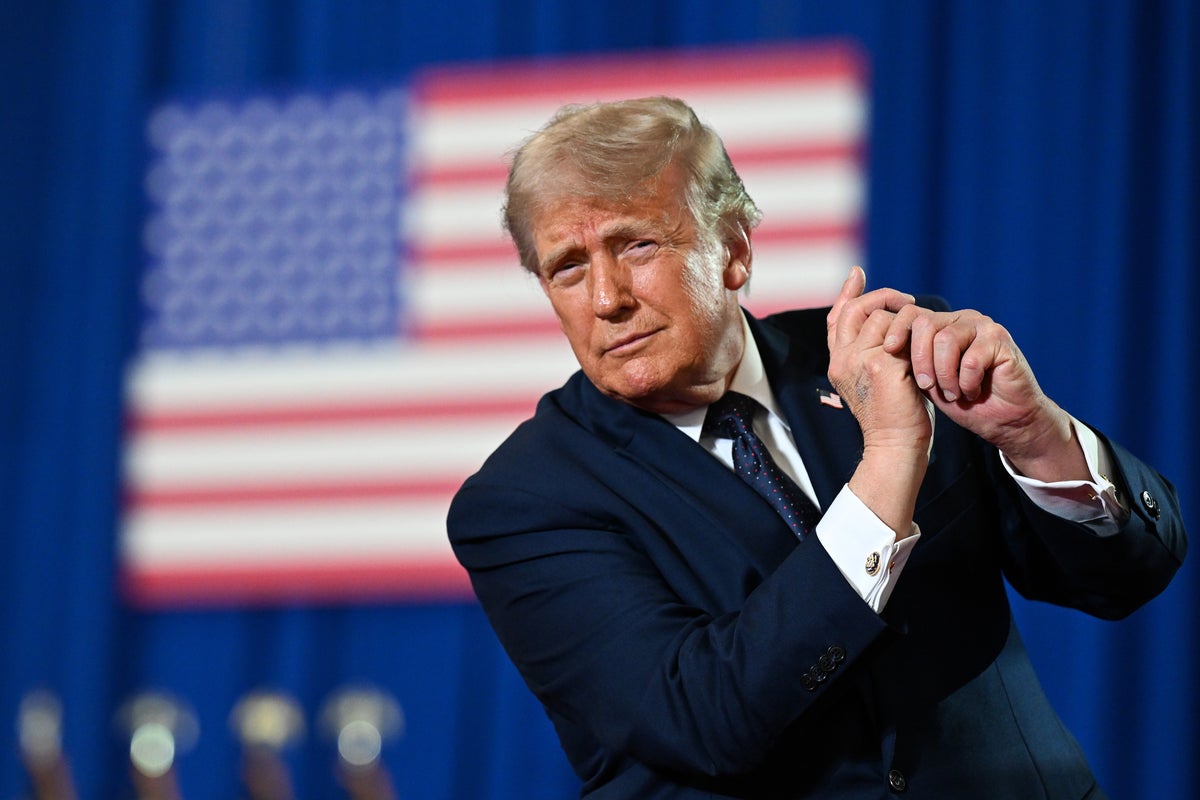
The modern presidency does not sleep, nor does it log off. In the early hours of the morning, while traditional diplomatic channels remained silent and Washington slept, Donald Trump was active online, publishing a rapid succession of highly stylized images to his millions of followers on Truth Social. This is not merely an old man venting into the digital void. It is a highly deliberate, weaponized aesthetic that has effectively replaced traditional press operations, creating a direct pipeline of political myth-making that bypasses conventional media scrutiny entirely.
By analyzing the mechanics of these late-night posting sprees, it becomes clear that these are not erratic outbursts. They are a core governing strategy. A single image of Trump looming like a harvest moon over Greenland, or a depiction of himself standing on a warship peering at burning targets, carries more weight with his base than any white paper or press briefing ever could.
The Mechanics of Slopaganda
Political communications teams used to spend days focus-grouping a single campaign ad. Now, the presidency relies on what internet researchers call slopaganda, the high-volume dissemination of cheap, quickly generated visual assets designed to flood the information ecosystem. Data shows that Trump’s use of synthetic imagery on Truth Social has surged significantly this year, shifting from text-heavy grievances to a purely visual language.
This shift matters because images bypass the analytical brain. When the president shares an altered photo of the Lincoln Memorial Reflecting Pool, rendered in an impossibly vibrant blue to contrast it with an algae-ridden "before" photo blamed on past administrations, he is not trying to win a policy debate. He is establishing an emotional reality.
- Speed Over Accuracy: Images are produced and distributed within minutes of a news event breaking, capturing the narrative before formal journalism can establish the facts.
- Algorithmic Dominance: Visual content achieves far higher engagement metrics on proprietary platforms, forcing mainstream news networks to cover the imagery just to explain what the executive branch is doing.
- Plausible Deniability: If an image causes too much diplomatic friction, such as a depiction of opposition leaders in degrading scenarios, it can be deleted or dismissed as a mere joke.
The strategy relies heavily on a small circle of aides who present the president with printed packets of memes, online commentary, and digital art curated from the darker corners of the internet. Trump reviews these physical printouts, selects his favorites, and dictates modifications before they are uploaded directly to his feed, often between the hours of 11:00 p.m. and 4:00 a.m.
Geopolitics by Meme
The consequences of this rapid-fire digital output extend far beyond domestic political posturing. During critical, high-stakes negotiations regarding global trade routes and Middle Eastern security, the administration's official stance is frequently articulated not through state department communiqués, but through combat-themed digital art.
When tensions peaked over naval blockades in the Strait of Hormuz, the White House did not issue a standard warning. Instead, Trump posted an image of himself holding an automatic weapon under the caption "NO MORE MR NICE GUY." To an outside observer, this looks like posturing. To foreign intelligence agencies tasked with decoding American intent, it represents a highly unpredictable variable in international diplomacy.
Foreign adversaries have quickly adapted to this environment. State-linked media operations in Tehran and Beijing now routinely respond in kind, creating a bizarre parallel track of international relations conducted entirely through adversarial image generation. One notable response from overseas showed an American leader kneeling before foreign officials, a direct attempt to counter Washington's digital projection of absolute strength.
This transactional, visual diplomacy reduces complex geopolitical realities down to basic schoolyard dynamics. It functions because it requires zero nuance. A narrative of strength or submission is established in a single glance, leaving traditional diplomats to clean up the strategic ambiguity left in the wake of a midnight posting binge.
The Attention Economy as Executive Power
Traditional political analysts often mistake these social media blitzes for a sign of distraction or a lack of discipline. This view fundamentally misunderstands how power is maintained in a fractured media landscape. For this administration, attention is the ultimate currency, and a lack of coverage is the only true failure.
During a recent holiday weekend, while domestic policy decisions languished and key family events were skipped under the guise of pressing government business, the president remained isolated, generating dozens of posts detailing his personal grievances and idealized victories. To the institutionalist, this looks like a dereliction of duty. To the populist strategist, it is a masterclass in staying at the absolute center of the national conversation.
Mainstream news outlets consistently fall into the trap of analyzing these posts as psychological tells rather than structural tactics. They write headlines focusing on the strangeness of the imagery, effectively doing the work of the administration's communications team by distributing the content to an even wider audience. The content of the meme matters far less than the fact that everyone is talking about it.
This constant state of digital stimulation serves an internal purpose as well. By keeping his base in a perpetual loop of outrage, celebration, and grievance, Trump ensures that loyalty is tied directly to his persona rather than any specific legislative achievement or policy outcome. The platform is the policy.
The traditional infrastructure of the presidency, from formal press pools to archived briefings, is increasingly obsolete. In its place stands a single man with a smartphone, reshaping the reality of American power one late-night upload at a time. The digital panopticon is fully operational, and the signal shows no signs of fading.