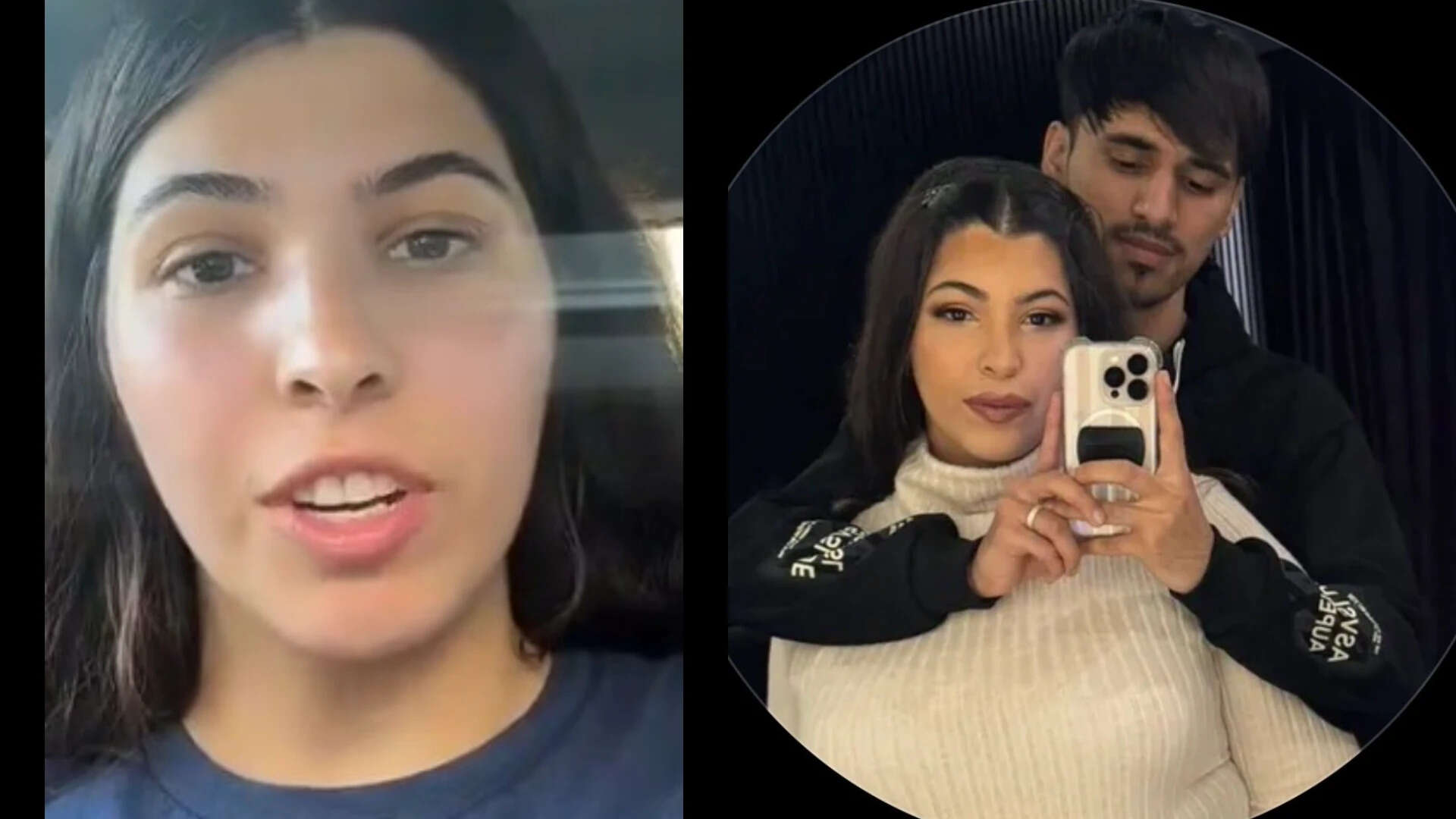
A phone screen glows in the dark cabin of an 18-wheel truck. Outside, the endless concrete of an American highway stretches into the night. Inside, the rhythmic blue light of Snapchat illuminates the face of Alex Sunny, a 26-year-old truck driver with a Kentucky-born mother and a Jordanian father. In July 2024, a simple notification bridged the gap between this highway and a completely different reality thousands of miles away.
She met a man. They talked, they laughed, and they built a universe out of pixels and voice notes. By December of that year, they met in person and married. It was a whirlwind, the kind of romance that feels destined because of, rather than in spite of, its sheer improbability.
Then came the silence.
For nearly two years, they have lived on opposite sides of a geopolitical chasm. He cannot travel to the United States due to strict immigration barriers and travel bans. She cannot easily bring him home. So, she made a decision that has polarized the internet: this August, she claims she is pack-loading her life, leaving her truck, and relocating permanently to Afghanistan.
The Weight of an Algorithm
"I’m just going to go where he’s at because he can’t come to where I’m at," Sunny told her growing audience of onlookers on TikTok.
The comment section did not offer congratulations. Instead, it erupted into a mixture of horror, disbelief, and deep suspicion. To the average western observer, the move is incomprehensible. Afghanistan under Taliban rule is not a typical destination for a young American woman, regardless of her dual U.S.-Jordanian citizenship.
People have many questions. How will she navigate the severe restrictions on women’s travel, dress, and employment?
Sunny has attempted to quiet the storm of skepticism by offering defense points on her channel. She mentions that her husband's aunt attends a local gym. She explains that she intends to live with his family, immerse herself in Afghan history, eat local food, and strictly respect traditional customs.
But the internet remains unconvinced. The skepticism has morphed from standard concern into dark, complex theories.
PR, Plants, and the Pursuit of Engagement
Consider the sheer oddity of the situation. Some commentators, especially those claiming experience with Afghan advocacy groups, believe there is more to this story than simple romance. They suggest Sunny might be a modern propaganda tool—a "plant" designed to soften the global image of a highly restrictive regime.
Others wonder if she is operating under a false sense of security, believing that her viral fame and American passport will act as an invisible shield against local laws.
But there is an even simpler, modern explanation: engagement farming.
In a digital economy where outrage and disbelief are the most valuable currencies, making a claim this extreme is guaranteed to generate millions of views. Anger drives clicks. Fear drives comments. A young woman claiming she is moving to Kabul for a husband she barely knows is the ultimate lightning rod for online attention.
Is she a genuine romantic willing to risk everything for a husband she has not seen in two years? Or is she a clever creator playing the algorithm like a fiddle, knowing that the mere mention of her plans will keep her in the spotlight?
The Realities Beyond the Screen
The tragedy of the digital age is that we often forget the physical world has teeth. Beyond the TikTok filters and the comforting reassurances of Snapchat messages lies a country currently ranked as one of the most challenging places on earth for women's rights.
If Sunny's plans are real, she is trading the open road of her trucking career for a society where her autonomy will be radically redefined. The romanticism of crossing oceans for love is a beautiful narrative. But a passport cannot rewrite local decree, and a viral following cannot negotiate with authorities.
As August approaches, the countdown on her channel continues. Whether this ends as a cautionary tale of digital naivety, a masterclass in internet trolling, or an incredibly high-stakes leap of faith, the world is watching.
Sometimes, the bridges we build online are too heavy for the real world to support.