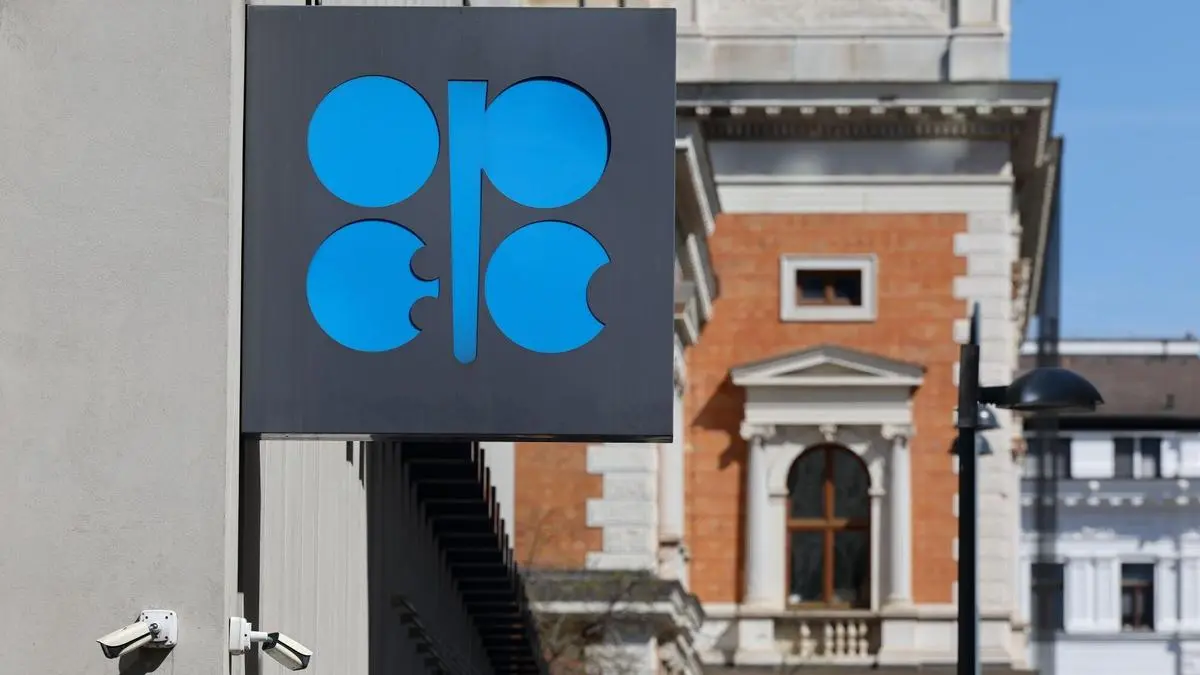
The air in the glass-walled boardrooms of Vienna is always filtered, climate-controlled to a precise, comfortable temperature that betrays nothing of the sweltering heat of the Arabian Peninsula or the biting winds of the Siberian steppe. But inside those rooms, the atmosphere is currently heavy with the scent of a crumbling alliance. For decades, the Organization of the Petroleum Exporting Countries (OPEC) has functioned like an exclusive, high-stakes dinner club. The members agreed on the menu, they agreed on the price of the wine, and they agreed to never leave the table until the bill was settled.
Now, the United Arab Emirates is looking at the exit.
This isn't just a dry shift in diplomatic alignment. It is a tectonic break. When a player as central as the UAE decides to step away from the coordinated production cuts that have kept oil prices artificially buoyant, the ripples reach far beyond the trading floors of London or New York. They reach the gas station in a small town in Ohio. They reach the heating bill of a family in Krakow. They reach the very heart of the Kremlin.
The Architect of the Break
Consider a man we’ll call Omar. He is a high-level logistics coordinator at the Jebel Ali Port in Dubai. To Omar, the oil flowing through the veins of his country isn’t just a commodity; it is the architect of the skyline he sees every morning. The UAE has spent the last decade frantically diversifying, building tourism hubs, tech incubators, and renewable energy grids. But to fund a future without oil, they need to sell as much oil as possible right now.
The UAE has invested billions into increasing their production capacity. They have the drills, the pipes, and the tankers ready to go. Under the current OPEC+ rules—rules heavily influenced by Russia and Saudi Arabia—those machines must sit idle. It is like owning a fleet of Ferraris but being told by your neighbors that you are only allowed to drive them in second gear to keep the neighborhood quiet.
Eventually, you want to see what the engine can do.
Russia, watching from the frozen north, sees this tension clearly. Russian energy analysts have begun to voice what everyone in the industry whispered behind closed doors: a UAE exit is not a matter of "if," but "when." From Moscow’s perspective, this isn't necessarily a catastrophe to be avoided, but a mathematical inevitability that will reshape the global economy.
The Calculus of Cold Hard Cash
When the UAE leaves, the dam breaks. Without the constraints of the quota, millions of additional barrels of crude will begin to flood the global market. Economics is often treated as a complex, mystical art, but at its core, it is as simple as a seesaw.
On one side, you have supply. On the other, demand. When the UAE pushes down on the supply side with all their weight, the price on the other side shoots downward. Russia’s own Ministry of Energy acknowledges that this move will likely drag global oil prices into a sustained decline. For a world struggling with the lingering ghost of inflation, this sounds like a victory. Lower prices at the pump. Cheaper shipping for goods. A bit of breathing room for the average consumer.
But for the nations that rely on "Petrodollars" to keep their lights on, this is a terrifying prospect.
Russia finds itself in a paradoxical position. They need high oil prices to fund their state machinery and their ongoing military ambitions. Yet, they also recognize that the current system of production cuts is losing its grip. If the UAE leaves, other nations might follow. The "Plus" in OPEC+—the coalition of non-member allies led by Russia—becomes a subtraction.
The Invisible Stakes
To understand why this matters to you, forget the billion-dollar figures for a moment. Think about the "Invisible Stakes."
Oil is the hidden ingredient in almost everything you touch. It is in the plastic of your keyboard, the synthetic fibers of your clothes, and the fertilizer that grew your breakfast. When the UAE decides to walk away from a production agreement, they are essentially deciding to devalue the world’s most important raw material.
If prices drop significantly, the incentive to switch to green energy weakens. Why spend thousands on a heat pump or an electric vehicle when gasoline and heating oil are cheaper than they’ve been in years? The UAE's exit could inadvertently slow the global transition to renewables, tethering us to the carbon economy for just a little bit longer.
There is also the matter of geopolitical stability. Oil-producing nations with fragile economies—think Nigeria, Venezuela, or even Iraq—rely on a certain price floor to prevent civil unrest. If the UAE triggers a price war by flooding the market, those floors collapse. We aren't just talking about numbers on a screen; we are talking about the ability of governments to pay teachers, police officers, and doctors.
The Sound of the Engine
Russia's prediction of increased production isn't just a forecast; it's an acknowledgment of a shifting power dynamic. For years, Saudi Arabia and Russia have been the two suns that the rest of the oil-producing world orbited. The UAE is now declaring itself a third star.
They have the "Murban" crude, a light, sweet oil that refiners crave. They have the geographical advantage of the Strait of Hormuz. And most importantly, they have the ambition. They are tired of subsidizing the fiscal health of other nations by keeping their own taps closed.
Imagine the moment the final decision is announced. It won't be a dramatic televised speech. It will be a quiet filing, a formal letter delivered to a secretariat. But the moment that letter is opened, the gears of the world economy will shift.
Traders in Singapore will stay up all night. Supertankers already at sea will receive new coordinates. In Moscow, the budget will be rewritten in red ink. In Abu Dhabi, the valves will begin to turn.
The Friction of the Future
We often think of global markets as these vast, impersonal forces, like the weather. But they are driven by the very human desire for autonomy and the very human fear of being left behind. The UAE is choosing autonomy. Russia is bracing for the fallout.
There is a specific kind of silence that happens right before a major change—a "hush" in the market where everyone is waiting for the first person to move. We are in that silence now. The UAE is standing by the door, hand on the knob. Russia is watching them from across the room, already calculating the cost of the cold air that is about to rush in.
The era of the managed oil market is dying. What comes next is a period of volatility, of cheap fuel and expensive geopolitical consequences, of old alliances being traded for new realities. The desert is ready to produce, and the rest of the world is about to find out exactly what that costs.
The taps are creaking open. You can almost hear the rush of the pressure being released, a low hum that starts in the sands of the Emirates and ends in the gas tank of a car idling at a red light thousands of miles away.