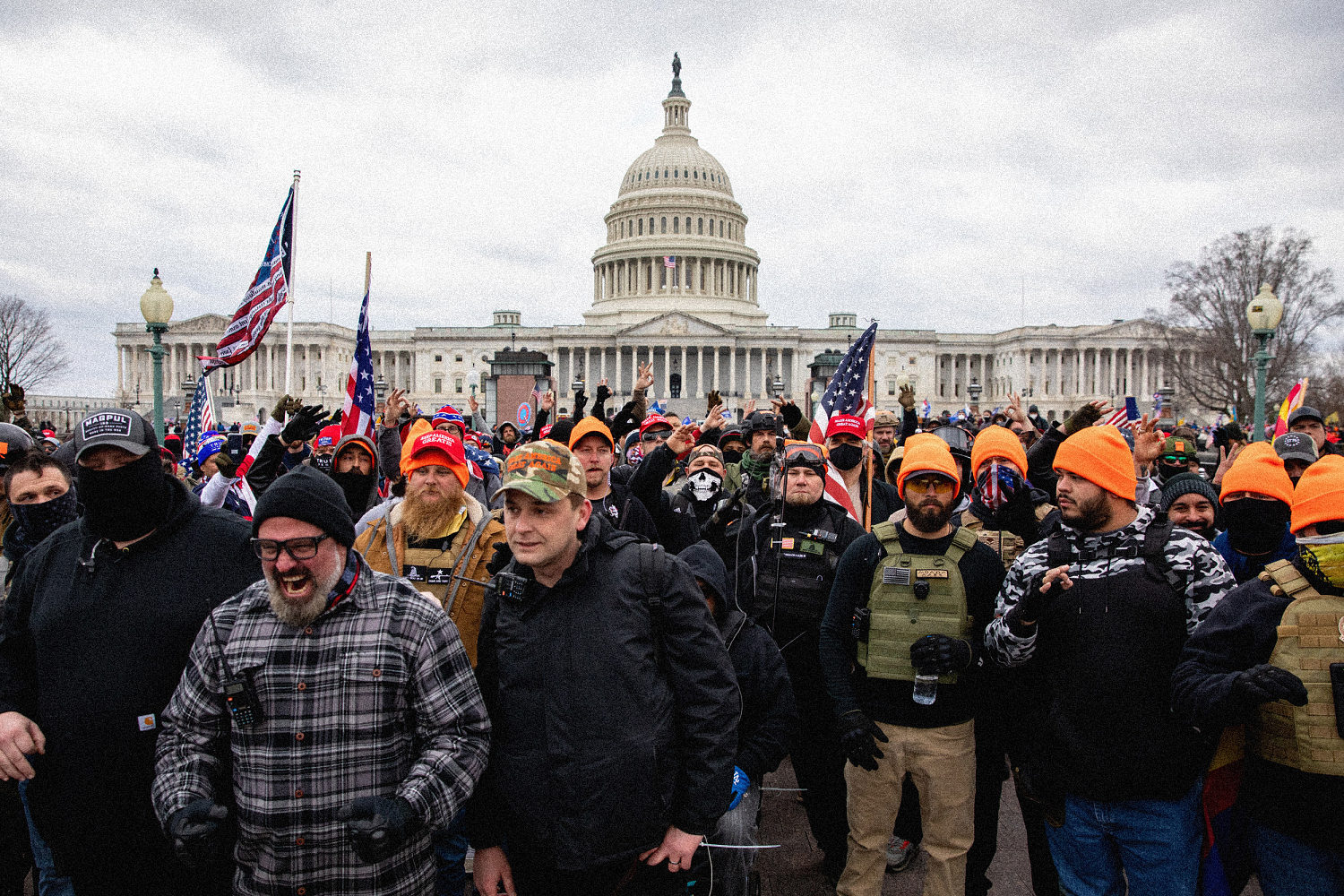
The federal prosecution of January 6 defendants has hit a wall of its own making. In a quiet but devastating legal maneuver, the Department of Justice moved to dismiss the remaining convictions of high-profile Proud Boys members, a request that a federal judge swiftly granted. This is not a failure of evidence, nor is it a sudden wave of judicial leniency. It is a calculated retreat by a justice system that backed itself into a corner by relying on overreaching legal theories that could not withstand appellate scrutiny.
For years, the DOJ leaned heavily on specific obstruction statutes to secure lengthy sentences for hundreds of Capitol riot defendants. By using a post-Enron financial shredding law to prosecute physical disruption, prosecutors built a house of cards. The Supreme Court eventually knocked it down. What we are seeing now is the messy, embarrassing cleanup operation as the government tries to salvage what remains of its institutional credibility before more high-profile defeats make the evening news.
The Mechanical Failure of the Obstruction Charge
To understand why the government threw in the towel on these specific Proud Boys convictions, you have to look at the machinery of the law itself. Prosecutors relied on 18 U.S. Code § 1512(c)(2), a provision enacted under the Sarbanes-Oxley Act of 2002. The law was originally designed to stop corporate criminals from burning financial ledgers or wiping hard drives during SEC investigations. It carries a heavy 20-year maximum penalty.
The DOJ stretched this corporate-fraud statute to cover the physical disruption of the electoral vote certification. For a time, the gamble worked. Judges in the D.C. District accepted the interpretation, and juries convicted based on it.
Then came the reckoning.
In Fischer v. United States, the Supreme Court ruled that the statute applies only to acts that impair the integrity or availability of evidence, documents, or other objects used in an official proceeding. Walking through a broken window at the Capitol did not fit the bill.
The ripple effect was immediate. Defendants who had been serving years in federal prison suddenly had the legal ground cut out from underneath them. The DOJ faced a grim choice: retry hundreds of cases using far more difficult evidentiary standards, or cut its losses. They chose the latter.
Inside the Decoupling of Conspiracy and Disruption
The dismissal of these specific counts does not mean the Proud Boys walk free on all charges. Seditious conspiracy convictions still stand for the top leadership. However, the dropping of the obstruction charges fundamentally alters the sentencing math and exposes a deeper flaw in how the government built its narrative.
Consider how federal sentencing guidelines work. They operate on a points system. By stripping away the 1512(c)(2) obstruction count, the government loses the scaffolding that allowed them to ask for "terrorism enhancements." These enhancements exponentially increase prison time. Without them, the convictions look less like a coordinated insurrection in the eyes of the law and more like a chaotic, albeit violent, trespass.
The government realized it could not win a retrial on the remaining counts without exposing its broader investigative tactics to intense cross-examination. A retrial means discovery. Discovery means the defense gets to look at what the FBI knew, when they knew it, and how many informants were embedded within the crowd. For the DOJ, dropping the charges was the cheaper price to pay.
The Collateral Damage to Judicial Precedent
This retreat has severely damaged the credibility of the Department of Justice. By aggressively pursuing a legal theory that multiple legal scholars warned was unstable, prosecutors have handed a massive political and legal victory to the very movement they sought to dismantle.
- Jury Trust: Juries spent weeks listening to complex arguments, believing they were applying the law correctly, only to see those convictions erased because prosecutors pushed the envelope too far.
- Resource Drain: Millions of dollars and thousands of man-hours were poured into defending a statutory interpretation that was fundamentally flawed from inception.
- Appellate Backlog: The federal public defender's office in D.C. is now overwhelmed with motions to vacate, resentence, or dismiss, paralyzing other parts of the judicial system.
The broader public is left with a fractured understanding of accountability. When the government uses a flawed tool, the tool breaks. When the tool breaks, the public loses faith in the factory that made it.
The Strategy Behind the Surrender
The DOJ's motion to dismiss was not an act of mercy. It was a triage maneuver. By voluntarily asking the judge to toss the remaining convictions, the government prevented a formal evidentiary hearing where defense attorneys could have picked apart the remaining threads of the prosecution's case.
In high-stakes federal litigation, knowing when to fold a hand is as critical as knowing when to raise. The prosecutors looked at the appellate landscape and saw a minefield. If they pushed forward and lost a retrial, it would create a binding precedent that could jeopardize other, non-January 6 obstruction cases across the country. They sacrificed the individual convictions of a few high-profile defendants to protect the broader utility of their prosecutorial arsenal.
This strategy protects the institution, but it abandons the narrative of total accountability that the DOJ pushed for years. It proves that under the pressure of constitutional scrutiny, even the most aggressive federal prosecutions can be forced into a humiliating retreat by the sheer weight of their own overreach.



