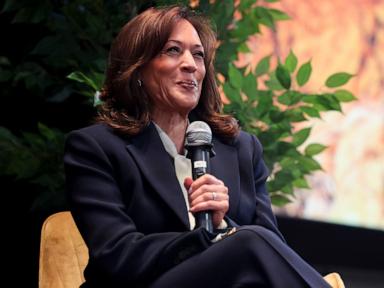
The conventional political press is currently obsessed with a lazy, predictable fairy tale. It goes like this: Kamala Harris is a washed-up, consultant-driven artifact of the 2024 defeat, and the salvation of the Democratic Party lies in a clean break toward "fresh faces." Commentators point to moving on from the past, highlighting figures like Josh Shapiro, JD Pritzker, or even a hypothetical progressive ticket, arguing that a shiny new governor or a media-savvy outsider is the immediate fix for a fractured base.
This view is fundamentally flawed. It misreads basic voter psychology, ignores the harsh structural realities of modern campaigns, and fundamentally misunderstands why Harris lost in 2024. The institutional push to dump a known national brand in exchange for unproven regional executives is not sophisticated strategy. It is panicked amateur hour.
I have watched political operations waste hundreds of millions of dollars chasing the myth of the unblemished outsider. In a highly polarized, nationalized media environment, the idea that you can pluck a midwestern executive or a local mayor, drop them onto the national stage, and seamlessly build a winning coalition in 20 months is a fantasy. The "fresh face" strategy is an elite delusion that ignores how modern political capital actually works.
The Myth of the Unblemished Challenger
The primary argument for abandoning Harris is that she carries the permanent stain of a general election loss. Pundits talk about her 107-day blitz against Donald Trump as a definitive rejection of her brand. They assume a blank-slate candidate can walk into 2028 without any baggage.
This logic completely falls apart under scrutiny. A candidate only looks pristine when they have never faced the relentless machine of national opposition research. The moment a governor leaves their home state, their record is picked apart. Every local tax increase, every controversial judicial appointment, and every minor legislative compromise is amplified into a national crisis.
Imagine a scenario where a popular state executive is thrust into a national primary. Within weeks, their perceived moderate appeal is shredded by primary opponents demanding purity on federal issues, while opposition PACs spend $100 million defining them to independent voters before they can even introduce themselves. The blank slate disappears instantly.
Harris has already survived that meat grinder. Her flaws, vulnerabilities, and rhetorical quirks have been fully litigated on the largest possible stage. There are no sudden surprises waiting in her closet. In a political environment driven by negative partisanship, knowing exactly how the opposition will attack your candidate is an immense strategic advantage.
The Brutal Math of National Name Recognition
The establishment loves to speculate about the raw talent of new contenders, but they consistently underestimate the sheer scale of the American electorate. Building national familiarity is an incredibly expensive, agonizingly slow process.
Consider the underlying data of the current Democratic field. Recent polling shows Harris crushing potential challengers like Gavin Newsom by double digits among primary voters. Why? Because name recognition is the primary currency of modern politics.
- The Baseline: Harris already secured over 75 million votes in a general election. She holds a pre-existing national donor network, an active grassroots email list, and immediate access to every major media market in the country.
- The Contenders: A fresh face starting from scratch must spend the first nine months of a campaign simply explaining who they are to voters in peripheral primary states.
- The Capital Burn: Every dollar an unproven candidate spends on basic introduction ads is a dollar that cannot be used to attack the opposition or build a sophisticated field operation.
Abandoning a candidate who possesses near-total name recognition for an unknown entity means starting the race with a massive structural deficit. It forces the party to waste the entire pre-primary period on introduction rather than execution.
Dismantling the Primary Premises
The conventional wisdom surrounding 2028 is built on flawed premises that need to be addressed directly.
People Also Ask: Can a candidate who lost a presidential election ever win a second nomination?
The establishment answer is usually a rigid "no," citing historical precedent and the need for a clean break. This completely ignores the reality of modern American politics. The rules of political gravity changed entirely when Donald Trump lost the White House in 2020, maintained his grip on his party's apparatus, and won the presidency again four years later.
Voters no longer view a single loss as a permanent disqualifier. In a highly polarized environment, a previous nominee who stayed in the fight is often viewed as a resilient fighter rather than a flawed candidate. Assuming a previous loss makes a comeback impossible is an archaic view that ignores current voter behavior.
People Also Ask: Wouldn't a governor from a swing state be an automatic upgrade?
The assumption is that winning a statewide election in Pennsylvania, Michigan, or Ohio automatically translates to national appeal. This is a severe misunderstanding of how regional politics work. A governor wins by hyper-focusing on hyper-local issues, managing local media relationships, and building specific regional coalitions.
The national stage is an entirely different beast. Local popularity rarely survives the transition to federal polarization. When regional figures are forced to take hard, definitive stances on complex international conflicts, federal trade policies, and polarizing social issues, the cross-partisan appeal that made them successful at home evaporates.
The Unintended Perils of the Outsider Strategy
Embracing the contrarian view that Harris remains the most viable structural anchor for the party does come with distinct risks. It requires accepting that her communication style will always be a target for opposition mockery. It means acknowledging that she will always be tied to the economic headwinds of the early 2020s.
But the alternative—throwing the nomination to a chaotic, crowded primary filled with unproven regional figures—is far more dangerous. A wide-open primary encourages candidates to sprint to the ideological extremes to capture corporate donors and activist energy. It guarantees a bruising, expensive internal civil war that leaves the eventual winner broke, exhausted, and deeply damaged before the general election even begins.
The obsession with finding a fresh savior is an admission of intellectual laziness. It assumes that the complex, systemic challenges of winning working-class voters can be solved by simply changing the face on the campaign poster.
The party elite do not need a new candidate. They need to realize that in the modern political arena, an unblemished outsider is just an untested target waiting to be destroyed. Stop looking for a flawless savior who does not exist, and start understanding the raw mechanics of national political power.