The stabilization of highly volatile borders during active conflicts relies on distinct institutional mechanisms rather than vague diplomatic goodwill. The recent convening of Israeli and Lebanese military officials at the Pentagon represents an operational coordination mechanism designed to isolate tactical de-confliction from macro-political gridlock. While public-facing diplomatic channels often characterize these meetings through superficial descriptors like "constructive discussions," a rigorous strategic analysis reveals that such engagements function as a highly structured matrix of crisis management, constrained by explicit operational boundaries and asymmetric political realities.
To understand the efficacy of these Pentagon-mediated talks, the situation must be evaluated through a tri-lateral strategic framework that isolates the incentives, constraints, and operational variables of the three primary actors: the United States Department of Defense, the Israel Defense Forces (IDF), and the Lebanese Armed Forces (LAF).
The Tri-Lateral Operational Matrix
The architecture of these military-to-military discussions operates on a separate track from standard civilian diplomacy. This structural separation is intentional, designed to maintain open lines of communication when formal diplomatic relations are non-existent or politically toxic.
[United States (Pentagon)]
       /              \
      /                \  (Indirect/Facilitated Friction Reduction)
     /                  \
[Israel (IDF)] ------ [Lebanon (LAF)]
               (De-confliction Layer)
1. The Host Sub-System: United States Strategic Incentives
The Pentagon’s primary objective in hosting direct or indirect military-to-military dialogue is the mitigation of regional escalation. This strategy is driven by two specific operational requirements:
- Controlling the escalation ladder: Preventing tactical miscalculations along the Blue Line from triggering a multi-front theater engagement that would necessitate a direct U.S. kinetic or logistical response.
- Preserving institutional counterweights: Maintaining the viability of the LAF as the sole state-sanctioned military institution in Lebanon, which serves as a long-term strategic counterweight to non-state actors operating within Lebanese territory.
2. The Israel Defense Forces (IDF) Operational Mandate
For the Israeli military apparatus, communication via a Washington-mediated channel serves immediate tactical and intelligence functions rather than long-term political reconciliation.
- Operational clarity: Establishing verifiable parameters for kinetic operations to prevent accidental engagement with Lebanese state military infrastructure.
- Strategic signaling: Utilizing a secure, authoritative channel to communicate explicit red lines regarding northern border security, troop repositioning, and the enforcement of demilitarized zones.
3. The Lebanese Armed Forces (LAF) Structural Constraint
The LAF operates under severe structural asymmetries that dictate its behavior in high-level military dialogues.
- Domestic sovereignty deficit: The LAF does not hold a monopoly on the use of force within Lebanese territory, particularly south of the Litani River. This lack of singular authority limits its capability to guarantee the enforcement of cross-border agreements.
- Logistical dependence: The institution relies heavily on international material support, primarily from the United States, for operational continuity. Participation in Pentagon-hosted frameworks is a prerequisite for maintaining this foundational pipeline of aid.
The Three Pillars of Tactical De-Confliction
When military leaders from adversarial nations meet under the auspices of the U.S. defense establishment, the agenda ignores broad geopolitical settlement. Instead, the dialogue is compartmentalized into three strict operational pillars.
Pillar I: Spatial Separations and Border Demarcation
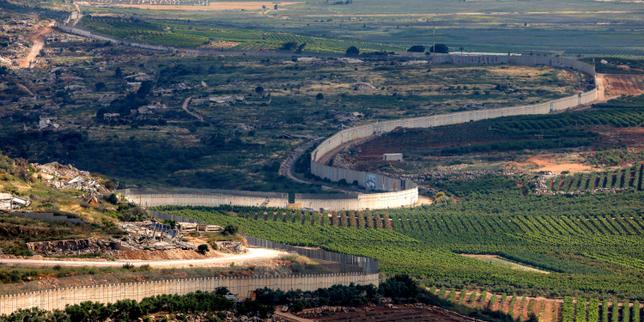
The core structural friction point is the precise definition of geographic boundaries. Discussions focus on resolving contested points along the UN-demarcated Blue Line. By breaking down the border into specific, localized segments, military planners can negotiate localized buffer zones and establish protocols for agricultural and civilian movement near the security fence, reducing the probability of accidental kinetic triggers.
Pillar II: Verification Mechanisms and Information Routing
A primary point of failure in ceasefires is the lack of objective, real-time verification. The Pentagon framework attempts to establish a standardized information routing protocol:
- Incident Detection: A kinetic event or border breach occurs.
- Triangulation: The hosting party (U.S.) acts as a clearinghouse for data, cross-referencing satellite imagery and signals intelligence against reports from both sides.
- Direct Clarification: The U.S. defense apparatus relays technical clarifications to both commands to interrupt the automatic retaliatory cycle.
This mechanism acts as an information buffer, absorbing the initial political shock of border incidents before they escalate to large-scale military mobilizations.
Pillar III: Rules of Engagement (ROE) Synchronization
While neither military shares its comprehensive operational doctrines, these meetings are used to clarify the specific thresholds that trigger defensive or offensive maneuvers. This includes defining what constitutes a hostile act versus a hostile intent within specified geographic corridors, and establishing clear protocols for airspace utilization and maritime border monitoring.
Structural Friction Points and Strategic Limitations
A data-driven assessment of these military talks must account for the systemic bottlenecks that prevent tactical agreements from translating into permanent stability.
The Sovereignty Execution Gap
The fundamental limitation of any agreement reached between the IDF and the LAF is the execution gap within Lebanese territory. Because the Lebanese government lacks comprehensive control over non-state paramilitary factions operating within its borders, any commitment made by LAF leadership at the Pentagon is structurally incomplete. The LAF cannot reliably enforce demilitarization or prevent third-party kinetic launches, making the execution of border guarantees inherently asymmetric.
The Political-Military Asymmetry
Military-to-military channels are designed to manage existing realities, not alter political landscapes. A strategic bottleneck occurs when the tactical solutions developed by military planners collide with the domestic political requirements of the respective governments. If the civilian leadership in Jerusalem or Beirut requires a prolonged state of heightened readiness or kinetic signaling for domestic political signaling, the technical de-confliction frameworks established at the Pentagon become subordinated to broader political strategies.
Predictive Scenarios for Border Stability
Based on the structural constraints analyzed above, the trajectory of these military-to-military coordination efforts will likely yield one of three distinct operational outcomes over the mid-term horizon.
| Scenario | Operational Triggers | Probability | Impact on Border Stability |
|---|---|---|---|
| Controlled Attrition | Maintenance of Pentagon channel; localized enforcement of Blue Line parameters; continuation of U.S. military aid to the LAF. | High | Stabilizes border at a baseline of low-intensity friction; prevents catastrophic escalatory spirals but fails to resolve underlying security vulnerabilities. |
| Institutional Fracture | Complete collapse of Lebanese economic stability; withdrawal of U.S. logistical support for the LAF; unilateral cross-border kinetic campaign. | Moderate | Complete breakdown of the de-confliction framework; direct confrontation between state militaries; total reliance on raw kinetic deterrence. |
| Enforced Demilitarization | Trilateral agreement backed by international monitoring infrastructure; binding political mandates overriding localized factions. | Low | Comprehensive stabilization; establishment of a durable, verified buffer zone; requires a level of political consensus currently absent from the theater. |
Strategic Operational Directive
To maximize the utility of the Washington-mediated military channel, defense planners must shift away from pursuing a comprehensive political settlement through military actors. The operational focus must narrow exclusively to verifiable, small-scale spatial agreements.
The immediate tactical priority requires the formalization of a localized, sector-by-sector notification matrix. This involves establishing specific geographic grids along the Blue Line where any movement of heavy hardware or changes in defensive postures must be communicated through the Pentagon clearinghouse with a mandatory minimum lead time. By converting abstract diplomatic goals into concrete, time-delimited operational protocols, the framework can successfully lower the probability of accidental escalation, even while the broader geopolitical environment remains volatile. This incremental, highly technical stabilization strategy is the only viable mechanism to prevent a localized tactical failure from escalating into a regional conflict.