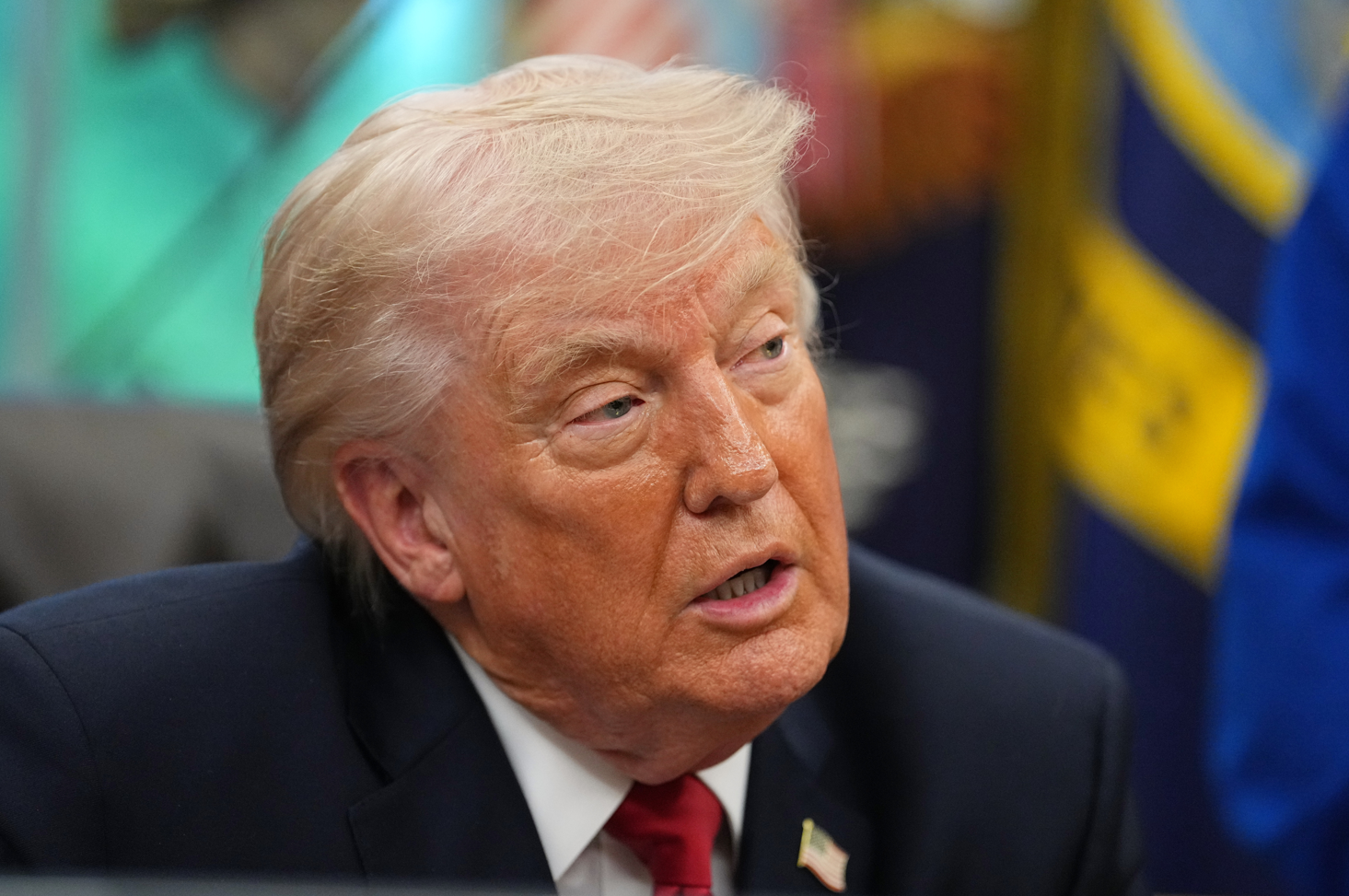
The sixty-day clock was supposed to be the final check on the American imperial presidency. Instead, on a Friday afternoon in Washington, it became a footnote. By notifying Congress that hostilities with Iran have "terminated," President Donald Trump didn’t just end a phase of a regional war; he effectively neutralized the 1973 War Powers Resolution.
The move is a masterclass in executive legal maneuvering. By claiming that a fragile, frequently violated ceasefire has reset the clock to zero, the administration has successfully avoided a mandatory vote on the conflict’s authorization. It is a precedent that will resonate long after the current smoke over the Strait of Hormuz clears. If the "termination" of hostilities can be declared while 50,000 troops remain on a hair-trigger and a naval blockade continues to strangle Iranian ports, then the concept of "war" has been legally redefined into something far more permanent and far less accountable.
The Strategy of the Perpetual Pause
The administration’s logic rests on a semantic technicality. Under the War Powers Resolution, a president who initiates military action without a formal declaration of war from Congress has 60 days to secure authorization or withdraw forces. That deadline hit its expiration on May 1, 2026.
By sending letters to Speaker Mike Johnson and Senator Chuck Grassley declaring the conflict "terminated" as of the April 7 ceasefire, the White House has argued that the statutory clock is no longer ticking. It doesn't matter that the U.S. Navy is currently preventing every drop of oil from leaving Iranian terminals—an act of war by any traditional definition. In the eyes of the executive branch, as long as the missiles aren't flying today, the war doesn't exist for the purposes of the law.
Defense Secretary Pete Hegseth made this position clear during recent testimony. He described the ceasefire as a "stop" or "pause" on the legal countdown. It is a convenient interpretation. If hostilities can be "terminated" on day 59 and resumed on day 61, the 60-day limit becomes a theoretical concept rather than a functional restraint.
The Blockade and the Oil Bottleneck
While the White House uses the language of peace to satisfy the legalists, the economic reality is one of total confrontation. The ongoing naval blockade has effectively removed millions of barrels of Iranian crude from the global market.
Energy markets are currently pricing in a "permanent temporary" conflict. Traders are no longer waiting for a resolution; they are hedging against a decade of volatility. The Strait of Hormuz remains the world’s most dangerous choke point, and the U.S. presence there is not diminishing. By declaring the war over while keeping the blockade in place, the administration is attempting to maintain maximum pressure on Tehran without the political risk of a congressional debate that could highlight the rising cost of gasoline at home.
The Economic Toll of Unauthorized War
| Metric | Pre-Conflict (Feb 2026) | Current (May 2026) |
|---|---|---|
| Global Brent Crude | $78/bbl | $114/bbl |
| U.S. National Gas Average | $3.45/gal | $5.12/gal |
| Daily Iranian Oil Exports | 1.5M Barrels | < 100,000 Barrels |
| Shipping Insurance Rates | Standard | +400% Surcharge |
A Compliant Congress
The most striking aspect of this constitutional shift is the silence from the halls of the Capitol. Historically, the War Powers Act was the tool of a Congress that had been burned by the "credibility gap" of the Vietnam era. Today, it is treated as a nuisance by the majority and a lost cause by the minority.
Senate Majority Leader John Thune has indicated that he sees no immediate need for a vote. This deference suggests a fundamental change in how the American government functions. The power to declare war, once the most guarded prerogative of the legislative branch, has been surrendered to the executive in exchange for political expediency. A vote on the Iran war would be a vote on record—a liability in an election year. By allowing the President to "terminate" hostilities on paper, lawmakers avoid having to explain to their constituents why the country is still involved in a multi-billion dollar "non-war."
There are outliers. Senator Todd Young and Senator Susan Collins have signaled that the administration’s legal theory is thin. But without a unified front, these objections are merely static. The executive branch has realized that if it simply ignores the deadline, the legislative branch lacks the collective will to enforce it.
The Iranian Gambit
Tehran is playing its own hand in this legal theater. By proposing a new peace plan through Pakistani mediators, the Iranian leadership is attempting to exploit the friction between Trump and his congressional critics. They know the President is sensitive to the "forever war" label.
However, the administration has signaled that it is "not satisfied" with the current proposal. This creates a state of permanent tension. The U.S. military remains "locked and loaded" on Iranian dual-use infrastructure and power generation. The message to Tehran is simple: we can restart the clock whenever we want, but we will never let it run out.
The Long Shadow of Precedent
This is not just about Iran. It is about how the United States will conduct every future conflict. If this maneuver stands, any president can bypass Congress indefinitely by simply ordering a 24-hour pause in kinetic strikes every 59 days.
The War Powers Act was designed to force a national conversation about the cost and purpose of shedding blood. By finding a way to skirt that conversation, the White House has cleared a path for executive-led military interventions that have no clear end and no democratic mandate.
We are entering an era where the definition of "hostilities" is whatever the Commander-in-Chief says it is. The ships are still in the water, the planes are still in the air, and the blockade is still in force. But on paper, the war is over because the President says the clock has stopped.
The law remains on the books, but its heart has been cut out.