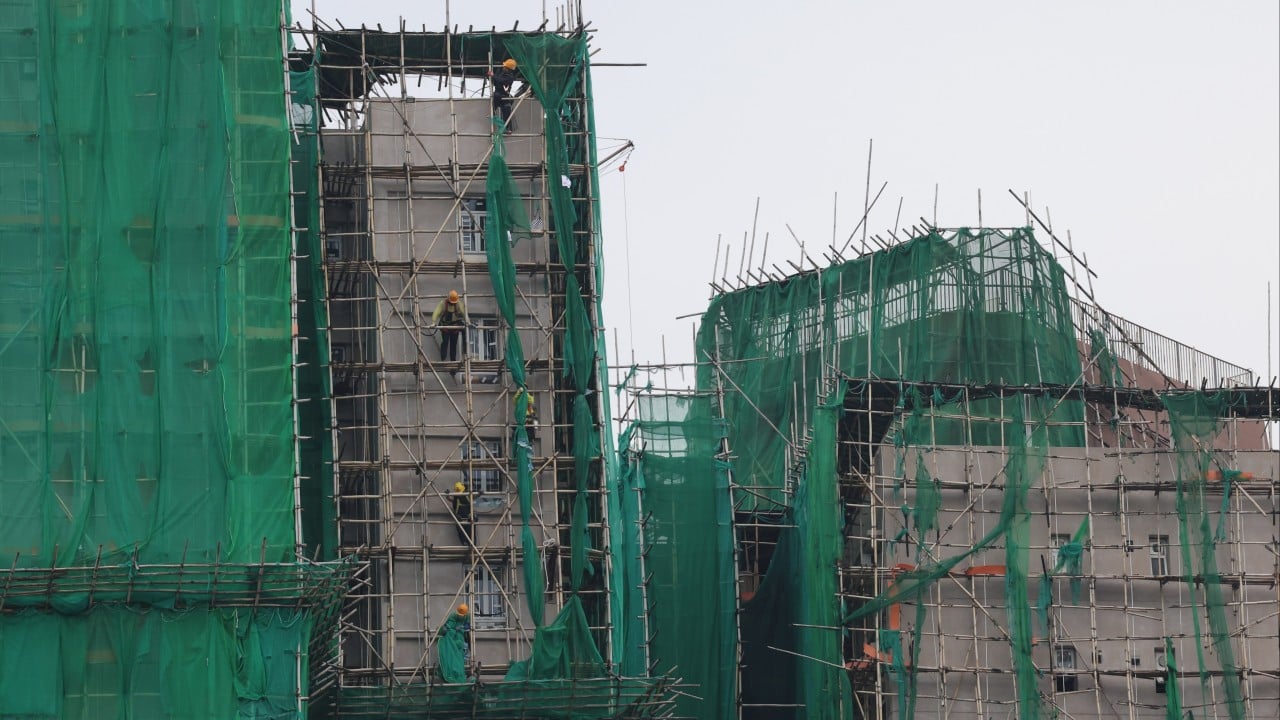
The Hong Kong government has finally bowed to the inevitable. By folding Wang Chi House, the only building left untouched by last November’s catastrophic fire, into a massive HK$6.8 billion buyout, authorities have effectively signed the death warrant for the entire Wang Fuk Court estate. This is no longer just a resettlement plan for fire victims. It is a total erasure of a community that, until today, existed in a bizarre legal and social limbo.
The primary query for thousands of anxious residents has been whether the government would ever acknowledge that a "spared" block cannot survive in a graveyard. The answer arrived today. With 75% of Wang Chi House owners opting to sell, the Housing Bureau has confirmed it will acquire the remaining 600-plus units at the same premium rates offered to the seven fire-damaged blocks. Meanwhile, you can find similar developments here: The British Crown Stakes Its Future on a Fragile American Alliance.
This move resolves a logistical nightmare but opens a Pandora’s box of questions regarding public spending, urban decay, and the terrifying precedent of "empathy-led" policy.
The Illusion of Choice in a Vertical Ghost Town
When the November 26 blaze claimed 168 lives and gutted Blocks A through G, Wang Chi House stood as a lonely, functional sentinel. Initially, the government excluded it from the acquisition scheme. The logic was cold and fiscal: the building was structurally sound, so why pay market-plus rates to buy back property that wasn't broken? To explore the full picture, check out the recent analysis by BBC News.
But buildings are more than concrete shells. For the residents of Wang Chi House, the "scatheless" status was a myth. They were living in the middle of a demolition zone. Their neighbors were gone. The shops were boarded up. The communal gardens were cordoned off with police tape. You cannot have a thriving life in a single tower surrounded by seven charred skeletons.
The government’s shift to include Wang Chi House isn't just about compassion. It is a pragmatic surrender. Officials realized that if they didn't buy out the final block, they would be left with a permanent, inhabited island in the middle of a multi-billion dollar demolition site, making any future redevelopment of the Tai Po waterfront impossible.
The Brutal Math of the Buyout
The financial package is staggering. For an administration that has recently been tightening its belt, the Wang Fuk Court intervention is a massive outlier.
| Category | Offer Price (per sq. ft. saleable area) |
|---|---|
| Premium Unpaid (Green Form) | HK$8,000 |
| Premium Paid (Open Market) | HK$10,500 |
To put these numbers in perspective, secondary market prices in Tai Po for similar aged estates were hovering around HK$6,000 to HK$8,000 before the fire. The government is essentially paying a 30% to 40% premium over pre-disaster values.
Why such a generous offer? Because the Housing Bureau is terrified of a protracted legal battle. Under the Basic Law, property rights are sacrosanct. Forcing people out of their homes requires clear justification and fair compensation. By offering prices that effectively allow residents to move into newer, better-quality subsidized housing without a heavy debt load, the government is buying silence and speed.
The Flat-for-Flat Mirage
For many elderly residents, cash is a secondary concern. They want a roof. The "Flat-for-Flat" arrangement sounds simple: trade your charred unit for a new one. In reality, it is a complex shell game of "credits" and "vouchers."
Residents receive a voucher equivalent to the buyout price. They can then use these "credits" to bid on 3,900 reserved units across 10 projects, including the highly sought-after Chung Nga Road West development in Tai Po and Shing Chi Court in Kowloon Bay.
But there is a catch. If the new flat is more expensive than the voucher value—which is likely for the newer, modern developments—the residents must pay the difference. For a retiree on a fixed income, a "fair trade" can quickly become an unmanageable mortgage. The government is providing social workers for every household, but no amount of counseling can bridge a financial gap if the market shifts before the September 2026 selection date.
The Precedent Nobody Wants to Talk About
Deputy Financial Secretary Michael Wong has repeatedly stressed that Wang Fuk Court is a "special case within special circumstances" and will not set a precedent.
This is a dangerous line to walk.
Hong Kong is filled with aging, high-density estates. If the government establishes that it will step in as the "buyer of last resort" at above-market prices whenever a disaster occurs, it fundamentally alters the risk profile of property ownership in the city.
- Moral Hazard: Do owners have less incentive to maintain fire safety systems if they know a total loss leads to a government buyout at a premium?
- Fiscal Sustainability: Can the public purse afford another $7 billion intervention if a similar tragedy hits a larger estate in Kwun Tong or Tuen Mun?
- The "Unanimous Consent" Hurdle: Usually, redevelopment requires 80% to 90% owner consent. By stepping in and buying everyone out, the government is bypassing the difficult, democratic process of urban renewal that private developers struggle with for decades.
What Happens to the Land?
Once the checks are signed and the last resident of Wang Chi House packs their boxes, the government will own a prime piece of Tai Po real estate. The seven fire-damaged blocks are slated for demolition. The fate of the site remains "under study," but the whispers in the Planning Department are consistent: a transition from high-density residential to a mix of public open space and perhaps a more lucrative private-public housing hybrid.
There is a bitter irony here. The "community continuity" that officials talk about in press releases is being traded for a clean slate. The original Wang Fuk Court, with its 1980s-era corridors and tight-knit social networks, is being liquidated.
The residents of Wang Chi House are likely relieved. They are escaping a ghost town with enough cash to start over. But as the excavators move in, Hong Kong must ask if this is the new model for urban crisis management: a billion-dollar delete button that solves the immediate problem by erasing the evidence of the tragedy.
The demolition of Wang Fuk Court will be efficient, orderly, and expensive. It will also be a quiet admission that sometimes, in the face of absolute disaster, the only thing a government can do is buy the ruins and hope the public forgets the cost.