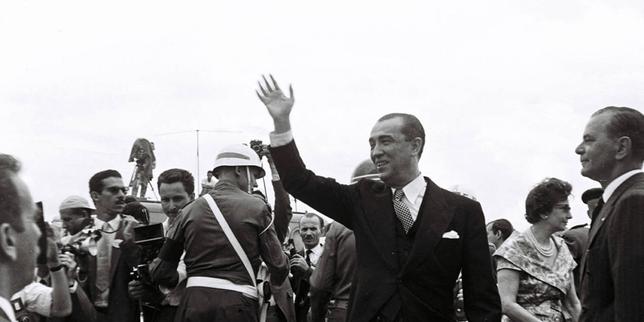
The official story was clean. It was simple. On August 22, 1976, former Brazilian President Juscelino Kubitschek died in a tragic car crash on the Via Dutra highway between São Paulo and Rio de Janeiro. His Chevrolet Opala collided with a truck. Case closed. Except it wasn't. For decades, a cloud of suspicion hung over the incident, whispering that the military dictatorship had silenced one of its most charismatic critics. Decades later, a truth commission finally confirmed what millions of Brazilians already knew. Juscelino Kubitschek was assassinated.
This wasn't just a traffic accident. It was political murder.
If you want to understand modern Brazil, you have to understand this moment. The overturning of the official narrative tells us everything about how power operates in Latin America, how history gets rewritten, and why pushing back against state-sponsored lies is a grueling, multi-generation fight.
The São Paulo Truth Commission Blows the Case Wide Open
The breakthrough didn't happen overnight. It took the Municipal Truth Commission of São Paulo, led by Gilberto Natalini, to officially tear down the military regime's lie. After analyzing over 90 documents, interviewing witnesses, and re-examining forensic evidence, the commission released a definitive report. The conclusion left no room for doubt. Kubitschek, along with his driver Geraldo Ribeiro, died as a direct result of a conspiracy orchestrated by the military dictatorship.
The regime ruled Brazil with an iron fist from 1964 to 1985. They wanted you to believe that JK, as he's widely known, was just unlucky on the highway. But the timing of his death was far too convenient.
Look at the evidence the commission uncovered. The original forensic reports were riddled with inconsistencies. The truck driver involved in the crash, Josias Oliveira, openly admitted that he had been offered bribes to take the blame for the accident. Decades later, fragments of metal were found in the exhumed skull of Ribeiro, the driver. It points directly to a gunshot wound before the vehicle lost control.
The military state didn't just suppress its people. It actively hunted down its rivals.
Operation Condor and the War on Leftists
You can't view Kubitschek's assassination in isolation. It happened at the height of Operation Condor. This was a clandestine, US-backed campaign of political repression and state terror conducted by South American right-wing dictatorships. Chile, Argentina, Uruguay, Bolivia, Paraguay, and Brazil pooled their intelligence resources. They shared data. They coordinated cross-border assassinations.
The goal was brutal but simple. Eliminate any leftist or centrist leader who could rally the public and restore democracy.
Kubitschek was a massive threat to the generals. He was the man who built Brasília. He represented the golden age of Brazilian democracy, a time of economic growth and cultural optimism. Even in exile, his name carried immense weight.
He wasn't the only one targeted. Look at the timeline around 1976. Former João Goulart, the president deposed by the 1964 coup, died under highly suspicious circumstances in Argentina, officially of a heart attack, though many believe he was poisoned. Carlos Lacerda, another prominent politician who opposed the regime, died suddenly around the same time. The three men had recently formed the Frente Ampla (Broad Front) to demand the return of free elections. Within months, all three were dead. That isn't a coincidence. It's a purge.
Why the Truth Matters to You Right Now
You might wonder why a 1976 assassination matters today. It matters because historical amnesia is dangerous. Brazil never fully punished its military torturers and killers. Unlike Argentina, which put its junta leaders on trial, Brazil passed a blanket Amnesty Law in 1979. It protected both returning exiles and the state actors who tortured them.
This lack of accountability creates a culture where state violence goes unchecked. When a nation doesn't confront its ghosts, those ghosts come back to haunt its politics.
By correcting the record on Juscelino Kubitschek, historians and activists are forcing a confrontation with the past. It changes how the public views the military's legacy. It reminds people that the "order and progress" promised by authoritarian regimes is often built on secret execution squads and falsified police reports.
If you are tracking geopolitical risks or studying Latin American history, the lesson here is clear. Official narratives from authoritarian regimes have a shelf life. The truth usually wins, but only if people keep digging.
To understand the full scope of this historical correction, you should look into the final reports of the National Truth Commission (Comissão Nacional da Verdade), which uncovered the systemic nature of the regime's human rights abuses. Read the testimonies of the families who spent forty years fighting just to change a death certificate. Pay attention to how modern political factions in Brazil still argue over this era. The battle for the past is really a battle for control of the future. Start by questioning the sanitized versions of history you find in old textbooks. Look for the dissenting reports. That's where the real story hides.