A Steel Box on the Horizon
Picture the damp, salty air off the coast of Yemen.
It hits your skin before you even see the waves. Out there, floating on a sea so blue it looks almost solid, sits a vessel three football fields long. It carries two million barrels of crude oil. That is not just fuel. That is the light in a European hospital, the diesel powering a tractor in Midwest America, the plastic casing of the screen you are reading right now.
Then, a sudden streak of white smoke cuts across the blue sky.
Shockwaves. Fire. The violent intrusion of geopolitical warfare into the quiet routine of global commerce.
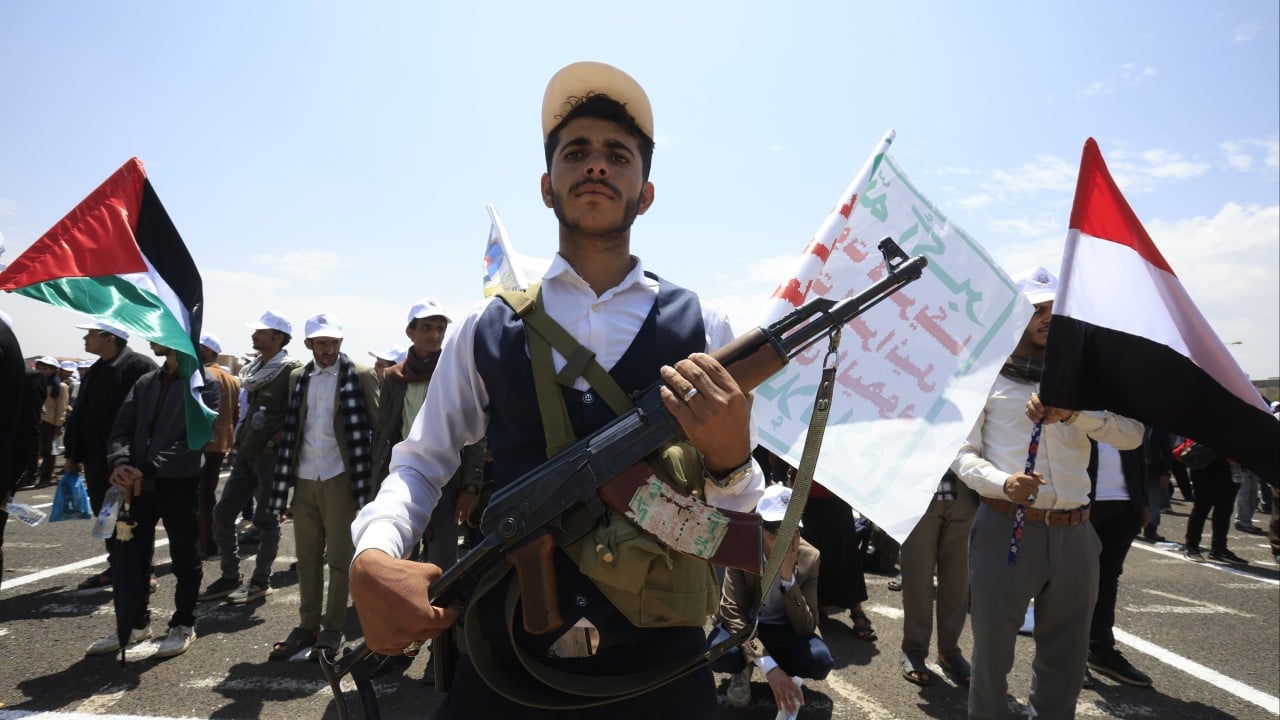
When Houthi militants targeted oil tankers bound for Saudi ports in the Bab el-Mandeb Strait, the international response focused on stock indexes, crude futures, and defense briefings. But war is never just a line on a financial chart. It is an interruption of human motion.
The Narrow Gate
The Bab el-Mandeb Strait is a geography lesson written in friction.
At its narrowest point, the waterway shrinks to a mere eighteen miles wide. To the east lies Yemen; to the west, Djibouti and Eritrea. Through this tiny needle eye passes nearly twelve percent of all seaborne-traded oil and roughly thirty percent of global container traffic.
Think of it as a single-lane bridge built across a violent river. Every day, thousands of drivers cross it without a thought. They trust the physics of the bridge. They trust the rules of the road.
Now, imagine someone standing in the middle of that bridge with a torch.
When the Houthis—an armed movement controlling significant territory in Yemen—launched anti-ship missiles and explosive-laden drones toward commercial vessels, they did not just attack a ship. They pinched the artery.
Saudi Arabia temporarily halted crude shipments through the strait to protect its crews and vessels. The decision made strategic sense, but it sent a violent ripple through the global nervous system. If the Red Sea closes, ships have to turn around. They must sail thousands of miles around the southern tip of Africa, rounding the Cape of Good Hope.
That rerouting adds nearly two weeks to a voyage. It consumes thousands of additional tons of fuel. It delays medicine, grain, and electronics.
Panic spreads faster than oil on water.
The Invisible Stakes
It is easy to view these conflicts through a cold, analytical lens. We talk about energy security. We debate regional hegemony between Iran and its neighbors. We calculate the barrel price of Brent crude.
Yet, we forget the human beings trapped inside those numbers.
Consider a hypothetical commercial sailor named Alexei. He is forty-two, born in a coastal town in Ukraine, and he has spent twenty years on container ships and crude tankers. His job is extraordinarily boring—until it becomes terrifying.
For Alexei, the Bab el-Mandeb is not an abstract geopolitical tension zone. It is a shift on the bridge at 03:00, staring through night-vision goggles at a dark expanse of water, watching radar screens for fast-approaching radar blips that do not broadcast identification signals.
When a missile strikes a deck, there is no high-level diplomatic debate. There is the acrid smell of burning fuel, the metallic scream of tearing steel, and the cold realization that help is hundreds of miles away across open water.
The crew on these vessels are rarely combatants. They are civilians working contracts to pay mortgages, fund educations, and support families half a world away. When chokepoints burn, these workers become human shields in a fight they never chose.
The Architecture of Conflict
To understand why this small stretch of water matters so deeply, we have to look across the Arabian Peninsula to another narrow gap: the Strait of Hormuz.
Iran has long held the threat of closing Hormuz over the international community. It is the ultimate leverage point, a lever that can choke off a fifth of the world's petroleum supply with a handful of mines and speedboats.
By targeting the Red Sea through proxy forces in Yemen, a second critical pressure point is engaged.
It is a strategy of geographic encirclement.
If both Hormuz and the Bab el-Mandeb become unnavigable, the Arabian Peninsula becomes an island cut off from global sea trade. The alternative trade routes are slow, costly, and inefficient. The global supply chain does not possess enough spare capacity to absorb two simultaneous heart attacks.
+-------------------------------------------------------+
|                THE CHOKEPOINT SQUEEZE                 |
|                                                       |
|  Strait of Hormuz           Bab el-Mandeb Strait      |
|  (Persian Gulf)             (Red Sea / Gulf of Aden)  |
|         |                              |              |
|         v                              v              |
|  [20% Global Oil]           [12% Global Seaborne Oil] |
|         \                              /              |
|          +------> CRIPPLING DELAYS <--+               |
|                   Reroute via Africa                  |
|                   (+10-14 Days Transit)               |
+-------------------------------------------------------+
When supply chains stretch, costs compound. The price of insurance for cargo ships skyrockets overnight. Shipping lines pass those insurance surcharges to logistics companies. Logistics companies pass them to retailers.
Eventually, a farmer in South America pays more for fertilizer. A family in Europe pays more for heating. A worker in Asia sees their factory slow down because raw materials are stuck on a vessel sitting idle off the coast of Africa.
The missile falls in the Red Sea, but the explosion lands in your grocery bill.
The Limits of Iron and Steel
Navies respond to these threats with force. Warships patrol the corridors. Counter-battery fire targets launch sites. Aegis combat systems track airborne threats, intercepting incoming missiles with multi-million-dollar interceptors.
Power projection has its limits.
A five-million-dollar missile used to destroy a fifty-thousand-dollar drone is an equation that favors the attacker over time. As asymmetric warfare evolves, holding a narrow maritime corridor open requires constant, exhausting effort.
Security on the high seas relies on an unspoken agreement: that the oceans are a common heritage, open to all for peaceful trade. Once that agreement fractures, force alone struggles to restore true peace. It can only enforce a tense, fragile pause.
What We Leave Behind
We often treat the modern world as something weightless. We talk about the cloud, instant communication, and digital economies. We act as if physical distance has been conquered by code.
Then a missile hits a tanker in an eighteen-mile-wide strip of water, and the illusion shatters.
We are still bound to the physical earth. We still depend on heavy steel hulls dragging cargo across deep water. We remain vulnerable to the ancient realities of geography, ambition, and conflict.
The fires in the Red Sea are a stark reminder of our collective fragility. When we look out over those dark, distant waters, we are not looking at someone else's war. We are looking at the thin, vulnerable thread that holds our daily lives together.