Doxing is no longer just an internet flame war tactic. It is a full-blown weapon used to target federal agents right at their doorsteps. If you think dropping an officer's home address online is just aggressive activism, the federal government is about to prove you wrong.
Department of Homeland Security Secretary Markwayne Mullin just drew a hard line in the sand. During intense congressional testimony, Mullin threw his weight behind a push for aggressive, enhanced criminal penalties for protesters who dox Immigration and Customs Enforcement (ICE) personnel. This isn't some vague warning. It's a direct response to a rapidly escalating security crisis that is blurring the lines between political protest and targeted harassment.
The Breaking Point at Delaney Hall
What triggered this sudden urgency? Look no further than the explosive demonstrations outside the Delaney Hall detention facility in Newark, New Jersey.
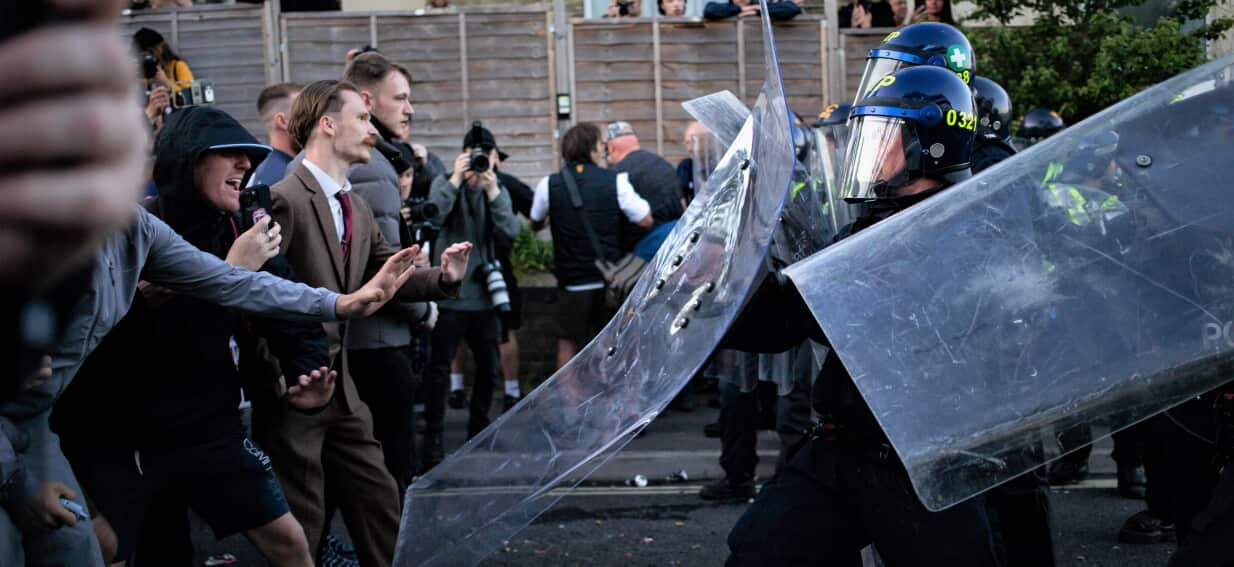
Tensions boiled over during intense standoffs between federal agents and anti-ICE demonstrators. Activists formed human barricades. Federal agents deployed pepper spray. Amid the chaos, things took a deeply personal, dark turn.
An unmasked ICE officer was targeted directly. A protester didn't just shout slogans; they threatened to kill the officer and his entire family. Mullin revealed that these groups aren't just angry citizens with signs. They are highly sophisticated, well-funded networks using technology to track down the private lives of federal workers.
They knew where the officer lived. They knew his family.
Dropping the Mask Restrictions
The fight over doxing has triggered an equally fierce battle over what agents can wear on duty.
Right now, a growing list of blue states—including California, New York, Washington, Oregon, and New Jersey—have implemented strict local rules or laws aimed at restricting ICE officers from wearing face masks during operations. The logic from local politicians is that masks eliminate accountability.
Mullin turned that logic right back on lawmakers. He laid out a stark trade-off: if jurisdictions want to force federal officers to show their faces, Congress needs to drastically crank up the legal consequences for anyone who exploits that visibility.
"If we want to eliminate the officers from having to wear masks, then increase the penalties," Mullin told the House Homeland Security Committee. "If they dox them, they threaten them in any way whatsoever, it should be a very stiff penalty to get all their attention. And then those that are funding the protest should also be held accountable the same way."
The federal government is currently fighting New Jersey's mask restriction in court, while a federal judge in California recently blocked that state's attempt to enforce a similar ban.
The Push for New Federal Legislation
The political battle lines are already drawn. Representative August Pfluger, a Texas Republican, used the hearing to announce his plans for a new bill specifically designed to enhance criminal penalties for doxing, intimidating, or threatening federal officers.
It didn't take long for the bipartisan consensus to hit a roadblock.
Democratic lawmakers on the committee immediately pushed back, arguing that any new anti-doxing protections shouldn't just apply to immigration enforcement. They want the legislation expanded to cover federal judges and elected officials, who have also seen a massive spike in home protests and personal threats over the last few years.
Why This Matters Beyond Politics
It is easy to get bogged down in the endless partisan back-and-forth over immigration policy. But the underlying issue here is much bigger than ICE. It's about a fundamental shift in how public disputes are fought in America.
When protesters move past opposing a policy and start targeting an individual worker's kids, the rules of engagement change. Doxing forces public servants to choose between doing their jobs and keeping their families safe. If the threat matrix gets too high, recruitment craters, institutional knowledge vanishes, and the agencies tasked with public safety simply cease to function effectively.
Federal law enforcement agencies have been trying to plug these leaks for a while. Back in 2020, the Office of Personnel Management officially designated ICE as a "security/sensitive" agency. That move allowed them to legally withhold personally identifiable information from public Freedom of Information Act (FOIA) requests. But data security acts like a shield; what Mullin and congressional allies are asking for now is a sword.
What Happens Next
Expect to see Pfluger’s anti-doxing bill hit the House floor soon. The real test will be whether it can survive a divided Congress where every single immigration-adjacent issue becomes an immediate proxy war.
If you want to track how this plays out, watch these three specific areas:
- The Funding Trail: Keep an eye on whether future legislation actually includes provisions to penalize the organizations and donors backing these highly technical protest groups.
- The Mask Litigation: The ongoing federal court battles in New Jersey and California will set the legal precedent for whether states have any right to regulate the operational gear of federal agents.
- The Scope Expansion: Watch if Democrats succeed in looping judges and politicians into the bill, which might be the only path to getting the legislation through a split Senate.
The era of digital anonymity shielding real-world intimidation is quickly drawing to a close. If these enhanced penalties pass, the consequences for hitting "publish" on an agent's private data will be swift, severe, and permanent.