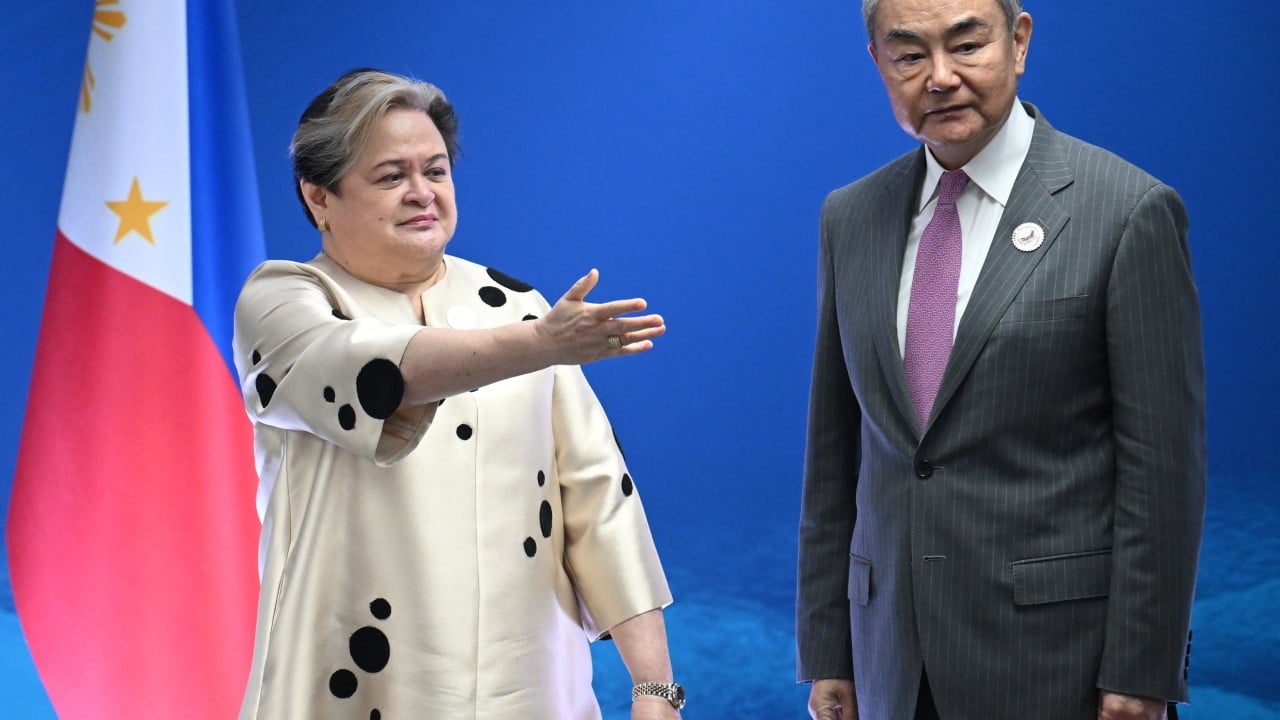
Tensions in the South China Sea reached a critical boiling point after a violent maritime clash near disputed features led Beijing to issue an explicit threat of bitter consequences to the Philippines. The warning marks a dangerous escalation in a long-standing territorial dispute. Manila has actively exposed Chinese maritime aggression, while Beijing continues to enforce sweeping claims over key waterways through coercive gray-zone tactics. At the heart of this standoff lies a high-stakes geopolitical battle that threatens to pull the United States directly into a major regional confrontation.
The Anatomy of a Calculated Collision
The physical confrontation on the water was neither an accident nor a routine navigational error. Chinese Coast Guard units and maritime militia vessels swarmed Philippine supply boats seeking to resupply a grounded military outpost on Second Thomas Shoal. Metal hulls buckled under deliberate ramming. High-pressure water cannons stripped equipment off wooden decks. Chinese personnel, armed with blades and spears, boarded Philippine boats, confiscated gear, and injured military personnel.
This encounter represents a deliberate strategy. Beijing operates with systematic precision just beneath the threshold of open warfare. By deploying coast guard and civilian fishing fleets rather than gray-hulled warships of the People's Liberation Army Navy, China maintains plausible deniability while asserting physical dominance over features inside the exclusive economic zone of the Philippines.
The mechanics are tactical and relentless. A target ship is identified during a routine resupply run. Chinese vessels execute dangerous maneuvers, crossing the bow of Philippine ships at close range. If the smaller craft does not reverse engines, physical contact occurs. Water cannons follow, aimed directly at sensitive navigational antennas and cabin windows to disable the crew's ability to steer or communicate.
It is maritime coercion executed with bureaucratic efficiency. The goal is simple. Force Manila to abandon its outposts without firing a single missile.
The Grounded Rust Bucket at the Center of the Storm
Everything in this specific maritime theater revolves around a decaying World War II era vessel. In 1999, Manila deliberately ran the BRP Sierra Madre aground on Second Thomas Shoal to establish a permanent presence on the feature. A small detachment of Philippine Marines lives aboard the rusted hull, surviving on periodic deliveries of food, fresh water, and construction materials needed to keep the ship from falling apart into the sea.
Beijing knows that if the rust wins, the shoal falls.
For years, Chinese operations focused primarily on blocking building materials like cement and steel beams. The intent was to let salt water and time destroy the outpost naturally. When Manila began finding clever ways to slip structural supplies past the blockades, the tactics transformed into direct physical intervention.
Why Manila Changed the Script
The operational environment shifted dramatically under President Ferdinand Marcos Jr. His predecessor, Rodrigo Duterte, spent six years downplaying maritime incursions in pursuit of Chinese infrastructure investment that largely failed to materialize. Marcos reversed course entirely, implementing what military planners call an assertive transparency campaign.
Manila began inviting civilian journalists onto supply ships and patrol craft.
Camera lenses became defensive weapons. High-definition footage of Chinese water cannons smashing wooden hulls and sailors suffering physical injuries was uploaded to global news networks within hours of each incident.
This policy shattered Beijing's preferred operational environment. Chinese maritime operations rely heavily on quiet intimidation. Darkness and isolation allow large states to squeeze smaller neighbors without international backlash. By illuminating every push and shove in real time, the Philippines forced neutral observers and world powers to take notice.
The public exposure infuriated Beijing. The Chinese foreign ministry routinely accuses Manila of orchestrating theatrical provocations designed to manipulate international opinion and damage China's regional standing.
Beijing Gray Zone Strategy Reaches Its Limit
The threat of bitter consequences signals a growing frustration inside the Chinese military command structure. Transparency did not make the Philippines back down. It made them double down.
China claims sovereignty over nearly the entire South China Sea using historical arguments represented by its expansive nine-dash line, recently expanded to a ten-dash line on official maps. These claims overlap directly with the exclusive economic zones of the Philippines, Vietnam, Malaysia, Indonesia, and Brunei.
In 2016, an independent arbitral tribunal constituted under the United Nations Convention on the Law of the Sea issued a landmark ruling. The tribunal found that China's historical claims lacked any legal foundation under international law. It ruled that features like Second Thomas Shoal fall squarely within the exclusive economic zone of the Philippines.
Beijing rejected the verdict entirely. It called the ruling a piece of waste paper and continued to build artificial islands, military airstrips, and radar installations across disputed reefs.
Now, China faces a dilemma created by its own aggressive posture.
If Beijing backs down, it signals weakness to other regional claimants and undermines its internal political narrative of national restoration. If it escalates further into lethal military action, it risks triggering a direct armed confrontation with a global superpower.
The American Equation and Treaty Escalation Risk
Washington watches every wave with extreme caution. The United States and the Philippines share a Mutual Defense Treaty signed in 1951. Under Article IV of that agreement, an armed attack on Philippine armed forces, public vessels, or aircraft anywhere in the Pacific—including the South China Sea—invokes mutual defense obligations.
This reality creates an extremely delicate strategic tightrope.
What exactly constitutes an armed attack?
Does a high-pressure water cannon that causes a severe physical injury meet the definition? Does the deliberate ramming of a government vessel qualify? Does a board-and-seize operation involving knives and axes cross the line?
The ambiguity is deliberate on all sides. Washington wants to maintain deterrence without giving Manila a blank check to drag the American military into a third global conflict zone. Beijing pushes right up against the line, testing how far it can go before the U.S. Navy steps in.
American officials have repeatedly affirmed that the treaty covers attacks on Philippine vessels in disputed waters. Yet testing that red line carries immense risk for everyone involved. A single panicked decision by a boat commander on a foggy morning could turn a localized skirmish into an international military crisis.
Economic Levers and Regional Fractures
Military force is only one part of the machinery. Beijing possesses an enormous economic toolkit that it routinely deploys when diplomatic rhetoric fails to bend small nations to its will.
In previous diplomatic disputes, China halted imports of Philippine agricultural products overnight under the guise of sudden quarantine violations. Bananas, pineapples, and nickel ore sat rotting on docks while trade negotiations stalled. Tourism flows were throttled through official government travel warnings that emptied out coastal resorts across the Philippine archipelago.
Similar economic tactics remain ready for deployment today.
Meanwhile, the regional diplomatic apparatus remains largely paralyzed. The Association of Southeast Asian Nations operates entirely by consensus, a rule that Beijing uses to its political advantage. Nations with deep economic ties to China consistently block strong collective statements condemning Chinese maritime actions.
Negotiations for a binding Code of Conduct in the South China Sea have dragged on for decades without producing a single enforceable rule. The discussions serve primarily as a diplomatic delaying tactic while physical control over disputed features is established through factual presence on the water.
The Unforgiving Reality on the Water
Strip away the geopolitical jargon and high-level diplomatic statements, and the situation becomes stark. Human beings are standing on wet decks in treacherous water while massive steel vessels crush against each other at sea.
Filipino sailors navigate small, outdated craft through gauntlets of heavy Chinese hulls twice their size. They operate under strict orders not to open fire, knowing that a single gun shot would provide Beijing with the immediate pretext for a full military response.
On the other side, Chinese coast guard officers face pressure from superiors to deliver absolute control over the waterways without generating headlines that trigger direct foreign intervention.
The standoff is not an abstract debate over maritime legal treaties. It is a physical fight for control over critical international shipping lanes through which trillions of dollars in global trade pass every single year.
Manila has made its decision clear. It will not quietly surrender its EEZ rights to a superior force, regardless of the rhetoric coming out of Beijing. Beijing has made its intent equally transparent. It will continue to use every non-lethal tool at its disposal to clear rival outposts from waters it views as its sovereign territory.
The warnings of bitter consequences are not empty political theater. They represent the volatile reality of a power struggle where the margin for error has dropped to zero. The next collision at sea will not be a minor maritime accident. It will be the ultimate test of international resolve in the Western Pacific.