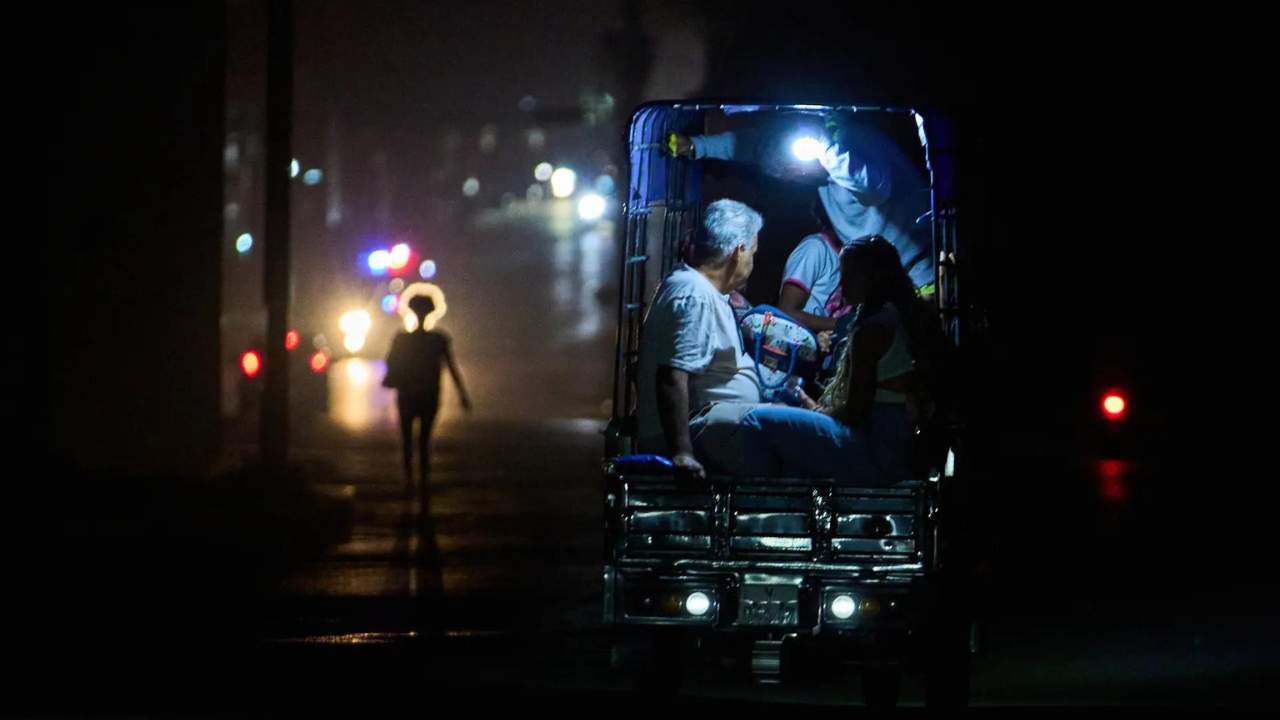
Imagine flipping a switch and nothing happens. Now imagine that happening to an entire nation. On Monday at midday, Cuba's national electric grid collapsed completely. The state grid operator, UNE, confirmed the total failure, which instantly plunged roughly 10 million people into total darkness.
It didn't come out of nowhere. Before the system gave out entirely, nearly two-thirds of the country was already sitting without power. This isn't just a simple technical glitch or a temporary headache. It's a full-blown humanitarian and economic emergency hitting during the brutal peak of the Caribbean summer.
If you want to understand why Cuba's lights keep going out, you have to look past the immediate headlines. The breakdown is the result of a perfect storm, combining decades of crumbling infrastructure with zero maintenance, intense geopolitical pressure, and an absolute shortage of fuel.
The Reality Behind the Total Blackout
When a national grid fails, it doesn't just mean your television turns off. It means food rots in powerless refrigerators. It means water pumps stop working, cutting off running water to high-rise apartments and homes. Businesses shut down, hospitals have to rely on strained backup generators, and daily life grinds to a painful halt.
Cuba has been dealing with rolling blackouts for months, but this complete collapse is a different beast. According to reports from the island, the state utility company UNE is still trying to figure out the exact trigger for Monday's midday crash. The truth is, the system was so fragile that practically anything could have tipped it over the edge.
Decades of Decaying Infrastructure
You can't run a modern society on machinery from the mid-twentieth century. Cuba's thermoelectric power plants are ancient. Most of them have outlived their intended operational lifespans by decades. Because the government is facing a severe financial crisis, they haven't been able to afford the spare parts or routine maintenance required to keep these plants running safely.
Instead of fixing the root issues, the strategy has been to patch up problems as they arise. It's the engineering equivalent of using duct tape on a leaking dam. When one major plant goes down for unplanned repairs, it places an unsustainable load on the remaining pieces of the grid. Eventually, the whole house of cards tumbles down.
The Fuel Shortage and Geopolitical Standoff
Even if the power plants were brand new, they would still need fuel to run. Cuba relies heavily on imported oil to fire up its power generation facilities. Right now, that oil is incredibly hard to get.
The Cuban government frequently points to the long-standing U.S. embargo as the primary culprit, arguing that financial restrictions make it nearly impossible to purchase fuel or equipment on the international market. The geopolitical pressure has intensified significantly under the Trump administration, which has penalized third-party countries and shipping companies that attempt to supply oil to the island.
The U.S. has conditioned any easing of these restrictions on major political reforms, including the release of political prisoners. With negotiations stalled and both sides digging in their heels, the Cuban people are left carrying the burden of the political gridlock.
What Happens Next for Residents
Living through a total grid collapse means adapting to a primitive reality. If you're wondering how people manage, they basically don't have a choice. Those who can afford them use small, noisy gas generators, but fuel for those generators is scarce and expensive. Others are left to cook over charcoal or open fires outside their homes.
The immediate priority for UNE engineers is to isolate the broken sections of the grid and attempt a slow, careful restart. Reviving a collapsed national power grid is a highly delicate process. If they feed power back into the lines too quickly, the sudden surge can trigger another chain-reaction shutdown. Residents can expect erratic, unstable power to flicker on and off over the coming days as technicians attempt to stabilize the network.
Long-term relief will require massive capital investment in renewable energy or a major shift in foreign oil partnerships, neither of which seems likely to happen overnight. For now, the island remains in survival mode, waiting for the lights to come back on.